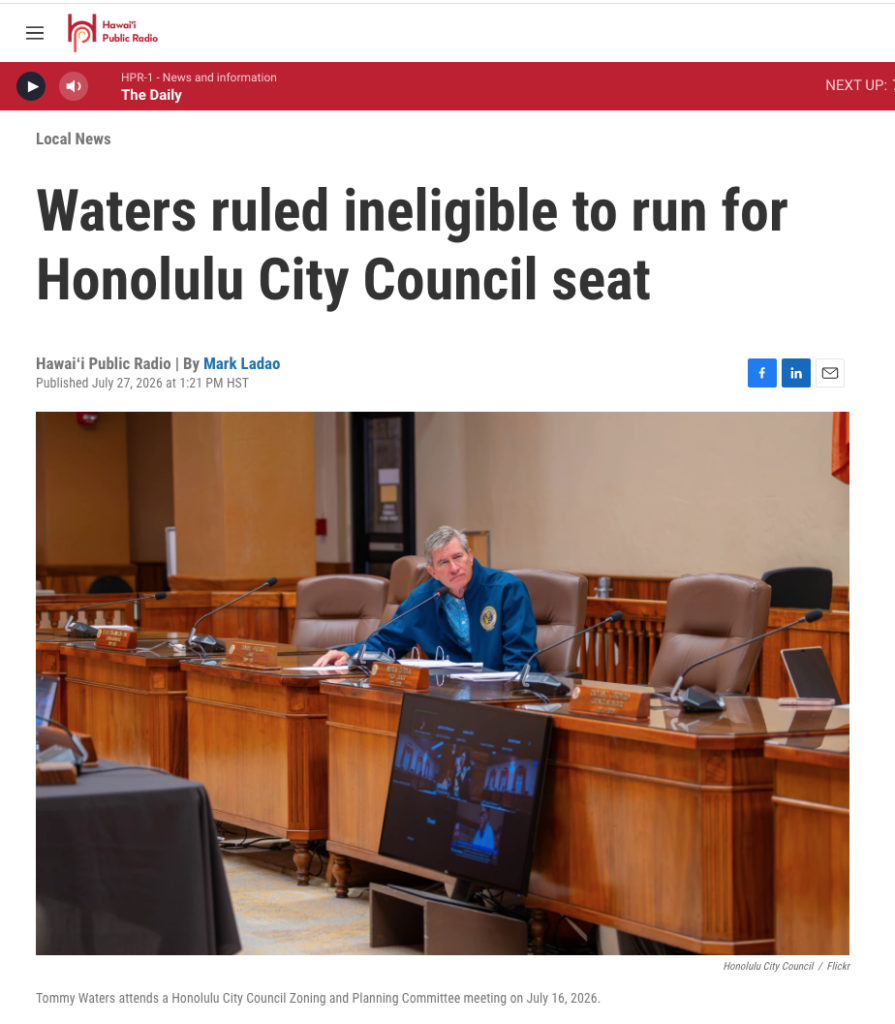
Circuit Court Judge James Ashford ruled today, maintaining that Waters cannot run for a Third Consecutive Term for District District IV – Hawai‘i Kai, Kuli‘ou‘ou, Niu Valley, ‘Āina Haina, Wailupe, Wai‘alae Iki, Kalani Valley, Kāhala, Wilhemina Rise, Kaimukī, Kapahulu,
Diamond Head, and Waikīkī
However, this ruling does not prevent Waters to take a break and run again for a seat in the Honolulu City Council. It’s just that ““No person shall be elected to the office of councilmember for more than two consecutive four-year terms.” as currently stipulated in the Honolulu City Charter.
The letter of the law and the spirit of the law is in play here.
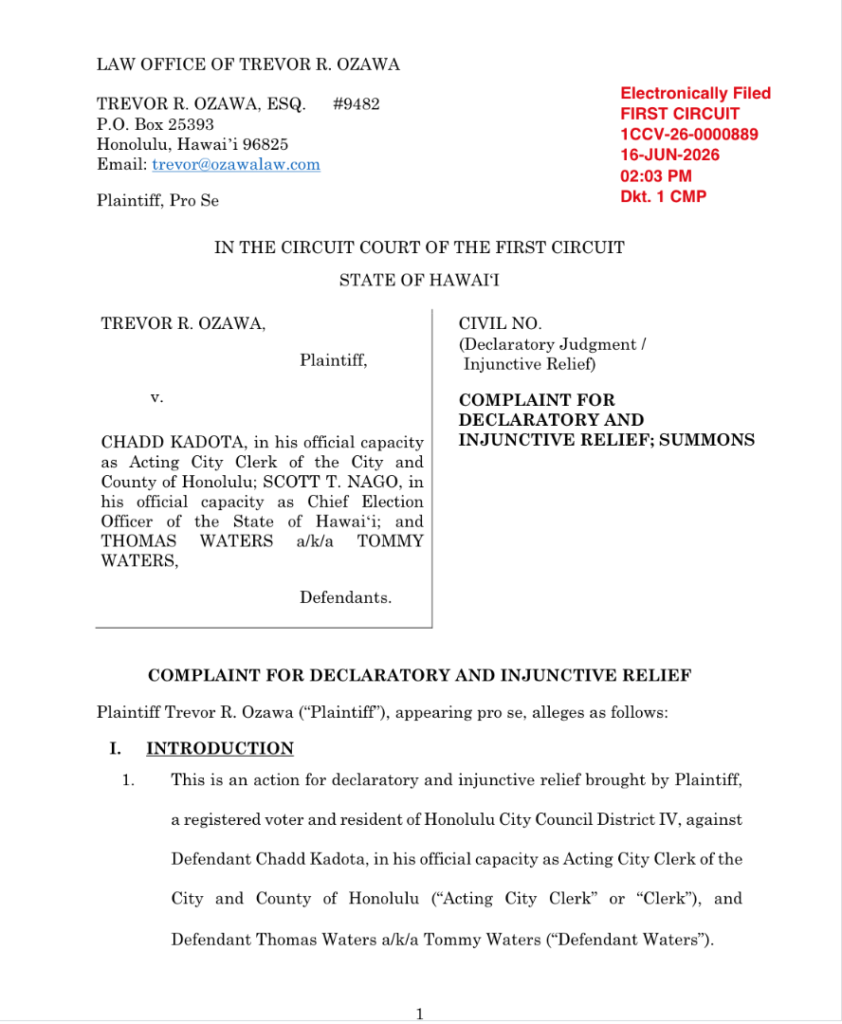
Trevor Ozawa filed a lawsuit questioning Chair Waters’ action:
Below is excerpt of the Complaint for Declaratory and Injunctive Relief from the Circuit Court:
This action presents a single, narrow, and purely legal question: whether
Defendant Waters is eligible under Section 3-102 of the Revised Charter of
the City and County of Honolulu (“Charter”) to be a candidate for, and to be
elected to, a third consecutive four-year term as Councilmember for District
IV in the November 2026 election.
3. Charter Section 3-102 provides, in relevant part:
“No person shall be elected to the office of councilmember for more
than two consecutive four-year terms.”
4. Defendant Waters was elected to the office of councilmember for the 2019–
2023 four-year term at a special remedial election held April 13, 2019. He
was elected to the office of councilmember for the 2023–2027 four-year term
at the general election held November 8, 2022. He has now filed a
nomination paper seeking election to the 2027–2031 four-year term — his
third consecutive election to a four-year council term, in direct violation of
Charter Section 3-102.
5. On June 5, 2026, Plaintiff filed a timely Written Objection to Defendant
Waters’ nomination paper with the Acting City Clerk pursuant to Hawaii
Revised Statutes (“HRS”) § 12-8, setting forth in detail the legal and factual
basis for Defendant Waters’ ineligibility. On June 12, 2026, the Acting City
Clerk issued a preliminary determination declining to refer the matter to
circuit court and stating that “no further action will be taken by this Office.”
6. The Acting City Clerk’s determination does not withstand scrutiny. It rests
on the proposition that Defendant Waters was elected to “a term of office
that commenced on May 6, 2019” — a phrase, and a date, that appear
nowhere in the Charter. Charter Section 3-102 provides that regular
council terms begin “at twelve o’clock meridian on the second day of
January following [the councilmember’s] election,” not on the date of the
councilmember’s oath of office. The Acting City Clerk’s determination
conflates the commencement of Defendant Waters’ personal service with
the commencement of the Charter-defined four-year term — a conflation
the plain text of the Charter forecloses.
7. This is the second time the Acting City Clerk has reached this same
erroneous conclusion on this same record. A substantially similar objection
filed by Christian H. Butt on March 23, 2026 received a materially identical
response on April 7, 2026 — including the same factual error regarding the
date of Defendant Waters’ swearing-in.
8. Plaintiff brings this action because no other adequate remedy exists to
resolve this purely legal question before ballots are printed and the 2026
election proceeds. The material facts are a matter of public record and are
not in genuine dispute. What remains is a question of law: the meaning of
Charter Section 3-102 as applied to an undisputed factual record. Plaintiff
intends to move for summary judgment promptly following Defendants’
appearance in this action.
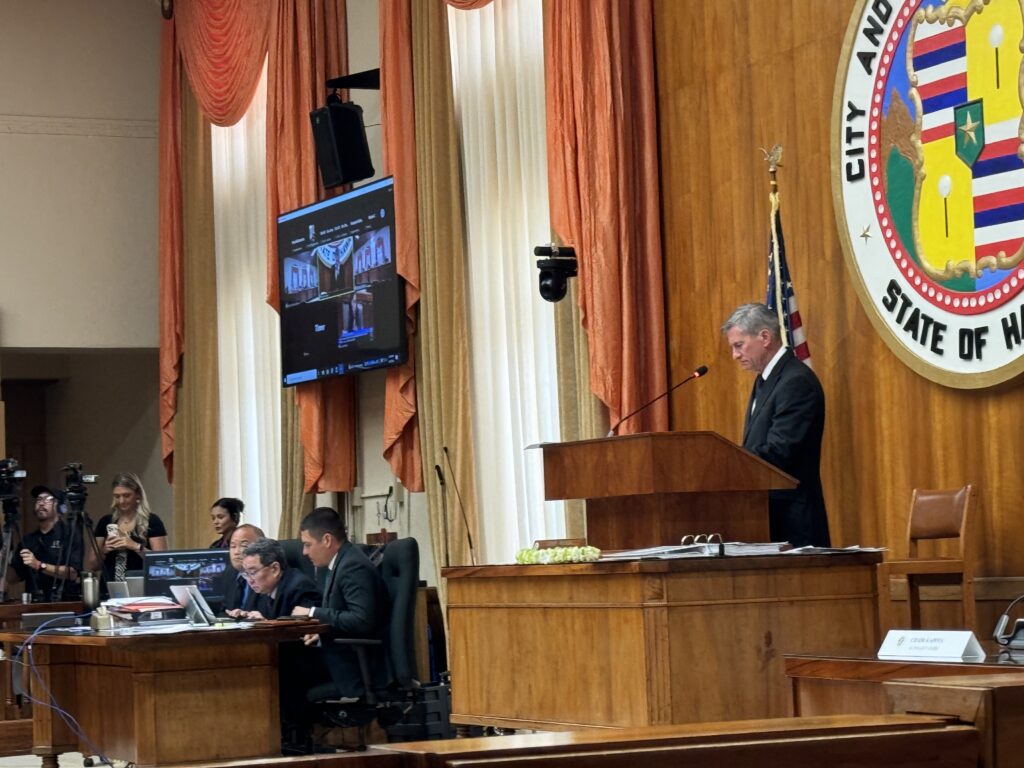
Council Chair Tommy Waters at the Honolulu Hale Chambers. Next to him is the Acting City Clerk Chadd Kadota.
The Council Chair said he would appeal after the ruling. There are obviously questions whether the Chair of the City Council set up his Eligibility question for his own personal gain. Chair Waters himself told the public he was testing the waters.
The pressure on an ACTING City Clerk Chadd Kadota to make the decision as to whether Waters is eligible or not for a Third Term must be tremendous. It’s the Honolulu City Council who does the hiring of this clerk position.
Besides the above controversy, Chair Waters’ intransigent push to diss the public on their 64% salary raise will stick negatively with his public record.
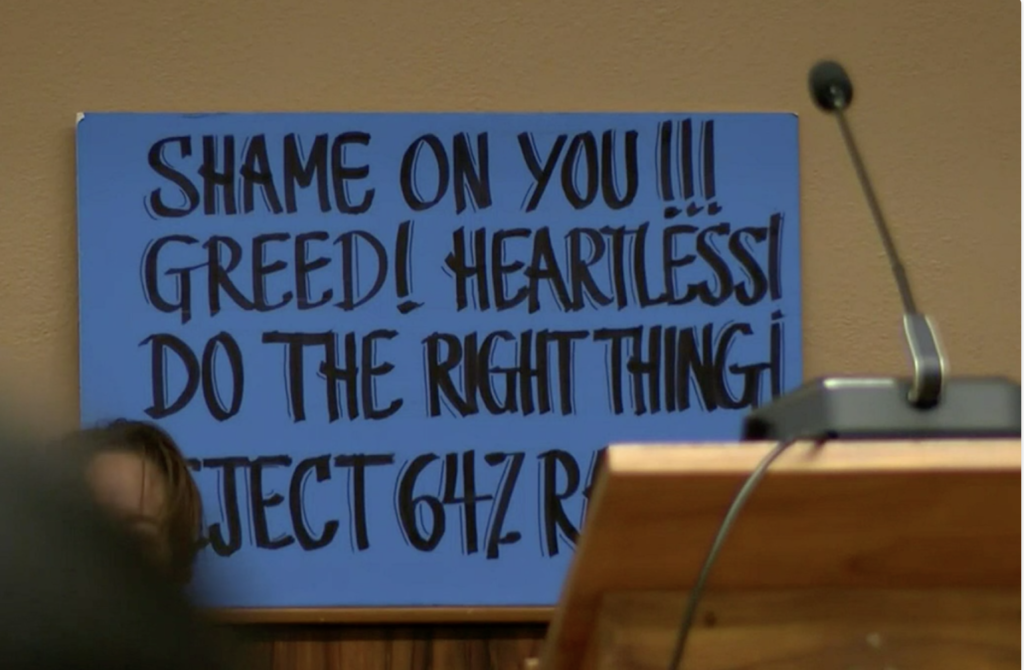
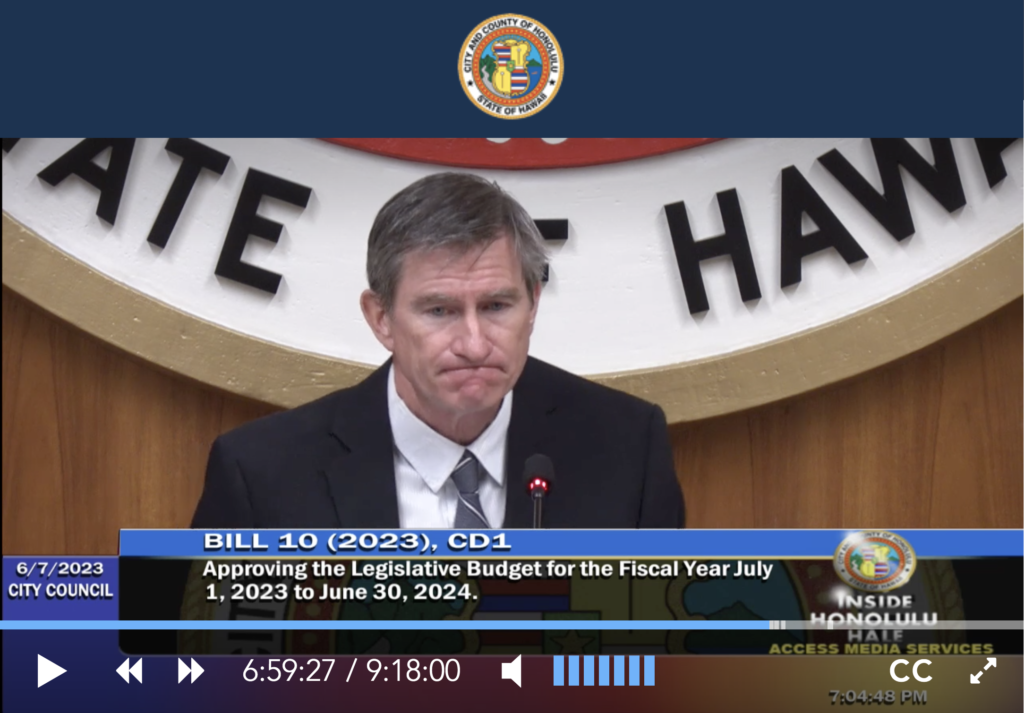
Tommy Waters’s most controversial action as the City Council Chair was to prevent a public participation by refusing to place on the council agenda relating to the infamous 64% salary increase in 2023 – – Scroll to 6:58 to watch the spirited pushback from the public.
After the intransigent approval, the city council Chair Waters, Esther Kia’aina, and others proceeded to adopt a charter question to remove themselves from making decisions on salary increases. Instead, the responsibility to approve salary raises now falls on the Honolulu Salary Commission, appointed by the City Council and Mayor. As of today, the cumulative salary increase has been 86%. There’s a lot the public can forgive, but this one will haunt Waters for a very long time.
Chair Waters has made “improvements” to the Council in various ways. The City Council website now prominently features the Council members. Look at his own promotion as Chair. This city-funded social media promotion has never been done before by other Council Chair.
It’s not clear whether a dedicated spokesperson for the Council is still in place. Of course, the question would be why would the City Council need a dedicated media spokesperson when the City Council member can hold their own. Each council already has about five full-time staff. Other support include the entire Council Services that cover professionals who provide legal drafting, research, budget analysis and so forth.
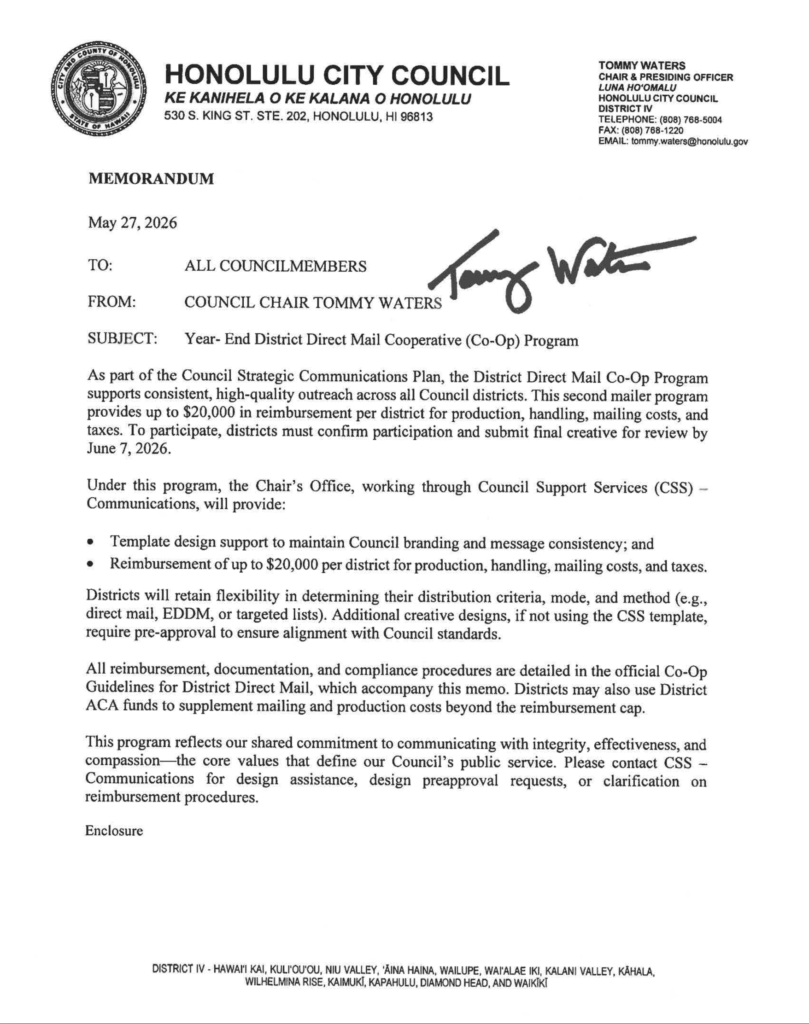
Another recent “improvement” is the additional available funds to support Council members in the name of “shared commitment to communicating with integrity, effectiveness, and compassion – the core values that defines our Council’s public service.“
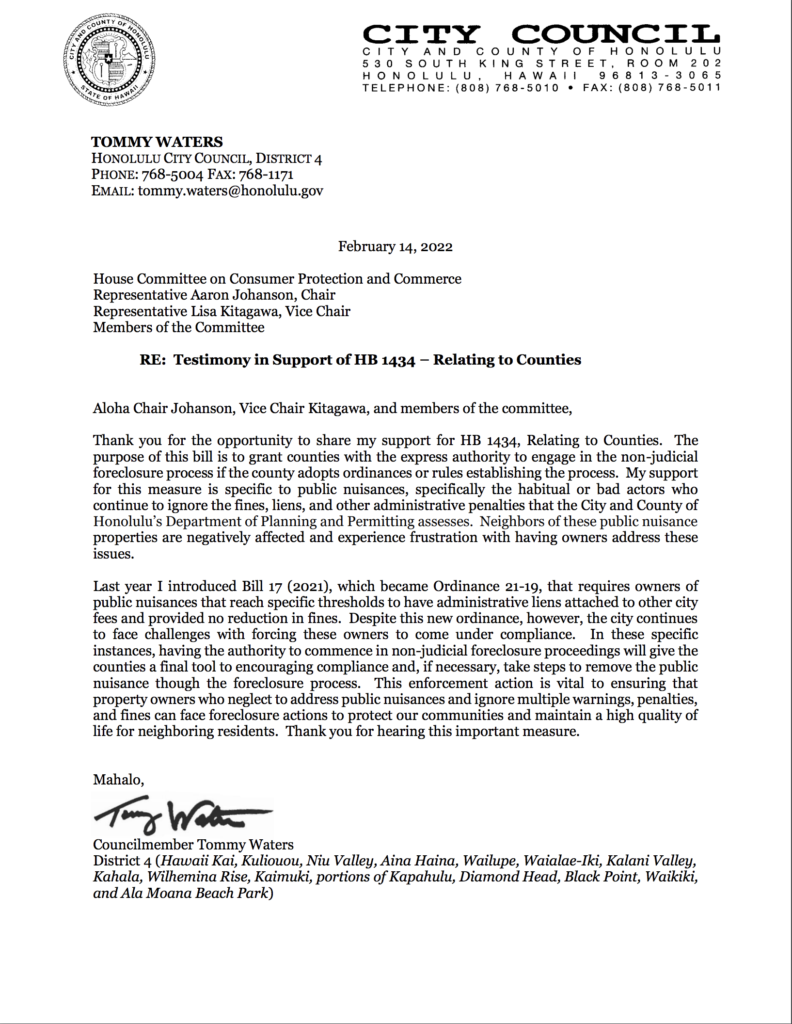
Yet, away from the public radar, Chair Waters has quietly promoted punitive measures without Due Process to the Public. Unbeknownst to the general public, HB 1434 submitted by Honolulu Mayor Rick Blangiardi (as a Mayoral Legislative Package to the State Legislature) was the beginning of a new agenda to deny Due Process to Hawaii. It’s ongoing since 2021.
The DPP Director and five Honolulu City Council Members also testified or submitted written testimony to the STATE Hawaii Legislature for new powers to seize property through NON-Judicial Foreclosure, due to DPP county fines. This is very concerning as he should know that the government is not always right and the public always wrong. Due Process is a fundamental right for a citizen. Such an over-reaching power should be made known to the Public.
This agenda is continuing.
Chair Waters is also known for his inconsistent management of time limit for Public Testimony at Honolulu Hale. Some testifiers are allowed to have more than ample time while he cuts off others.
Chair Tommy Waters has shown to be a politician with a punitive streak inside Honolulu Hale. As the Chair, he has the power to assign positions. He uses his power when loyalty to his agenda is tested.
My biggest concern as a citizen is the fact that the Council Chair has not questioned the Honolulu Rail aka Skyline budget each year. It bites a huge chunk of the city’s treasury every year. But, during this 2026-27 budget session, much more media attention and efforts were focused on the manini Office of Economic Revitalization (OER) than the extremely expensive white elephant at Honolulu Hale. Many in Oahu are hurting with the costs of living and yet not much is focused on this need.