Hawaii is vigorously protesting “NO KING – NO TYRANT – NO ICE ” to demand constitutional Due Process for all.
Yet, four (4) Hawaii State House Representatives – Sean Quinlan, Scott Matayoshi, Lisa Marten, and Ikaika Olds – have introduced House Bill 1861 aka HB29 to deny DUE Process to all Hawaii counties.
HB1861 (2026) authorizes counties to sell property through non-judicial foreclosure as a way to collect unpaid civil fines. Owners cannot go to court to explain or protect themselves. Period. Judicial Due Process is denied.
Yet, four (4) Hawaii State House Representatives – Sean Quinlan, Scott Matayoshi, Lisa Marten, and Ikaika Olds – have introduced House Bill 1861 aka HB29 to deny DUE Process to all Hawaii counties.
HB1861 (2026) authorizes counties to sell property through non-judicial foreclosure as a way to collect unpaid civil fines. Owners cannot go to court to explain or protect themselves. Period. Judicial Due Process is denied.
This stealth anti Due Process agenda has been happening for five years!
The Honolulu County Blangiardi Administration spear-headed this hamajang in 2021 through House Bill 1434 /Senate Bill 2110 – requesting a new NON-JUDICIAL Power of Sale based on the Department of Planning and Permitting (DPP) civil fines. The Mayor’s DPP Director testified that existing “Eminent Domain” was too slow, took manpower, and resources.
Can you trust the troubled DPP to be your Police, Prosecutor, Judge, Jury, and Executioner?
Look at Kalihi, Kamuki, Kailua, Kaneohe, Kahuku. Look at Waimanalo, Waianae, Wahiawa and Whitmore. What about Palolo, Mo’ili’ili, Sunset Beach, and Haleiwa? How many residents have turned their garages into extra living space or other additions to accommodate generational living or a little extra income to help pay for their mortgage? Is housing a huge problem in Hawaii?
This ill-thought unconstitutional bill will turn Hawaii’s private property owners and renters into perennial sitting ducks. The long arm of the government will be allowed to create a new source of revenue, bully, do political mischief, or issue violations at will that can morph into significant fines, ripe for non-judicial foreclosure.
Which legislator in 2026 would deny basic Constitutional Due Process Rights (through HB1861) as a “quick solution” to various issues some Counties have no will to manage.
No amount of contorted promises of “Due Process” through county appeals can justify this sweeping unconstitutional invasion and violation of Civil Rights to all Hawaii.
HB1861 aka HB29 is burning down a Cathedral to fry an egg.
Give Voice Now. Don’t complain AFTER-THE-FACT. Contact your legislators, Mayors, and City Councils. Elected legislators must stay inside the Constitutional Path for the Public Good.
Kill HB1861 hamajang!
Nothing good can come out by giving the long arm of government MORE new powers to control its people.
STATUS OF HB1861 ONLY Representatives Garcia, Gedeon, Pierick, Shimizu voting no. “Reservations is a YES vote.”
2/17/2026
H
Passed Second Reading as amended in HD 1 and referred to the committee(s) on JHA with Representative(s) Alcos, Amato, Matsumoto voting aye with reservations; Representative(s) Garcia, Gedeon, Pierick, Shimizu voting no (4) and Representative(s) Cochran, Lee, M., Poepoe excused (3).
2/17/2026
H
Reported from WAL (Stand. Com. Rep. No. 339-26) as amended in HD 1, recommending passage on Second Reading and referral to JHA.
2/10/2026
H
The committee on WAL recommend that the measure be PASSED, WITH AMENDMENTS. The votes were as follows: 7 Ayes: Representative(s) Hashem, Morikawa, Ichiyama, Woodson, Souza; Ayes with reservations: Representative(s) Belatti, Poepoe; 2 Noes: Representative(s) Iwamoto, Shimizu; and Excused: none.
2/6/2026
H
Bill scheduled to be heard by WAL on Tuesday, 02-10-26 9:00AM in House conference room 411 VIA VIDEOCONFERENCE.
1/26/2026
H
Referred to WAL, JHA, referral sheet 2 (FINANCE COMMITTEE IS DELETED in 2026. FINANCE COMMITTEE DEFERRED SIMILAR BILL HB29 in 2025.)
What is fascinating to me is it took an independent person to investigate and bring back boots in the ground reporting. None of the Corporate Media appear to be interested.
Another question we must ask ourselves is what is the fiduciary duty of an elected office, regardless of political affiliation.
REPOSTED HERE For Educational Purposes: Gov. Tim Walz Drops Re-election Bid, and Amy Klobuchar May Run Instead
Mr. Walz said a growing scandal over fraud in social services programs led him to abandon his run for a third term as governor of Minnesota.
Gov. Tim Walz of Minnesota said a widening scandal over fraud in social services programs in Minnesota had persuaded him to end his re-election bid.Credit…Jamie Kelter Davis for The New York Times
Tyler Pager and Reid J. Epstein reported from Washington, D.C., and Ernesto Londoño from St. Paul, Minn.
Jan. 5, 2026 Updated 1:28 p.m. ET
Gov. Tim Walz of Minnesota said on Monday that he was abandoning his bid for re-election to a third term. And Senator Amy Klobuchar, a fellow Democrat, is considering seeking the office, two people briefed on conversations between the two politicians said.
Mr. Walz and Ms. Klobuchar met on Sunday in Minnesota, where he informed her of his plans and she confirmed her interest in running to succeed him. For Mr. Walz, the Democratic nominee for vice president in the 2024 election, the departure caps a brief rise in national politics.
Mr. Walz said a widening scandal over fraud in social services programs in Minnesota had persuaded him to drop out of the race. He had been criticized for his administration’s oversight of the programs and its failure to prevent widespread fraud.
“I came to the conclusion that I can’t give a political campaign my all,” Mr. Walz said in a statement he read aloud during a news conference on Monday. “Every minute I spend defending my own political interests would be a minute I can’t spend defending the people of Minnesota against the criminals who prey on our generosity and the cynics who prey on our differences.”
Ms. Klobuchar did not respond to requests for comment on Monday morning.
Mr. Walz’s decision jolts a race that had drawn an unusually large and strong slate of Republican candidates, including the speaker of the Minnesota House, Lisa Demuth, and Mike Lindell, the chief executive of MyPillow and an ally of President Trump. Republicans have not won a statewide race in Minnesota since 2006, but they have expressed confidence that this year’s governor’s race would be different.
Democrats in the state had voiced concern in recent weeks that Mr. Walz’s presence on the ticket might hurt other Democrats in November.
Mr. Walz’s exit comes amid national scrutiny of his handling of the welfare fraud scandal, which Mr. Trump and other top Republicans have assailed him for in recent weeks.
A former public-school teacher who served in Congress for 12 years before becoming governor, Mr. Walz, 61, had signaled ambivalence last year about seeking a third term. During the summer, shortly before announcing he would run again, the governor said in an interview that he had been trying to gauge whether Minnesotans wanted him to stay in office.
“I think you need to think through: Well, do you have the ability to do the job? Have you done well?” Mr. Walz said, describing questions he was wrestling with.
In September, Mr. Walz announced that he did intend to run again. At the time, he said he was proud of a legacy that included passing numerous bills that pushed the state to the left in 2023, when Democrats had majorities in both chambers of the state legislature.
Soon after that announcement, the fraud scandal began dogging his candidacy.
Later that month, federal prosecutors announced that an investigation into fraud in a Covid-19 program meant to feed children had broadened to include other safety net programs administered by Mr. Walz’s administration. Federal prosecutors have asserted that as much as $9 billion may have been stolen over a period of years when Mr. Walz’s administration was overseeing state programs.
More than 90 people have been charged with felonies in the federal fraud cases to date and at least 60 have been convicted. The vast majority of defendants are of Somali origin, and many Republicans accused Mr. Walz and fellow Democrats of failing to respond forcefully to red flags about theft in state-run programs in part because Somali Americans are an influential voting bloc for Democrats.
Mr. Walz has called that accusation baseless but has acknowledged that fraud had become a pervasive problem in the state, and he announced a series of measures to improve oversight.
As the scandal continued to make national headlines, providing Republicans a powerful line of attack, Democrats began expressing worry that the scandal would hobble Mr. Walz’s campaign.
The leading Republicans running for governor have made combating fraud their signature issue.
“Even as we make progress in the fight against the fraudsters, we now see an organized group of political actors seeking to take advantage of the crisis,” Mr. Walz said in the statement announcing he was dropping out.
The Trump administration has repeatedly focused on the fraud scandal, and threatened to cut funding for Minnesota safety net programs, arguing that Democrats in the state could not be trusted to prevent taxpayer funds from being stolen.
Over the weekend, the White House announced that the Department of Justice was sending additional personnel and resources to Minnesota to “crush Minnesota’s fraud epidemic.”
“These complex criminal networks didn’t build themselves overnight on Tim Walz’s watch, and rooting them out completely requires thorough, methodical work to build cases that secure convictions and recover taxpayer dollars,” a statement from the White House said.
Interest in the fraud scandal grew in the past week, following a viral video created by Nick Shirley, a conservative content creator. In the video, Mr. Shirley purported to have exposed rampant fraud in government-subsidized day care centers run by Somalis in the Minneapolis area.
The video — which did not conclusively prove malfeasance — drew praise from top officials in the Trump administration and Minnesota Republicans.
On Monday, Republicans in the state suggested that they would continue to focus on the fraud issue even with Mr. Walz out of the race.
“Minnesota’s fraud epidemic extends well beyond any one individual,” said Harry Niska, a Republican state representative. “It is the result of nearly two decades of Democrat governors, backed by their legislative allies, creating a culture of complacency that has cost Minnesotans and their families billions of dollars.”
Ms. Klobuchar, 65, a former state prosecutor, has long held ambitions beyond her Senate seat. She ran in the 2020 Democratic presidential primary and has not given up her desire to hold executive office.
She has won each of her four Senate terms by at least 16 percentage points in a state that Democrats have controlled for more than a decade but often has close statewide elections. Should Ms. Klobuchar become the governor, she would appoint her own replacement who would serve until a special election is held to complete the remainder of her term, which ends in 2030.
Shortly after Mr. Walz’s announced he was suspending his campaign, Ms. Klobuchar praised him in a statement that did not shed light on her own plans.
“Governor Walz made the difficult decision to focus on his job and the challenges facing our state rather than campaigning and running for re-election,” Ms. Klobuchar said. “He has always dedicated his career to delivering for Minnesota.”
For Mr. Walz, the decision to forgo a third term puts a cap on a rapid rise from being a little-known Midwestern governor to his party’s vice-presidential nominee to someone mentioned as a potential top presidential candidate on his own.
Mr. Walz spent years carefully building his profile behind the scenes before he emerged as a potential running mate for Vice President Kamala Harris before she chose him last summer. But his turn on the national stage quickly turned rocky.
Questions emerged about inconsistencies in his personal biography. Democrats panned his debate performance, and Ms. Harris wrote in her campaign memoir that he wasn’t her first choice.
On Monday, his supporters said the governor’s decision exemplified Mr. Walz’s dedication to the state. Ken Martin, the chair of the Democratic National Committee, said, “Today’s decision is entirely consistent with who Tim is.”
Mr. Martin, who is from Minnesota and formerly served as the chairman of the state party, added, “Tim has always believed that leadership isn’t about preserving your own power — it’s about using it to make a difference for as many people as possible.”
Tyler Pager is a White House correspondent for The Times, covering President Trump and his administration.
Reid J. Epstein is a Times reporter covering campaigns and elections from Washington.
Ernesto Londoño is a Times reporter based in Minnesota, covering news in the Midwest and drug use and counternarcotics policy.
Best-kept secret is HB29 HD1 that is being quietly pushed through at the Hawaii State Legislature.
#HB29 is getting weirder by the minute. An attorney from Ashford & Wriston representing the Hawaii Bankers Association (HBA( testified that Hawaii already has a non-judicial foreclosure for delinquent mortgages, which is true. She cited the Hawaii Revised Statutes HRS 667 on foreclosure.
So, Chair #DavidTarnas said he would incorporate the bankers’ testimony into their HB29. amendment.
But, why? It doesn’t make sense. There is NO Mortgage involved. No private property owner applied or got a mortgage from the County.
We’re talking heavy smokes and mirrors, apples and oranges here. Expectedly, Bankers can force a NON-JUDICIAL foreclosure if a private property borrower does not pay. A property owner knowingly entered into a mortgage contract with promise to pay the bank.
But with this new POWER OF SALE HB29, it’s a forced “taking”. The County wants to sell a private property — based on a County civil fine — WITHOUT going to court. EVERY private property owner becomes a sitting duck.
This is really spooky. It exposes all private property owners to the whims of the government. HB29 HD1 is a fast lane to Tyranny.
Give voice. I testified that allowing the Counties Non-Judicial POWER OF SALE – – to sell private properties based on DPP’s civil fines WITHOUT going to court – – is unconstitutional and violates the 14th US Amendment. I asked if the public can trust DPP to be the POLICE, PROSECUTOR, JUDGE, JURY, & EXECUTIONER!
You can also see the Honolulu Department of Planning and Permitting’s reasons for wanting more easy Powers here. Dawn Takeuchi Apana‘s excuses for this quick Power of Sale are that their existing eminent domain power is too slow and costly and the city is short-staffed.
Do we really want to trust DPP who does not respect basic Constitutional Private Property Rights?
2/5/2025 H The committee on JHA recommend that the measure be PASSED, WITH AMENDMENTS. The votes were as follows: 9 Ayes: Representative(s) #Tarnas, #Poepoe, #Belatti, #Hashem, #Kahaloa, #Perruso, #Takayama, #Todd; Ayes with reservations: Representative(s) #Shimizu; 1 Noes: Representative(s) #Garcia; and 1 Excused: Representative(s) #Cochran.
1/31/2025 H Bill scheduled to be heard by JHA on Wednesday, 02-05-25 2:00PM in House conference room 325 VIA VIDEOCONFERENCE.
1/30/2025 H Passed Second Reading as amended in HD 1 and referred to the committee(s) on JHA with Representative(s) #Alcos, #Matsumoto, #Reyes Oda voting aye with reservations; Representative(s) #Garcia, #Muraoka, #Pierick voting no (3) and Representative(s) #Cochran, #Ward excused (2).
1/30/2025 H Reported from WAL (Stand. Com. Rep. No. 20) as amended in HD 1, recommending passage on Second Reading and referral to JHA.
1/28/2025 H The committee on WAL recommend that the measure be PASSED, WITH AMENDMENTS. The votes were as follows: 9 Ayes: Representative(s) #Hashem, #Lamosao, #Ichiyama, #Iwamoto, #Morikawa, #Poepoe, #Shimizu, #Souza; Ayes with reservations: Representative(s) #Belatti; Noes: none; and 1 Excused: Representative(s) #Woodson.
1/24/2025 H Bill scheduled to be heard by WAL on Tuesday, 01-28-25 9:00AM in House conference room 411 VIA VIDEOCONFERENCE.
In a world of Tic Tok and Instagram 30 seconds soundbites, here are some more reading for those of you who are interested in more information for this Elections.
Im sharing a few excerpts from various printed sources. Choon James for Mayor.
COMMUNITY ORGANIZATIONS/PRIOR OFFICES HELD
Oahu General Plan Working Group; Hawaii2050 Working Group; Koolauloa Sustainable Communities Advisory Planning Committee; Hospital board member; Defend Oahu Coalition–Keep the Country Country; Laniloa Point Community Association, president; Laie Community Association Board; BYU-Hawaii Alumni Association, president; BYU-Provo Alumni Board; Save Oahu Farmlands Alliance; Redhill Water Alliance; Hawaii’s Thousand Friends; Sierra Club; Amnesty International Freedom, writer; Olelo Community Media; CountryTalkStory.com; Friends of South Pass City; International Relief Society Women’s Organization; Young Women Group; Children’s Primary Organization, president; Aloha Council BSA, merit badge counselor; pro bono real estate advisor; immigrants volunteer tutor.
1. What’s the biggest issue facing the City and County of Honolulu and what will you do about it?
Oahu has an oligarchy that holds the power, money, opportunities and decision-making. Too many decisions are made against local residents’ best interests.
Residents are frustrated with the disconnect at City Hall. Property taxes escalated exponentially. Rail costs are out of control. Residents work two to three jobs. Seniors work to survive. Businesses and communities do not feel safe. I’m from Singapore and I know what a safe, clean, beautiful, efficient and thriving city is.
City Hall cannot be managed by social media narratives that the oligarchy wants us to hear.
3. In Hawaii, the term affordable housing has lost its meaning. What would you do to help people buy homes or move into rental units?
Change begins with questioning. How many billions of dollars has Oahu received from the federal, state, county and private funding for the past 10 years?
Is Oahu obligated to provide “housing” for every resident who comes here?
What is the definition of a “Hawaii resident”?
How “affordable” is “affordable”?
Short-term “bandage job” or long-term planning for housing?
Why is the “affordable” Kokua Hale building struggling to get renters in Chinatown?
The “Singapore Housing Model” is often quoted by politicians in Hawaii. Singapore has a Central Provident Fund for Education, Health and Housing. All employees pay into this fund. The Singapore government invests this fund and pays positive annual dividends.
Note that Singapore does not have lobbyists or developers or unions as their middleman in its housing agenda.
There is no one magic bullet to “affordable” housing. This is a worldwide problem. Oahu competes with international and out-of-state rich investors due to the U.S. Constitution.
I’ve been in residential real estate for over 30 years. There are preparations needed for qualifications into homeownership or rentals.
“Putting residents first” also means local building. Financial and real estate industries have first opportunities, not out of state, to help Oahu’s housing needs.
5. What should be the future of the Honolulu rail project? How do you to resolve this seemingly endless drain on public money and continuing delays? Should the line continue to Ala Moana as originally planned and how will you keep operating costs under control?
I’m from Singapore and appreciate its efficient rapid transit and related multi-modal transportation.
Rail needs a major re-assessment. As mayor, I will gather all stakeholders back to the roundtable. Independent contracts, legal, cost-analysis, engineering, budget experts and others will be invited. The public will have its say.
There are no sacred cows. No hiding behind or blaming FTA. I have zero donations from lobbyists or PACs. I can be 100% independent.
No managing Skyline through public relations handlers and insulting the public intelligence.
Natalie Iwasa, CPA and certified fraud examiner, and I have been at this for decades. We know what’s going on.
One tragic part of this boondoggle is Oahu can develop “transit-oriented developments” (TOD) without this fiscal black hole.
The city can create “special districts” for developments. Our local construction and building industries can benefit more without this financial albatross and without losing contracts to foreign players.
Oahu cares about climate crisis issues. But the inconvenient information — portions of the route from Middle Street to Ala Moana Center are in the Honolulu sea level rise inundation zone — is ignored. Why?
Oahu needs transformative leadership for our residents first. Our children must not suffer for our mistakes. Let’s work together.
What should be done to improve policing and police accountability in Honolulu? Should oversight of the police department be strengthened or reformed?
We love our HPD and other emergency personnel. We cannot pay them and their families enough for their public service. These warriors put their life on the line for public tranquility and peace for our communities. They deserve gratitude and respect.
We want our HPD and other emergency personnel to return home in peace each time they step out of their door.
We must provide them with all the resources and training needed. There can be bad apples in every organization. We must deal fairly and legally with alleged wrongdoing with the Police Commission and SHOPO. We all want to protect and safeguard the public trust in these institutions. No corruption can be tolerated.
Oversight and reform is a constant. We must always assess and improve.
This includes working with the prosecution side. The revolving door between crime, arrest and release is frustrating the public and HPD to no end.
Additionally, we must always focus on root causes of crime and other unrest for preventative measures. Residents, businesses and visitors deserve a safe environment. We must all work together to ensure a safe, prosperous and thriving Oahu. We can.
It’s becoming increasingly difficult to fill vacancies on the police department, the parks department and in many other city agencies. The city is struggling to provide basic services. What would you do to solve this problem and attract qualified people to fill essential services?
I’ve been advocating for public interest at Honolulu Hale for over 20 years.
This “vacancies” angst has been a constant concern all this time. On the other hand, residents say they don’t get a response or they can’t seem to get an interview.
It’s our 10,000 workers who keep the city in operation. The mayor provides the direction and culture. The mayor could be on vacation and not be missed.
I will always be respectful of all our city employees. I will always support them in their efforts to make Oahu a safe and efficient place. My door will always be open to their ideas and concerns.
The pay and benefits package is a big consideration. The culture and working conditions are also important.
Over $712 million is earmarked for the Honolulu rail this Fiscal 2025. Imagine when we can contain the rail costs and take care of our employees better.
I’m originally from Singapore and I appreciate efficient multi-modal transportation.
My trusted friend Natalie Iwasa, CPA and Certified Fraud Examiner, and I have been participating and observing City Hall for the last two decades. We know the good, the bad and the ugly.
We must stop the social media games and be honest with the Public.
Status Quo will not cut it.
The Rail Skyline is out of control.
If we do not control and reset these project costs, our children will pay for today’s mistakes.
As Mayor, I will do the following:
Every one is coming from a good place. I will gather all stakeholders, including City Council and HART back to the round table to analyze this project. INDEPENDENT experts in contracts, legal, costs-analysis, engineering, budget, environment, cultural, and others will be invited.
The public will have its say in this much needed reassessment.
Should HART be dissolved?
Should Rail Skyline be under the Transportation Department?
There will be no sacred cows; no tail wagging the dogs. There will be no hiding behind or blaming the FTA. FTA is not the monster or the Wizard of Oz behind the curtains. FTA is here to help and respect State Rights.
There should be no managing Rail Skyline through Public Relations handlers and insulting the Public Intelligence from the Mayor’s Office.
I have zero donations from lobbyists or PACs. I can be 100% independent to question the project with independent industry experts.
Together with all stakeholders and Oahu residents, we can decide the most pragmatic solutions for Oahu.
This project started in 2006 at the price tag of $2.7 BILLION. It’s filled with gross mishaps and mismanagement. The price tag is now around $12 BILLION and incomplete.
We must stop social media games and be honest with the Public. Status Quo will not cut it. The Rail Skyline is out of control. The Maintenance & Operations costs are unclear. If we do not control and reset these project costs, our children will pay for today’s mistakes.
My trusted friend Natalie Iwasa, CPA and Certified Fraud Examiner, and I have been participating and observing City Hall for the last two decades. We know the good, the bad and the ugly.
The 2012 Porter Report warned the city that it could not support both the Rail and its core services. The city ignores these warnings but continue to engage a “sunk-costs” Status Quo.
Mayor Blangiardi does not tell you that over $712 million was approved for Rail for 2025 city budget. Every year, big chunks of money are eaten up by rail but the Mayor has not told you about it, has he?
Portions of the Rail from Middle Street to Ala Moana Center is in the Honolulu Sea Level Rise Inundation Zone.
Why are we ignoring the City’s own data?
Why is the city throwing hundreds of millions ( and billions) of dollars into this without further consideration?
Despite overwhelming public testimony against this rushed and disjointed Land-Use sea-change from the most affected residents in Hawaii, the legislators quickly adopted this zoning to increase density for ALL Hawaii counties.
This was a last-minute attempt to disclose to the public about this Bill.
SOCIAL MEDIA’S FAST & EASY FALLACIES APPROACH TO PUBLIC POLICIES:
On the other hand, there was social media by interest groups circulated to those who hope for “affordable housing.” Share whatever is in your mind. No vetting needed. Ah! Creating a seismic land-use change is so simple; you do not consider all the multiplier impacts on Hawaii residents. Who cares about inviting more real estate speculators and investors to compete with local residents?
Interesting, I was warned by a California land-use planner about the trend to decimate single family and it was coming to Hawaii soon. That was about five years ago.
California pushed it and here is the recent court answer to rouge legislators who squashed single-family zoning.
April 29, 2024 3 AM PT
” A Los Angeles County Superior Court judge has ruled that a landmark law ending single-family-home-only zoning in California is unconstitutional, a decision that could lead to the law being invalidated in the state’s largest cities.
Judge Curtis Kin determined that Senate Bill 9 does not provide housing restricted for low-income residents and therefore cannot override state constitutional protections afforded to local zoning practices.”
CHATTER CIRCULATING AROUND
There was chatter circulating that increasing the density will pass. Rumors were circulating around that Senator Brian Schatz has met with local politicians and every one should fall in line for this “progressive” idea.
Senator Stanley Change and House Representative Luke Evlslin championed this process.
BACK TO TODAY AT THE STATE CAPITOL:
Scroll to 5:03 video of today’s hearing at the House of Representatives. (By the way, these hearings do not appear on the Olelo Public Access Television anymore. It’s on the Capitol’s own channel that requires ONLINE capabilities. Many residents, especially the kupuna sector, are not connected.)
April 26, 2024, the Committee Report said it has a FULL & FREE discussion. But it doesn’t say that the merits and the demerits were fully and freely discussed and analyzed.
Hawaii Residents should not have to spend time trying to explain and convince the decision makers that SB3202 is problematic and deficient.
Lawmakers must disclose such seismic land-use hijacking to their most-affected constituents first. So far, it’s been a well-kept secret. But the rush is on to adopt this bill.
This STATE bill subverts COUNTY HOME RULE. It’s the Counties which manage and enforce the Land-Use Comprehensive Plans or Community Plans and so on. These plans requires public hearings and public participation. These processes take months and years.
Senator Stanley Chang from Oahu and Representative Luke Evslin sponsored SB3202 and HB1630. They expect to adopt this within four short months with hardly any public participation or disclosures. They’re both on the ballot this year.
Long-story short, the bills upends Hawaii’s residential landed properties zoned Residential 3.5, Residential 5, Residential 7.5, Residential 10, Country in the name of “affordable housing” :
To allow a dwelling on every 2,000 square feet of land.
To allow subdivision of these 2,000 square feet of land.
It’s that “simple”. If they are allowed to subdivide and build, they can “keep families together” and fill the “missingMiddle” gap, so the supporters say.
Read the written testimonies submitted by the usual development lobbyists, non-profits, building industries and related commerce. The supporters this time around included Real Estate Escrow Company, a Aloha Shirt Company and so on. It’s a view into who’s connected to who in Hawaii.
When a small segment of the public caught wind of it, there are more opinions from the frontline and the most affected. It’s interesting to scroll down. There are some very thoughtful insights and warnings. But they do not appear to cause some legislators to pause and think deeper.
This is the video of the April 1, 2024 hearing on SB3202. It’s understandable to expect special interests lobby for their own industry or personal interests.
But it’s alarming to see those in public offices not thoughtfully and dutifully represent the public interests i.e. Hawaii’s residents.
One example: Scroll to 1:49 to listen for a few minutes to this Hawaii County Planner. He obviously disses the elected Hawaii County Council but claims “I’m very much a Home Rule guy.” Who hired this guy?
There is whole lot more to discuss. But here’s an extremely brief poster about SB3202. It’s alarming that taxpayers will always be responsible for crappy malfeasance if the legislators push this Bill through on May 1, 2024.
I urge you to speak up. You have to protect yourself and your own future in Hawaii.
EMAIL and tell them your opinions. Or simply say “OPPOSE HAMMAJANG SB3202”.
Facebook posts don’t have to be about just about food and events. I thought this was a very helpful share from a friend.
Hawaii has morphed into a very expensive place to live with the average price of a single family at $1M. There are more Hawaiians living out of Hawaii than here. There are a lot of frustrations and angst, and rightly so.
Perhaps the saddest thing I’ve heard from my years of community advocacy is this phrase from a Hawaiian: ” You can go home to your homeland but we have no place to return to. This is our homeland.”
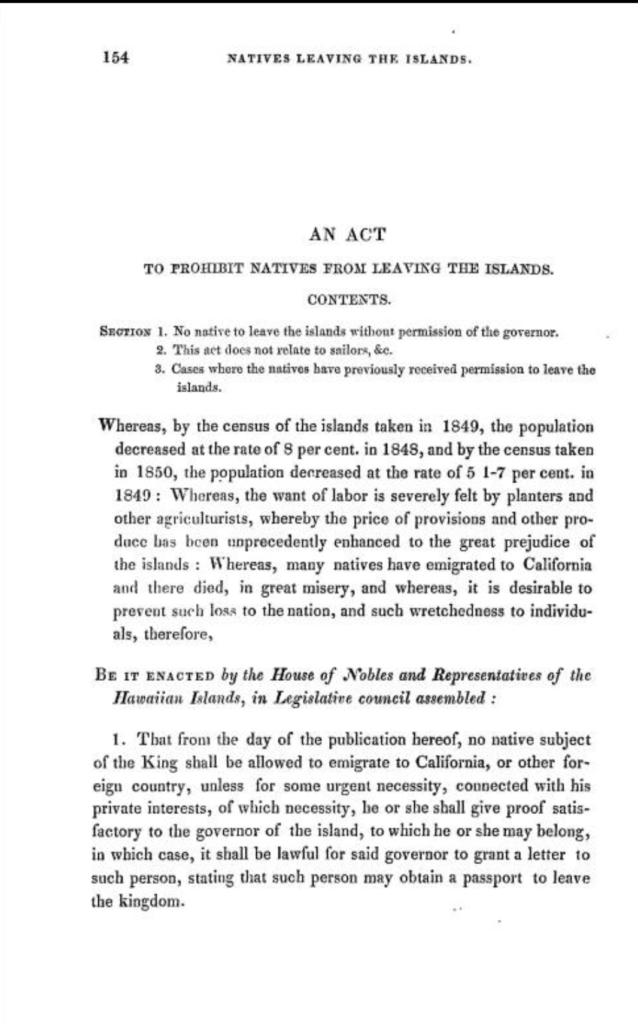
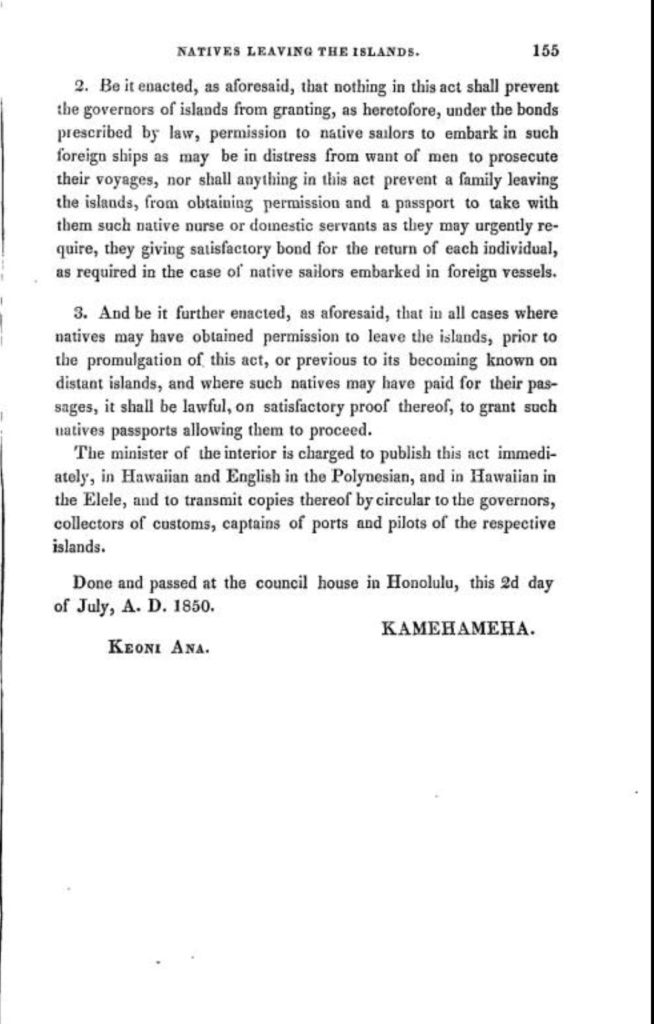
” While looking for something else, I came across this law from 1850, prohibiting natives from leaving Hawai’i due to a concern of population loss. It puts into perspective the recent discussions on the exact same issue.” Jonathan Scheuer