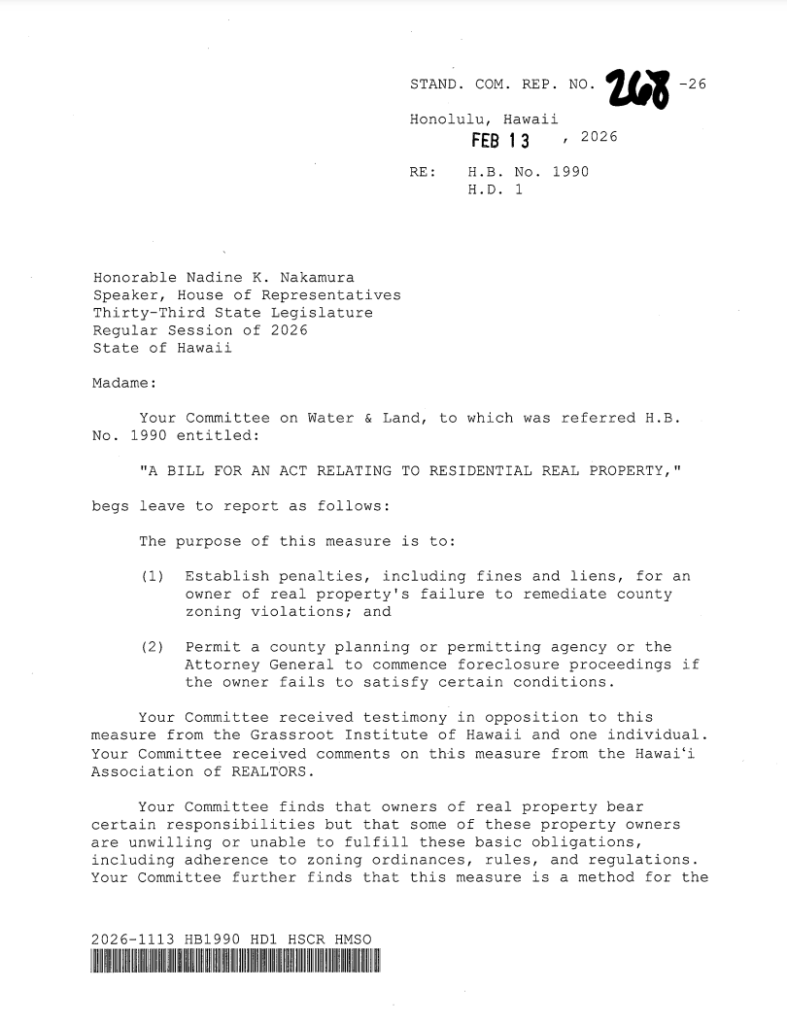
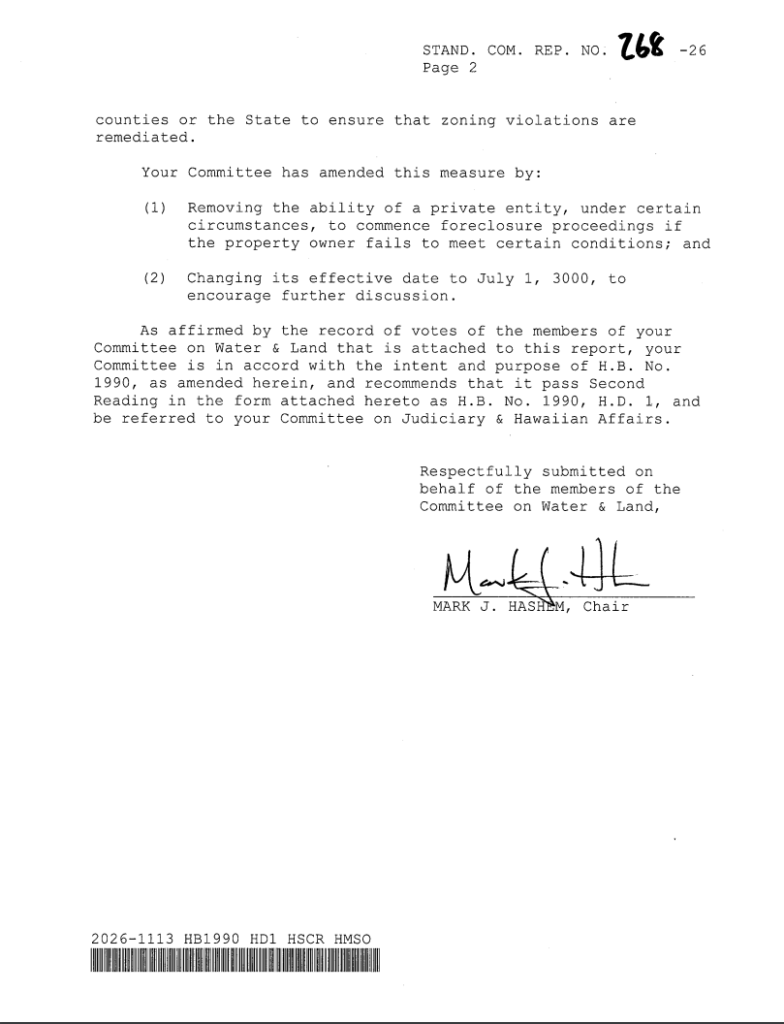
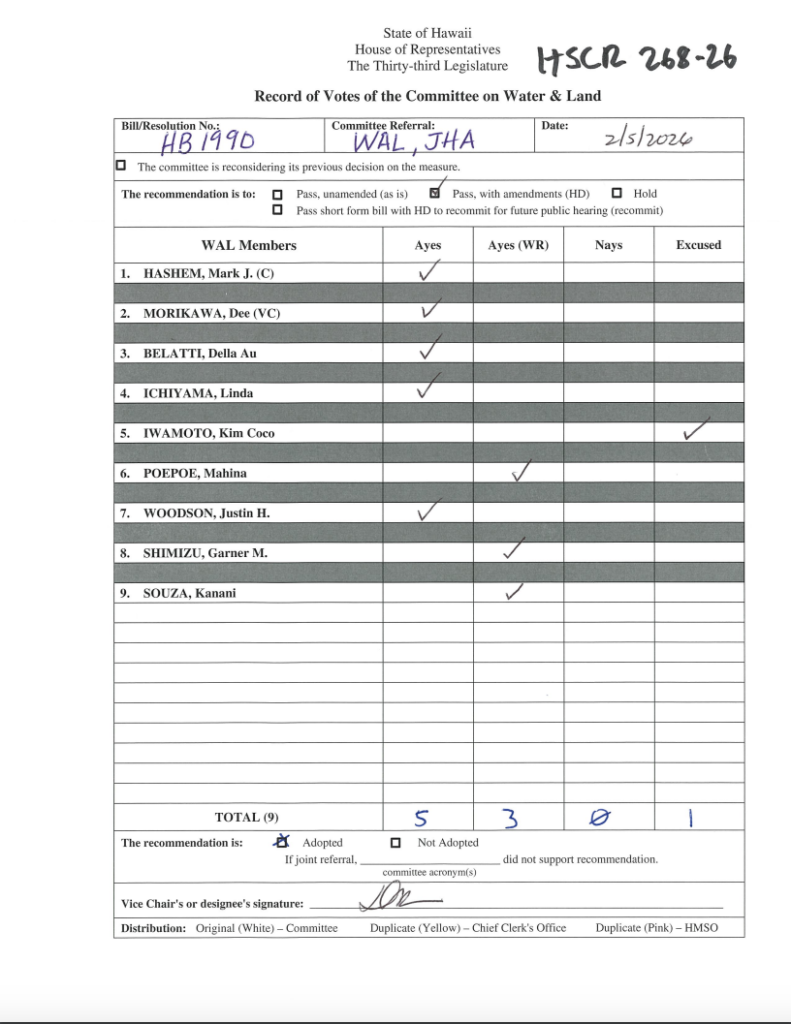
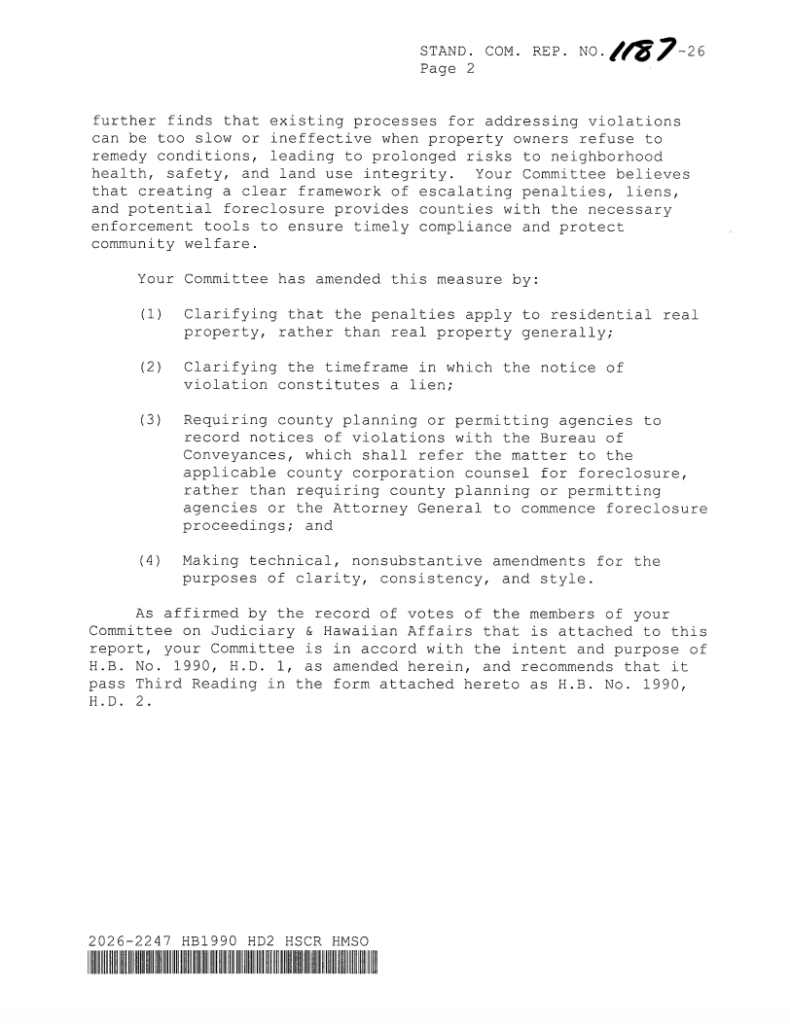
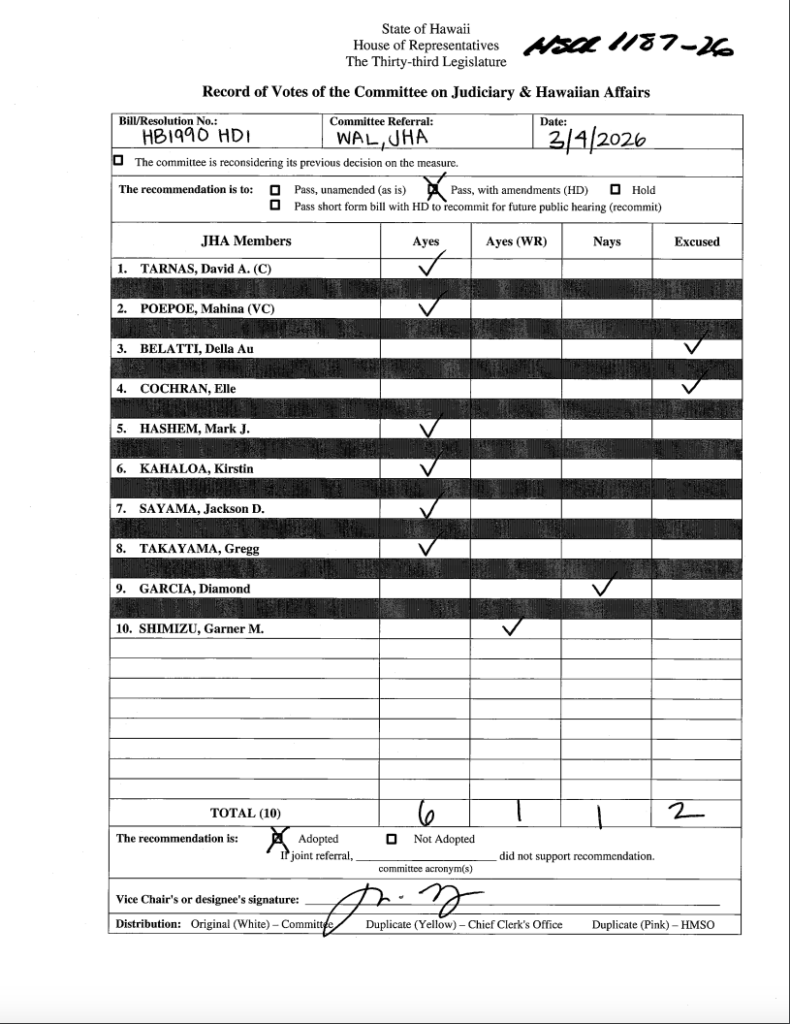
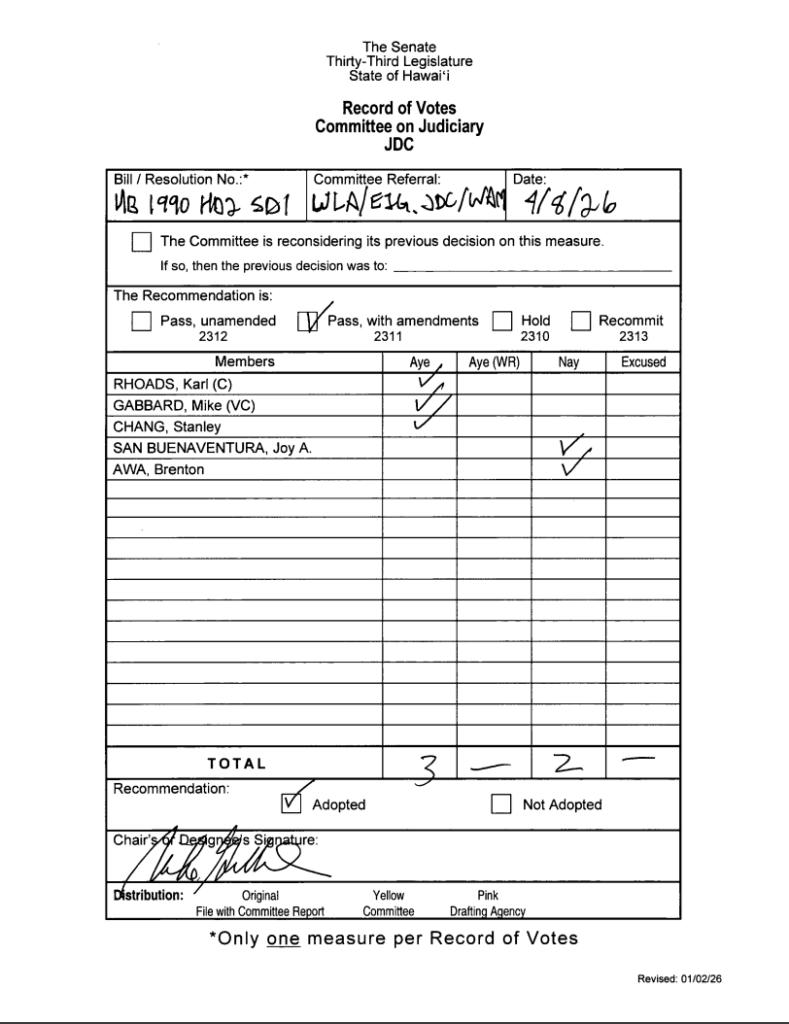
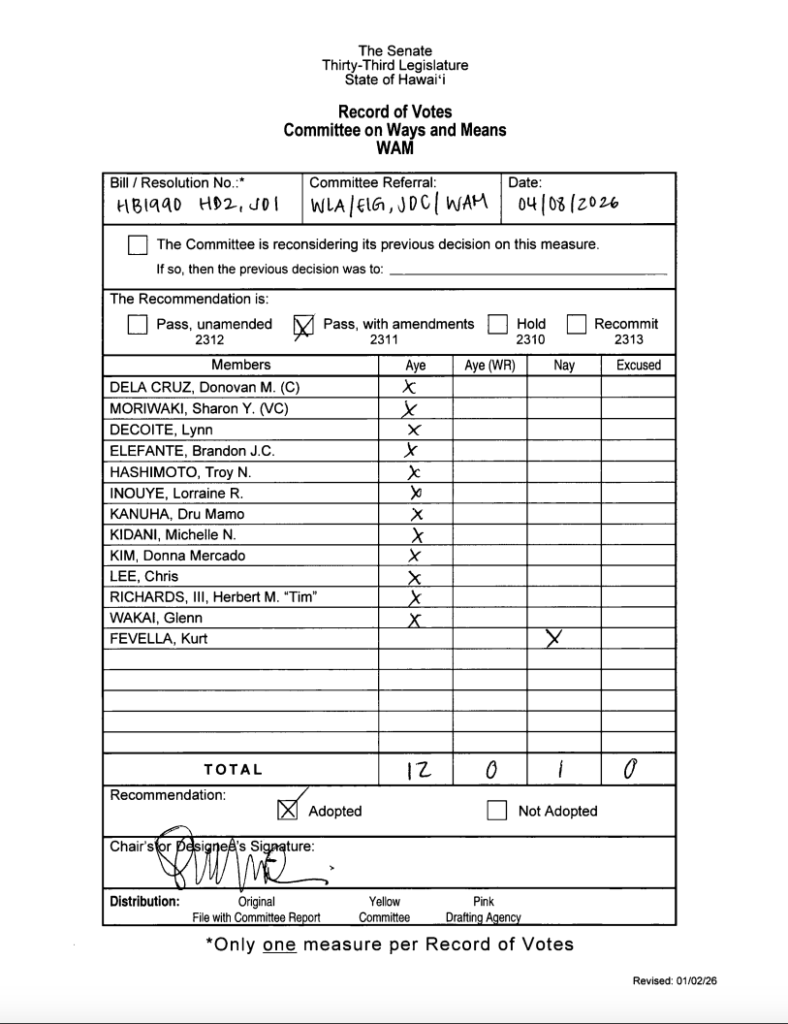
SENATE JUDICIARY and WAYS & MEANS COMMITTEES’ VOTING RECORD.
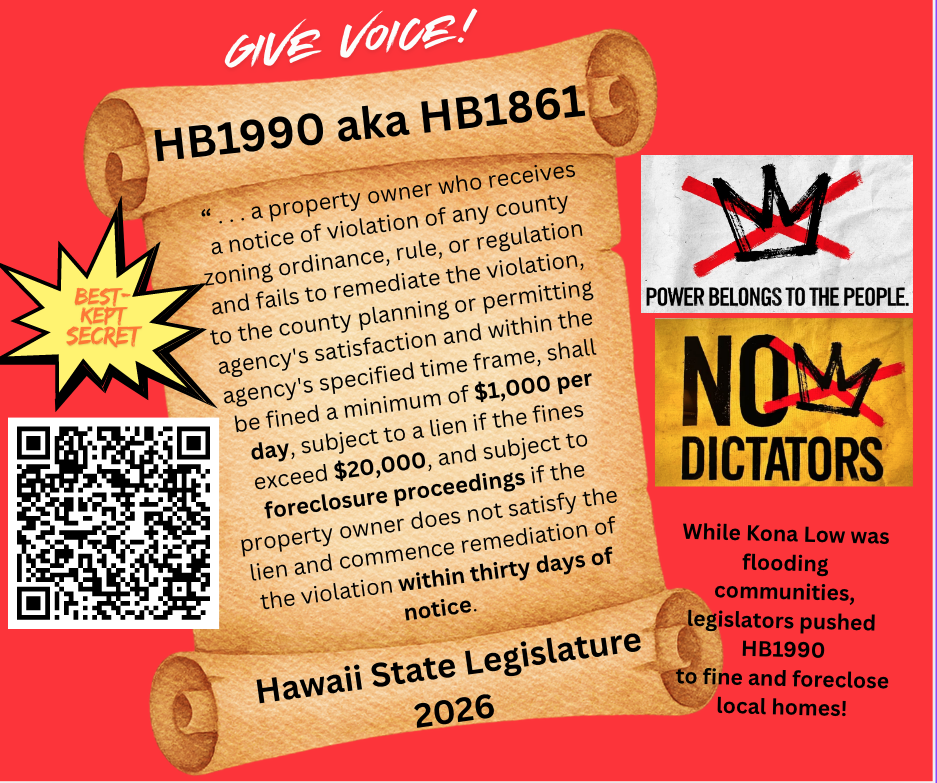
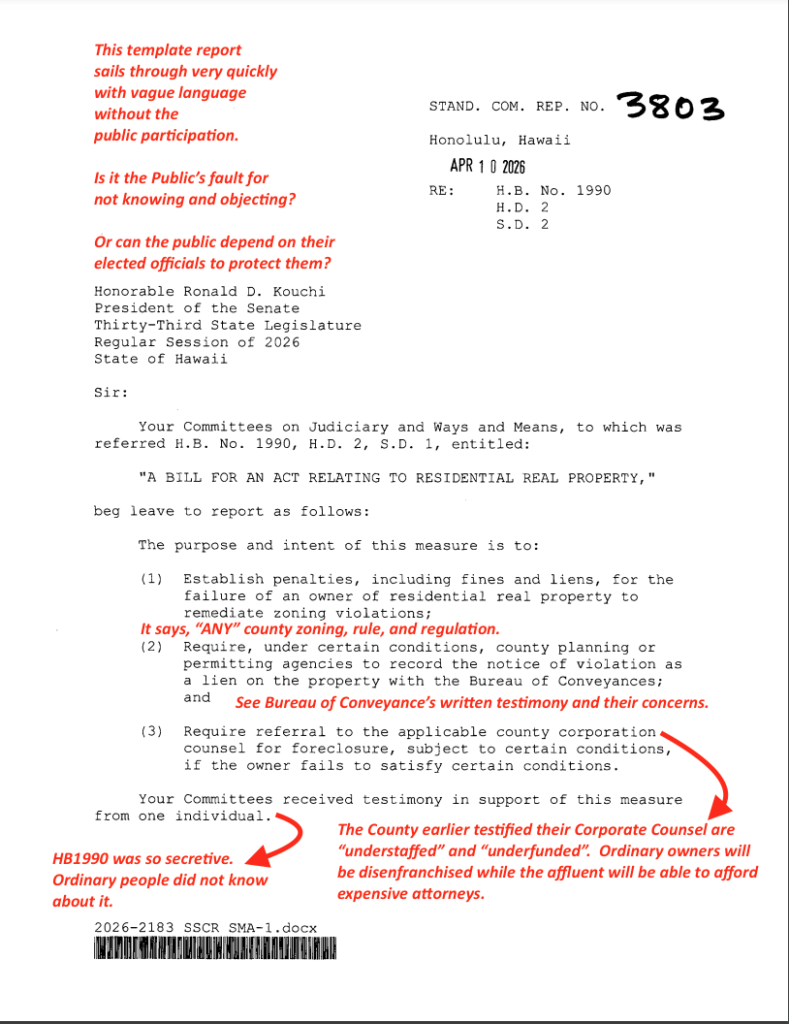
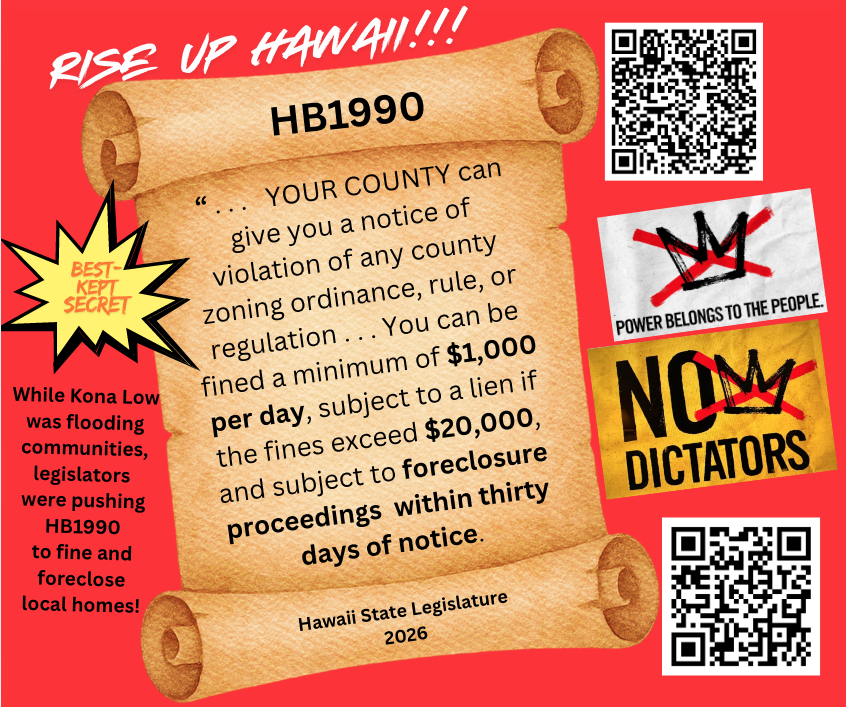
This was a very secretive Bill. While Hawaii was trying to handle the Kona Low flooding and storms, this Bill was sailing through without public knowledge until at the end.
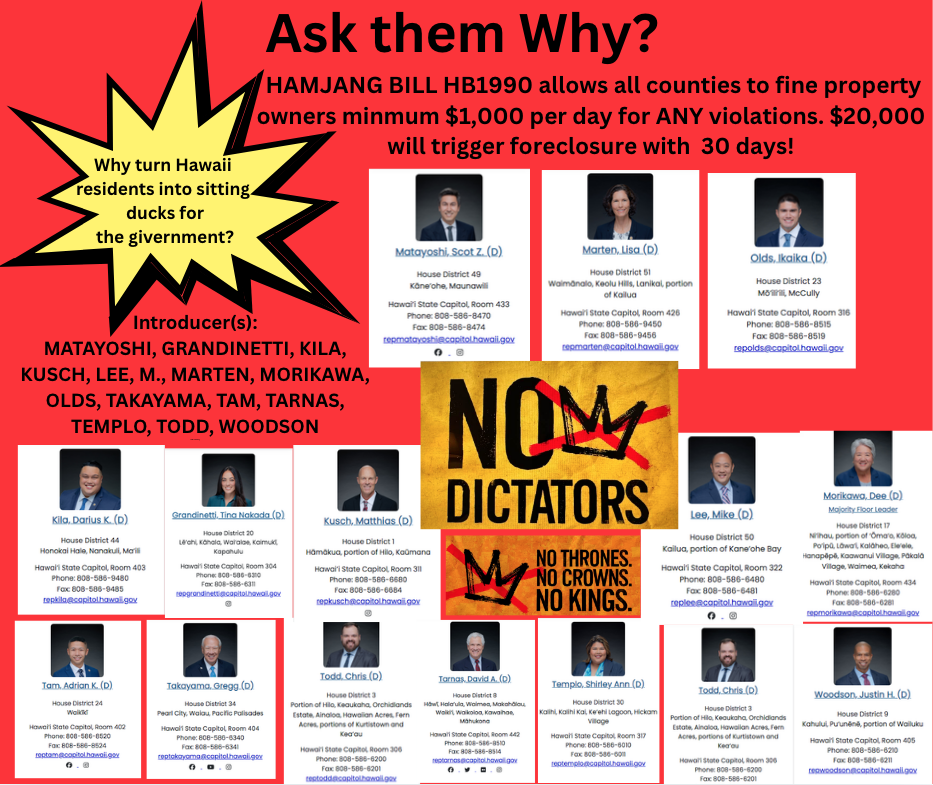
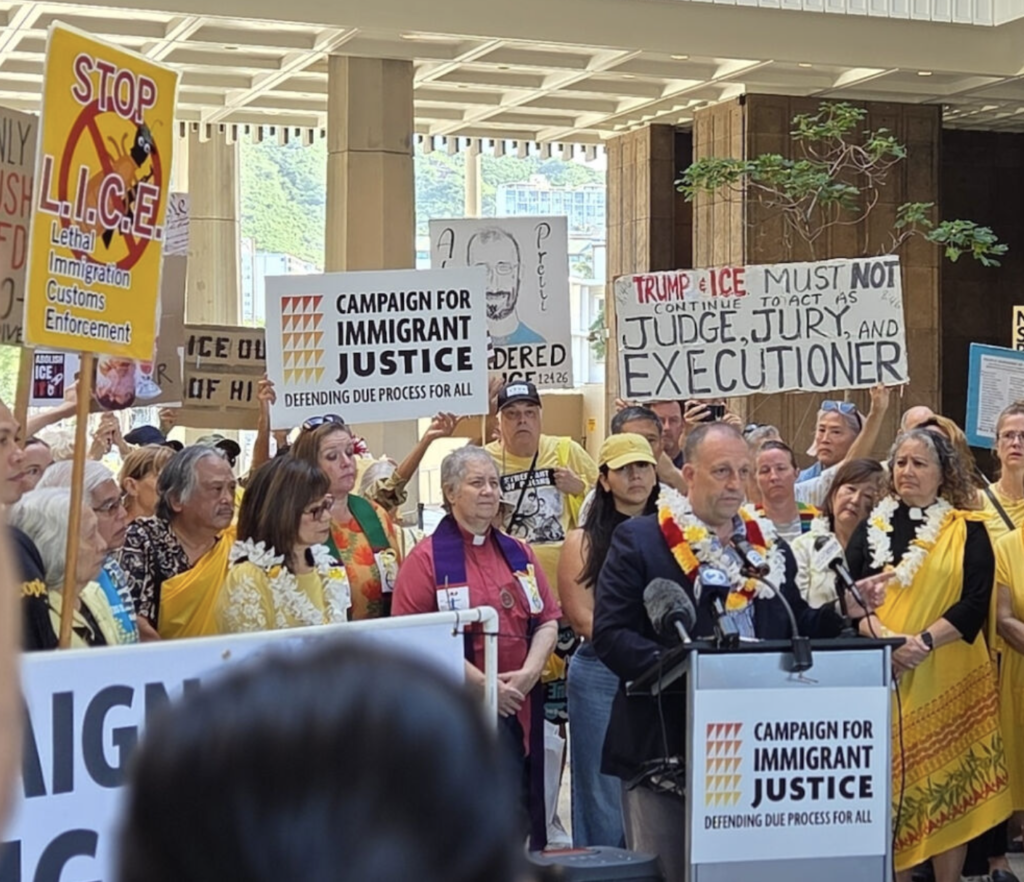
Hawaii was protesting “NO KING” “NO TYRANT” “NO DICTATOR” OUTSIDE the State Capitol while legislators INSIDE the Capitol were passing these tyrannical bills.
Typically, an ordinary person does not have the time to participate. Most people who are at these sessions are lobbyists, bureaucrats, interest groups, and corporations. The procedures are also foreign to most citizens.
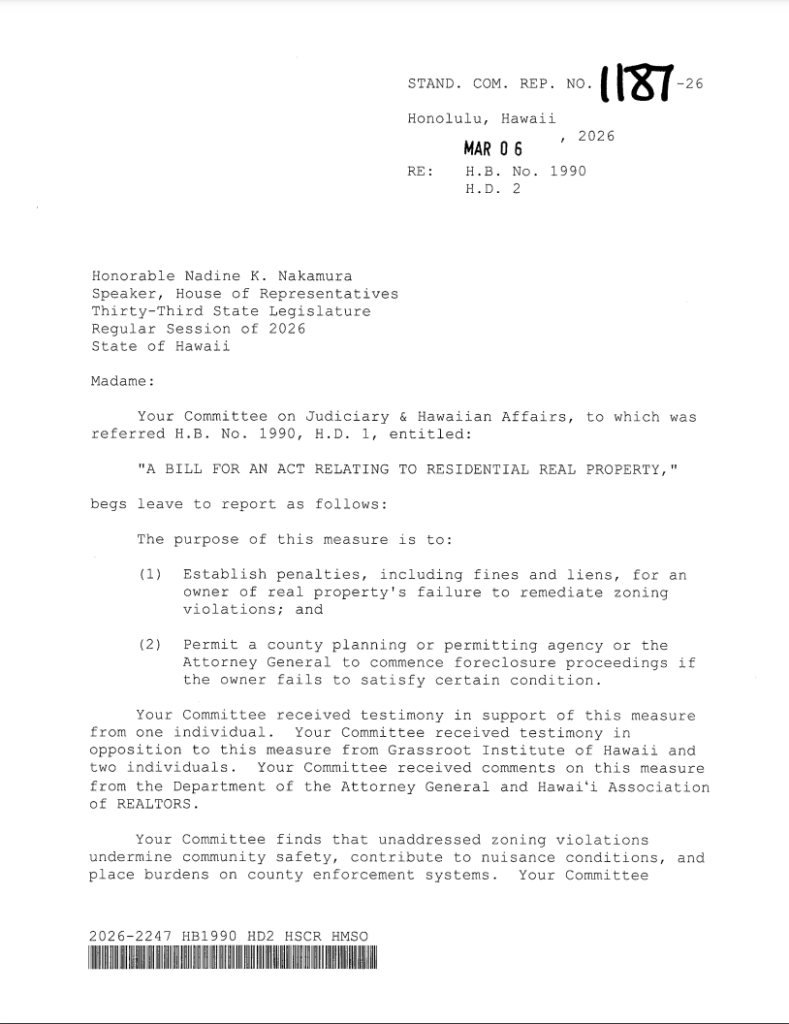
Hawaii SENATE Judiciary Committee and Ways and Mean Committee Report to the Senate President.
What is the intent of these quickie tyrannical Power of Sale and Foreclosure Sale?
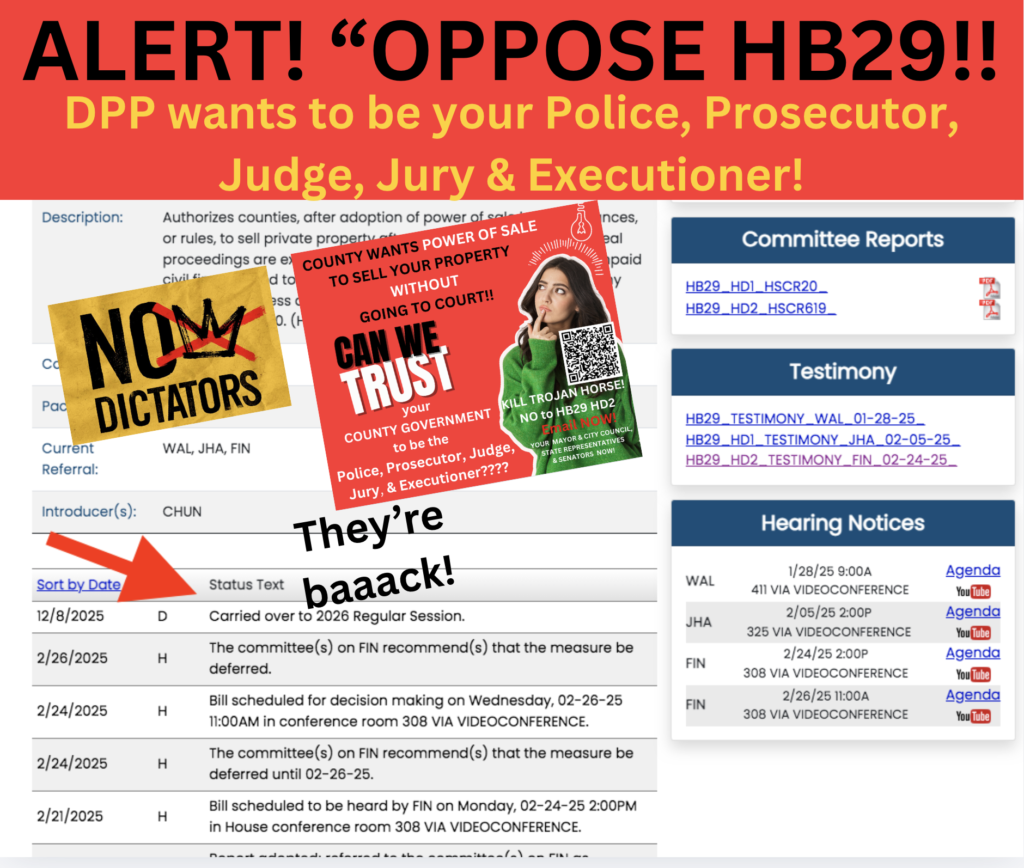
Hawaii Legislators want to remove DUE PROCESS from Private Property Rights through HB1861 aka HB29. New NON-Judicial Power of Sale to seize private properties based on county fines. No court. Just Non-Judicial Foreclosure.
On the other hand, Democratic Party affiliated protesters organized nation-wide civic resistance – “No Dictators” protests against the Trump administration’s policies relating to civil rights, Due Process and democracy in October, 2025.
Such rallies were held the Hawaii State Capitol and neighbor islands including Hilo, Waimea, Kona, and Kahului.
I
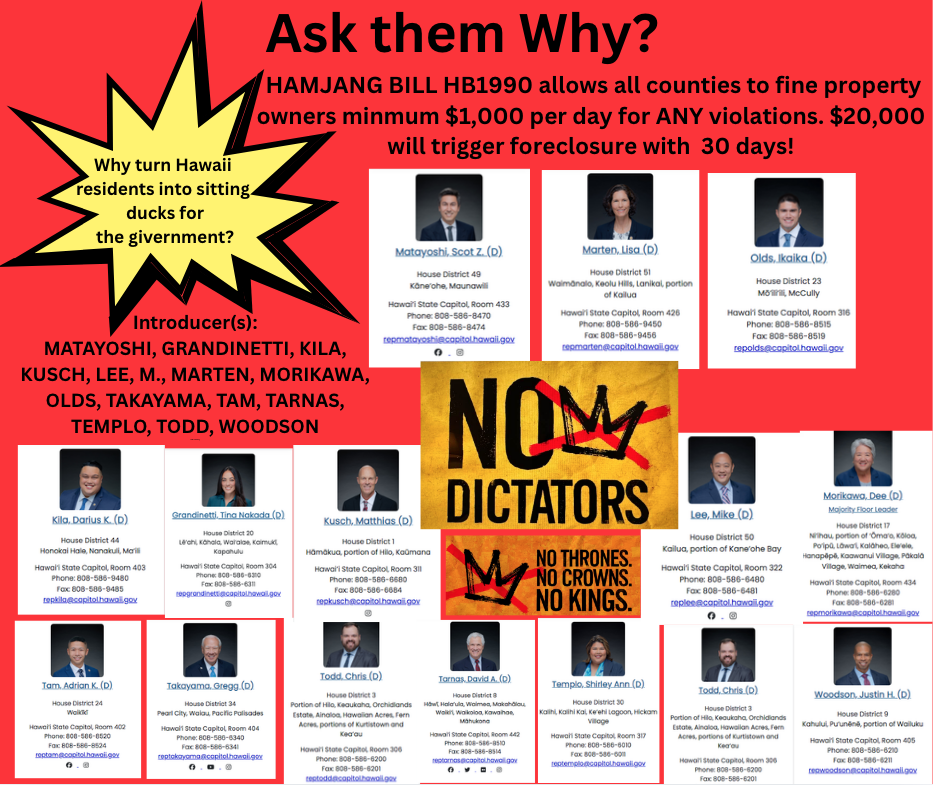
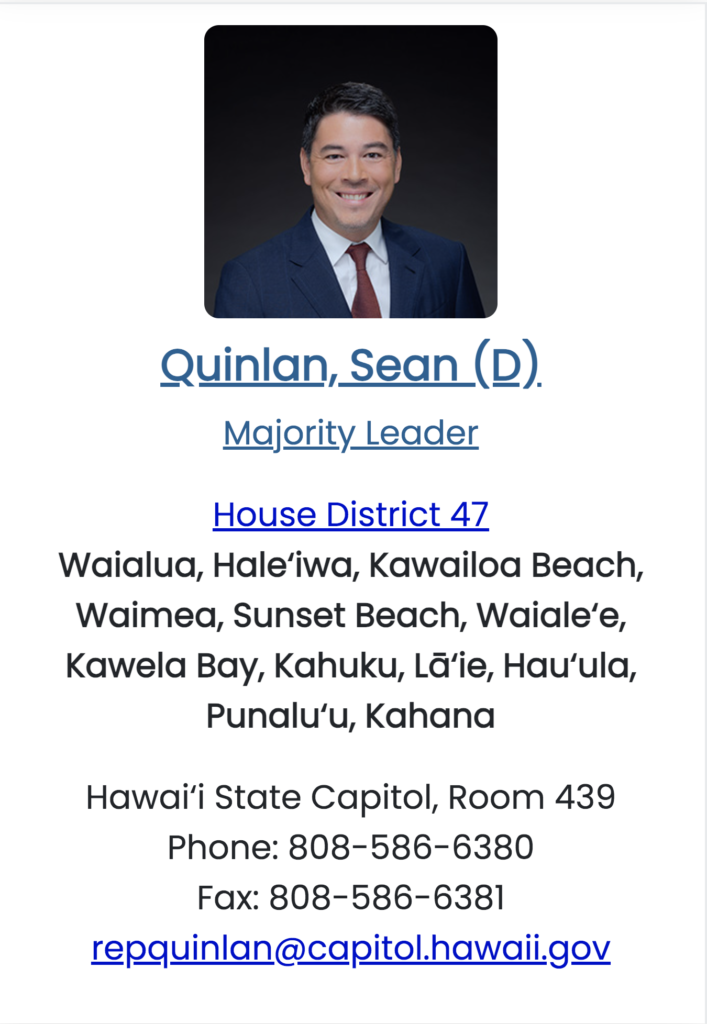
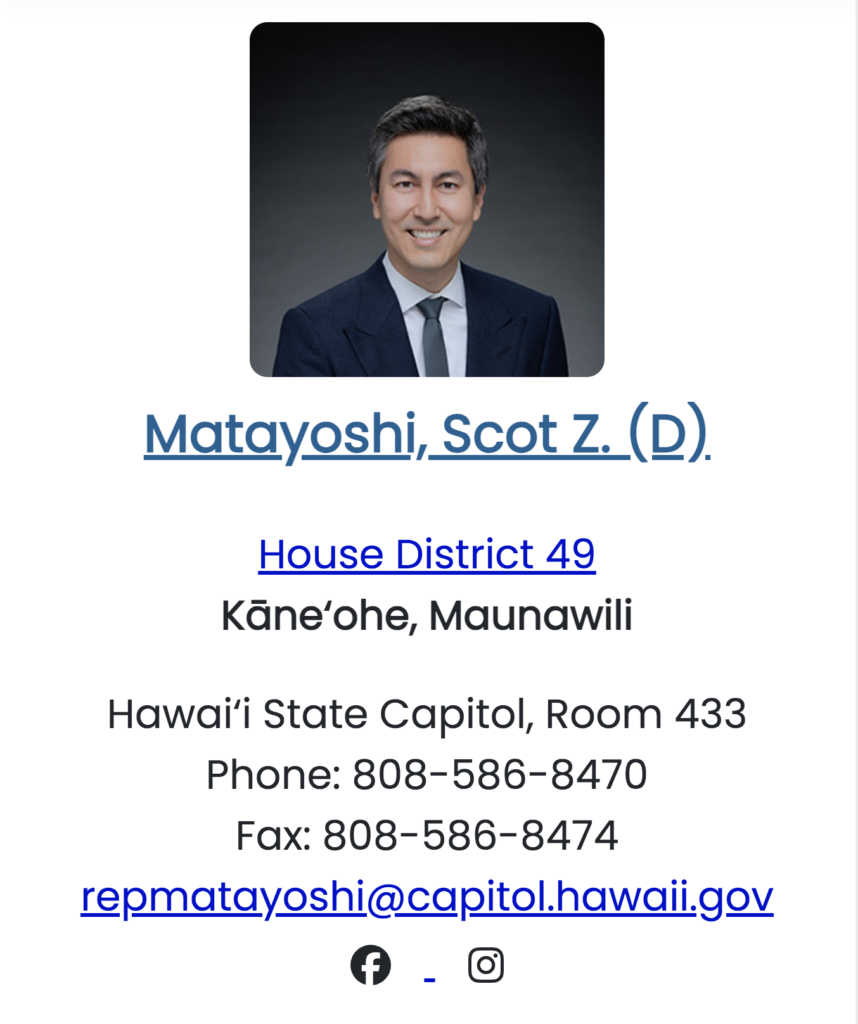
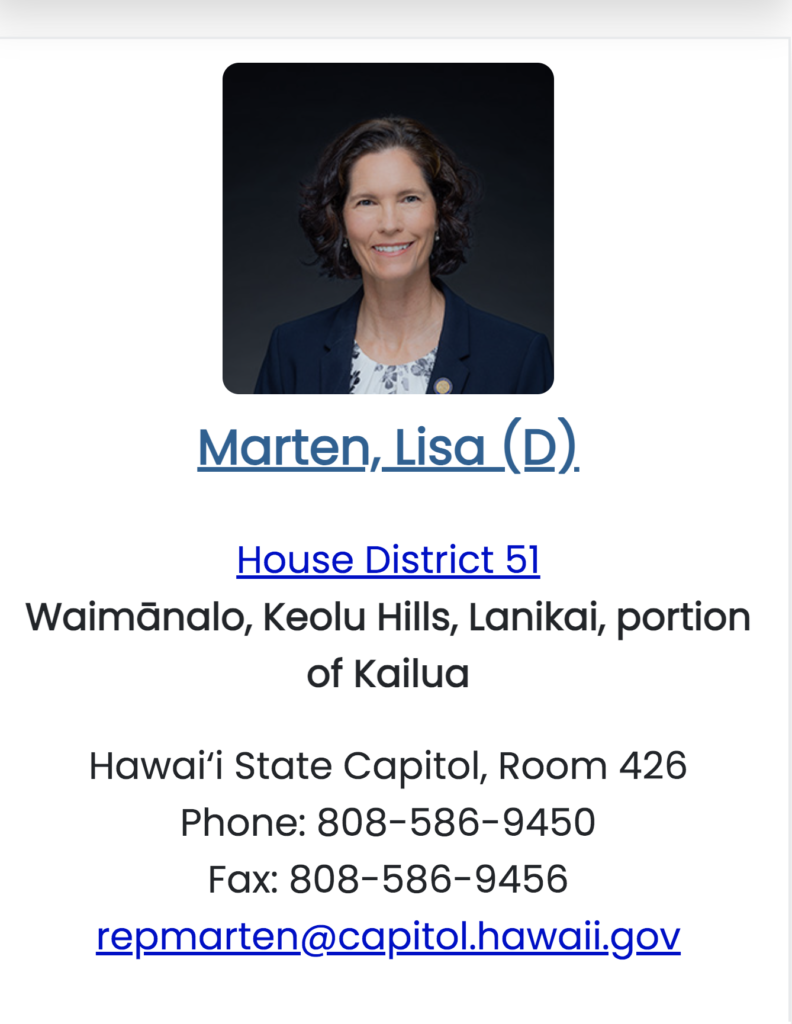
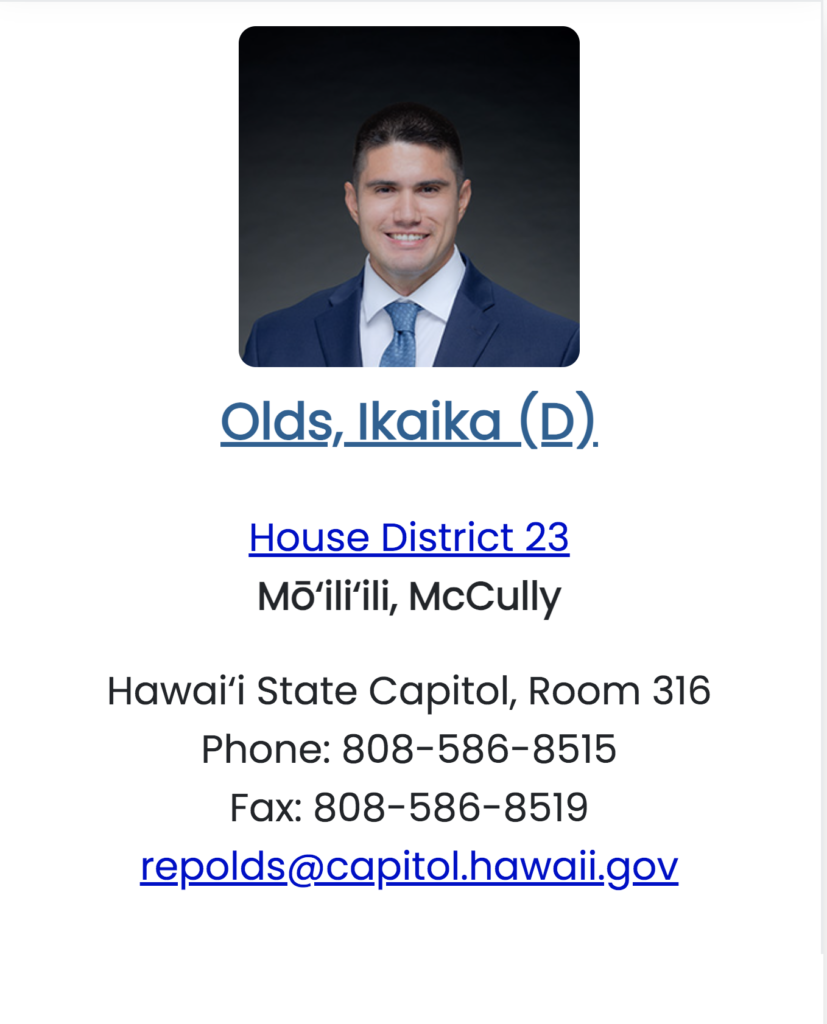
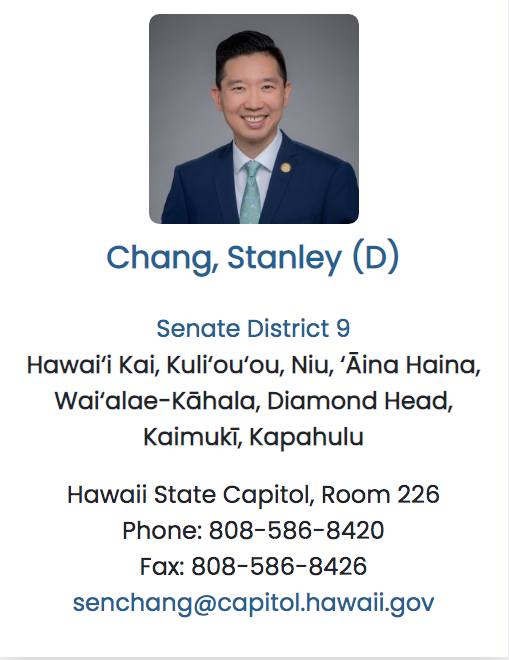
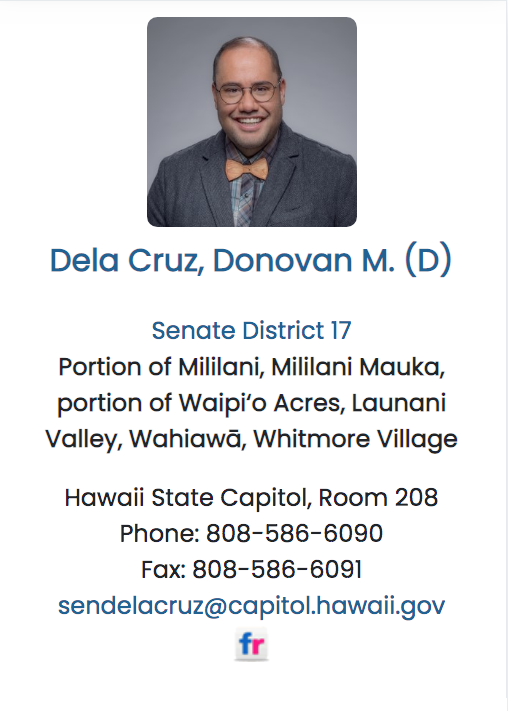
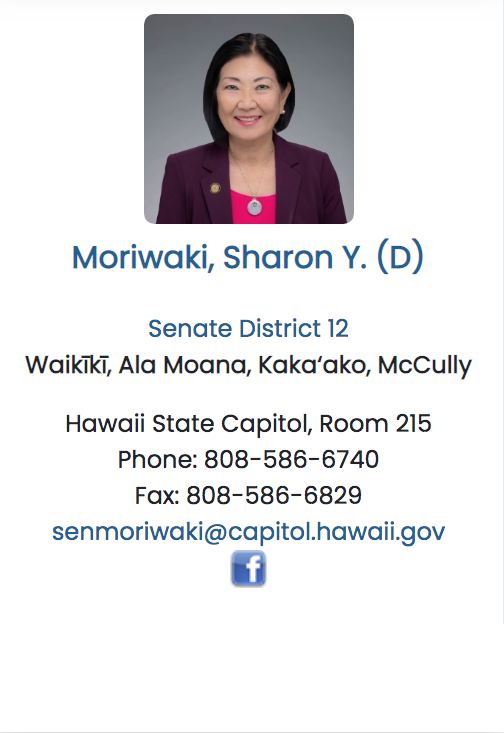
n January 2026, these four Hawaii Legislators (below) want to remove DUE PROCESS from private property owners through HB1861 aka HB29.
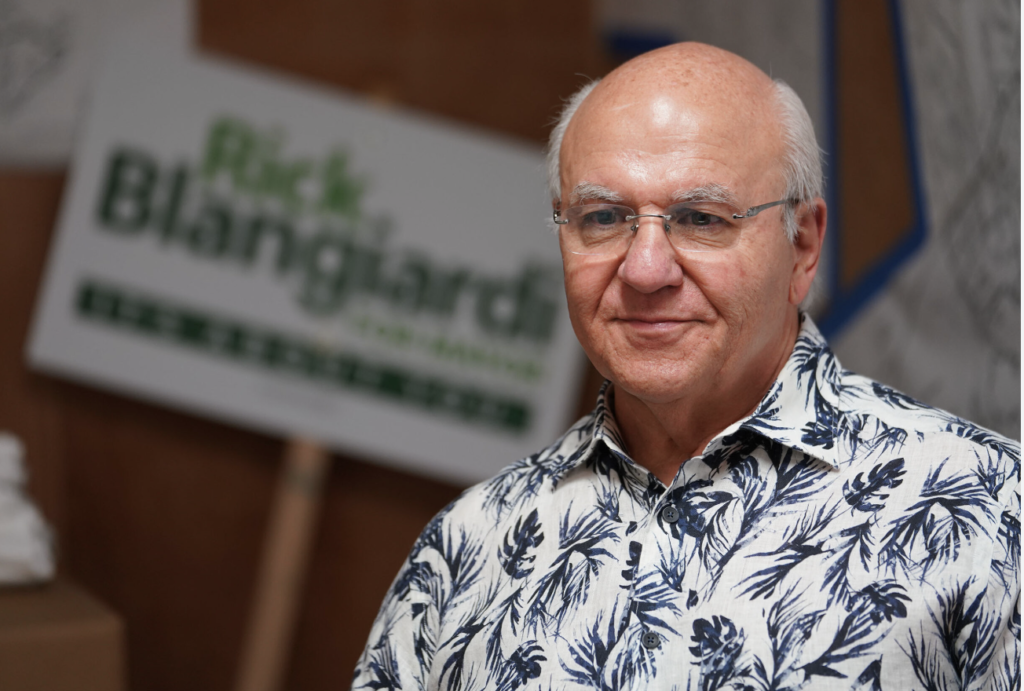
This unconstitutional Tyranny agenda began with Honolulu City County in 2021. The Blangiardi Administration introduced NON-Judicial Power of Sale as a County Legislative Package in 2021. The Department of Planning and Permitting (DPP) gets to issue violations, to place fines and to seize property without no Due Process of going to court.
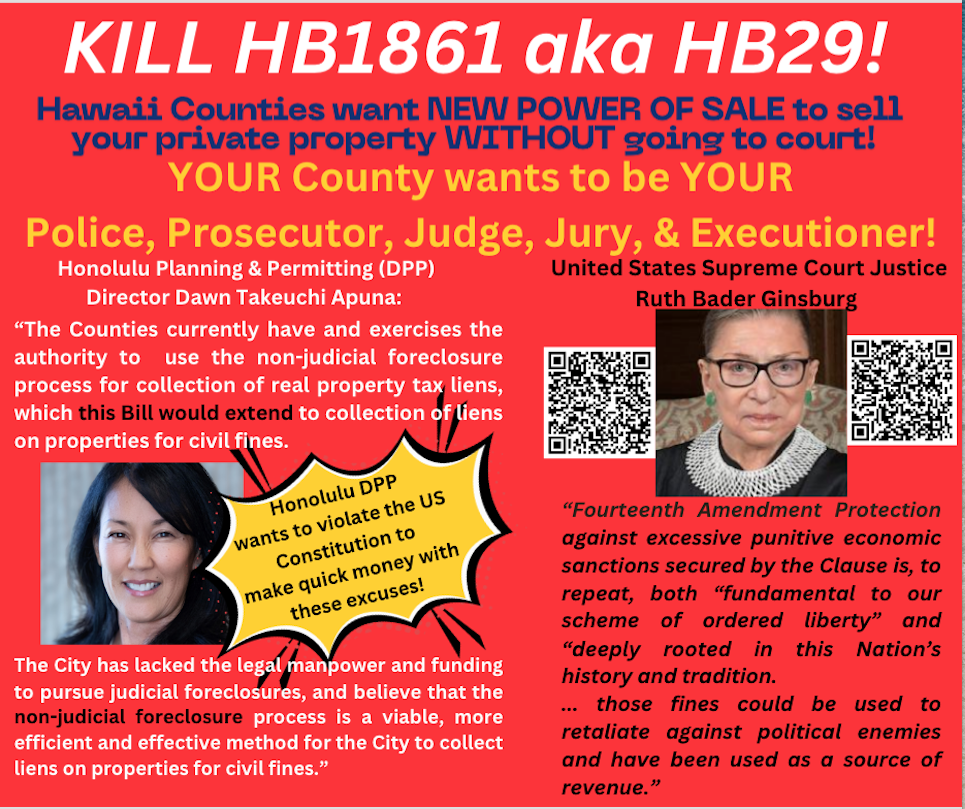
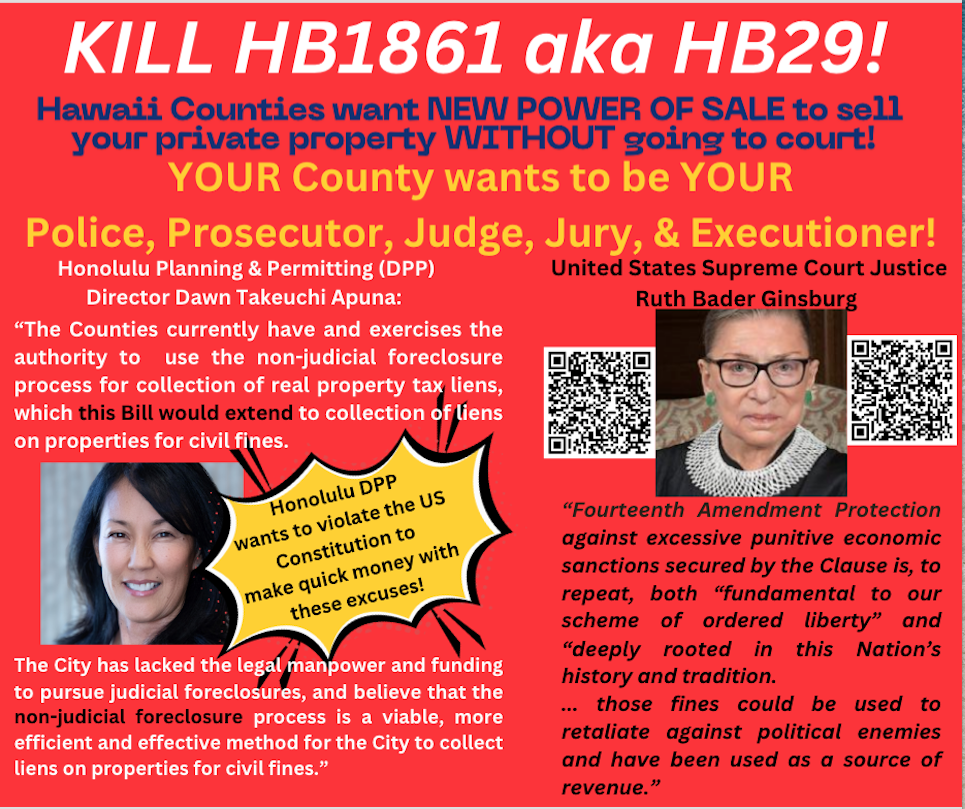
Who wants to give more powers to the long arm of the government? Who wants DPP to be the Police, Prosecutor, Judge, Jury, and Executioner?
Private Property owners will be stripped of Due Process if these non-judicial Power of Sale Bills are adopted by the Hawaii State Legislature this year.
It’s ironic that the Unhoused now has more rights than ordinary private property owners and renters if non-judicial Power of Sale based on county civil fines is adopted through HB1861 aka HB29.
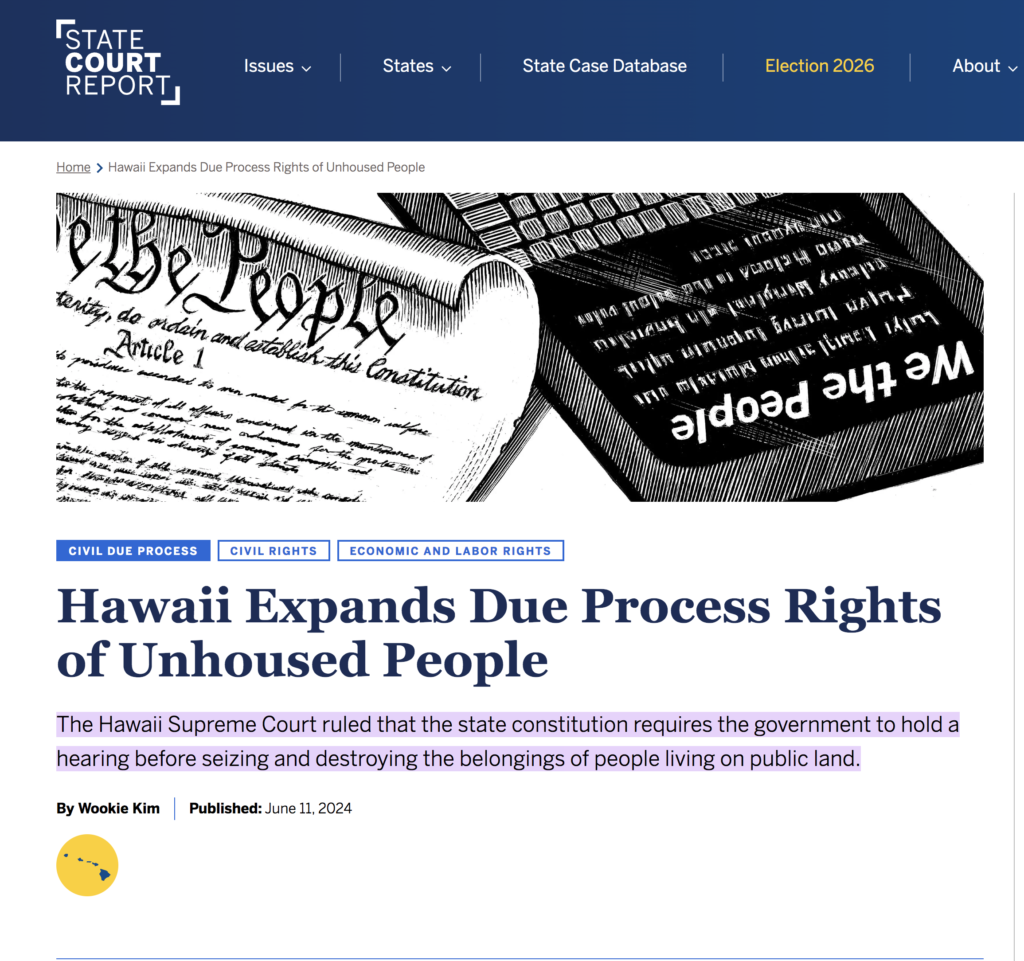
Below excerpt is for educational purposes.
The Unhoused is guaranteed an expanded Due Process Rights while private property owners will be denied Due Process in court.
Due Process in Hawaii is fundamentally guaranteed by Article I, Section 5 of the Hawaii Constitution, protecting life, liberty, and property from arbitrary government action. It ensures fair legal proceedings, including the right to counsel in specific cases, and has been recently applied to protect the property rights of unhoused individuals and the rights of parents in child protective proceedings.
Wookie Kim is the legal director of the ACLU of Hawaiʻi, which represented the plaintiffs in Davis v. Bissen.
On September 20, 2021, a group of unhoused people living near Kanahā Beach Park in central Maui were awakened by police officers and other Maui County workers armed with forklifts, dump trucks, and other heavy machinery. Wielding the threat of arrest and prosecution for criminal trespass, they forced everyone living in the park to leave immediately — with or without their personal belongings.
The county seized everything that was left behind. All told, the county impounded dozens of vehicles and immediately destroyed tons of property, including tents, clothes, pots and pans, child car seats, strollers, and water tanks.
Earlier this year, the Hawaii Supreme Court unanimously ruled in Davis v. Bissen that the county’s actions violated the due process rights of the people whose property was seized.
In an opinion authored by Justice Sabrina McKenna, the court held that “unabandoned possessions of houseless persons” were a “classic form” of property protected by Article I, Section 5, of the state constitution, even if such property was in a public space. The private interest at stake was “significant,” the court said, and the county’s “unchecked decision to seize and destroy the plaintiffs’ personal property posed a high risk of erroneous deprivation of property.”
Moreover, the court held, because “the county’s plan was to destroy (instead of store) seized property,” it could not carry out the sweep without first conducting a “contested case” hearing under the Hawaii Administrative Procedure Act. A contested case hearing is a proceeding before the relevant agency (here, Maui County) in which the agency considers evidence, hears testimony, allows for cross-examination of witnesses, holds oral arguments, and renders a decision about the legality of a planned action, much like a court proceeding.
Here, the plaintiffs had formally requested such a hearing before the sweep occurred, but Maui County ignored those requests. As later court filings would reveal, the county’s stance was that it did not need to hold any hearings. Why? Because, it maintained, unhoused people’s property was “on government property without permission and in violation of trespassing laws” and, therefore, was not protected by due process in the first instance. But, as the court’s decision confirms, one does not forfeit due process protections simply by leaving property in a public space.
The ruling paves the way for a potential first: the holding of a contested case hearing before a local government conducts a sweep of a houseless encampment. While such a hearing would be routine for, say, a landowner challenging the state’s decision to bulldoze a home erected on her property, to my knowledge no municipality in the country has ever held or been required to hold such a robust hearing before destroying the property of unhoused people. While the plaintiffs in this case may only get a post-deprivation hearing on remand, going forward unhoused people in Hawaii may be entitled to a full-blown contested case hearing before a planned sweep.
This could have significant practical effect on the lives of an immense number of people in Hawaii: As of 2023, there were 6,223 houseless people in in the state. Native Hawaiian women, including two of the four plaintiffs, are disproportionally impacted by Hawaii’s housing crisis. Maui County uses sweeps to force — or, as Honolulu officials euphemistically describe it, “gently coerce” — unhoused people into pulling themselves up by their bootstraps. (Never mind that many unhoused people in Hawaii are employed, including all but one of the plaintiffs in this case, who work in service jobs tailored to Maui’s tourism industry.) Rather than helping people get off the streets, sweeps only perpetuate the homeless crisis.
Beyond its practical impact, a state supreme court win squarely vindicating the due process rights of unhoused people also carries symbolic weight. Our legal system structurally disfavors unhoused people: as scholar Wayne Wagner has written, “homeless persons possess fewer and lesser legal rights” than those who live in houses or apartments. Many of our constitutional rights — including those relating to privacy and autonomy — are predicated on owning or having possession of real property, a place to which one can retreat from governmental interference. Further, in lacking access to conventional housing, unhoused people are more likely to be politically disempowered because of difficulties in proving identity or residence when registering to vote. The Hawaii Supreme Court’s declaration that government actors are bound to respect due process for everyone, unhoused or not, at all times, is a victory for the principle of equality under the law.
Finally, the court’s decision is notable not only for its holding but for the way it got there. The court applied what it calls the “state-constitution-first approach” to constitutional interpretation. Under that approach, the court “interpret[s] the Hawaii constitutional provision before its federal analogue.” The court adopted this approach less than a month earlier in State v. Wilson — a case construing the Hawaii Constitution’s analogue to the Second Amendment — to govern how it would resolve cases in which a party “invokes both the Hawaii and United States Constitutions.”
In choosing to interpret and rely exclusively on the state constitution in its Davis decision, the Hawaii Supreme Court has highlighted the “distinct role [of state constitutions] under our nation’s system of federalism” and reminded us, once again, that state constitutions can be as important a source of rights as the U.S. Constitution.
Hawaii is vigorously protesting “NO KING – NO TYRANT – NO ICE ” to demand constitutional Due Process for all.
Yet, four (4) Hawaii State House Representatives – Sean Quinlan, Scott Matayoshi, Lisa Marten, and Ikaika Olds – have introduced House Bill 1861 aka HB29 to deny DUE Process to all Hawaii counties.
HB1861 (2026) authorizes counties to sell property through non-judicial foreclosure as a way to collect unpaid civil fines. Owners cannot go to court to explain or protect themselves. Period. Judicial Due Process is denied.
Yet, four (4) Hawaii State House Representatives – Sean Quinlan, Scott Matayoshi, Lisa Marten, and Ikaika Olds – have introduced House Bill 1861 aka HB29 to deny DUE Process to all Hawaii counties.
HB1861 (2026) authorizes counties to sell property through non-judicial foreclosure as a way to collect unpaid civil fines. Owners cannot go to court to explain or protect themselves. Period. Judicial Due Process is denied.
This stealth anti Due Process agenda has been happening for five years!
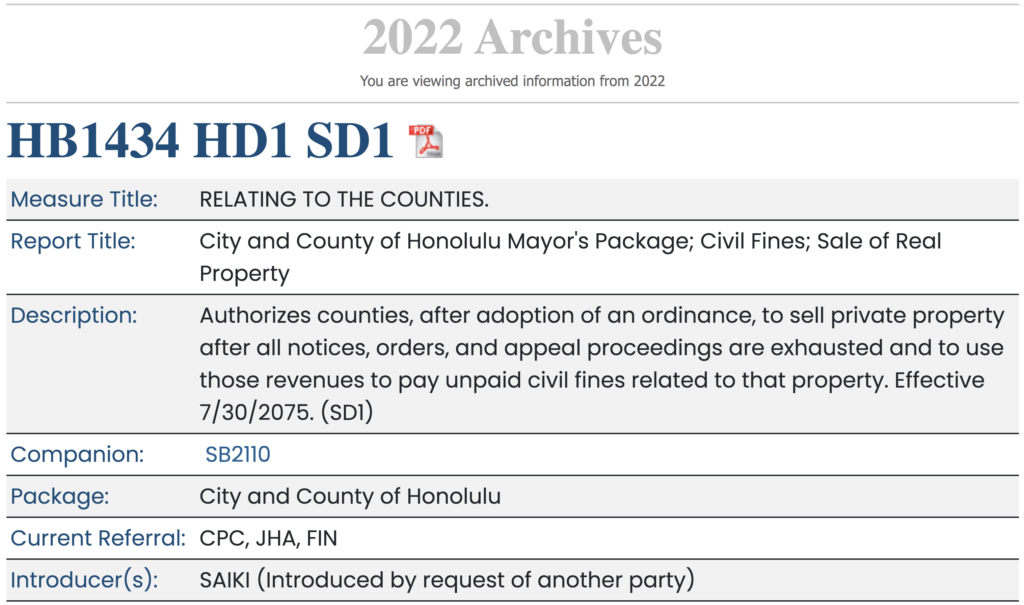
The Honolulu County Blangiardi Administration spear-headed this hamajang in 2021 through House Bill 1434 /Senate Bill 2110 – requesting a new NON-JUDICIAL Power of Sale based on the Department of Planning and Permitting (DPP) civil fines. The Mayor’s DPP Director testified that existing “Eminent Domain” was too slow, took manpower, and resources.
Can you trust the troubled DPP to be your Police, Prosecutor, Judge, Jury, and Executioner?
Look at Kalihi, Kamuki, Kailua, Kaneohe, Kahuku. Look at Waimanalo, Waianae, Wahiawa and Whitmore. What about Palolo, Mo’ili’ili, Sunset Beach, and Haleiwa? How many residents have turned their garages into extra living space or other additions to accommodate generational living or a little extra income to help pay for their mortgage? Is housing a huge problem in Hawaii?
This ill-thought unconstitutional bill will turn Hawaii’s private property owners and renters into perennial sitting ducks. The long arm of the government will be allowed to create a new source of revenue, bully, do political mischief, or issue violations at will that can morph into significant fines, ripe for non-judicial foreclosure.
Which legislator in 2026 would deny basic Constitutional Due Process Rights (through HB1861) as a “quick solution” to various issues some Counties have no will to manage.
No amount of contorted promises of “Due Process” through county appeals can justify this sweeping unconstitutional invasion and violation of Civil Rights to all Hawaii.
HB1861 aka HB29 is burning down a Cathedral to fry an egg.
Give Voice Now. Don’t complain AFTER-THE-FACT. Contact your legislators, Mayors, and City Councils. Elected legislators must stay inside the Constitutional Path for the Public Good.
Kill HB1861 hamajang!
Nothing good can come out by giving the long arm of government MORE new powers to control its people.
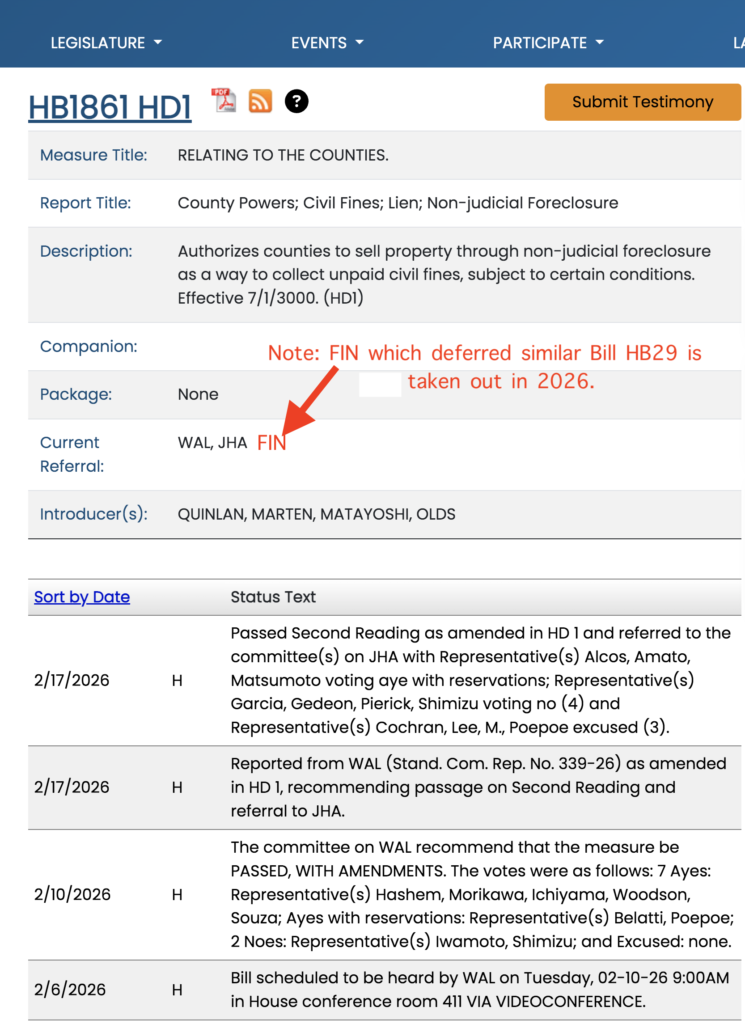
STATUS OF HB1861 ONLY Representatives Garcia, Gedeon, Pierick, Shimizu voting no. “Reservations is a YES vote.”
2/17/2026
H
Passed Second Reading as amended in HD 1 and referred to the committee(s) on JHA with Representative(s) Alcos, Amato, Matsumoto voting aye with reservations; Representative(s) Garcia, Gedeon, Pierick, Shimizu voting no (4) and Representative(s) Cochran, Lee, M., Poepoe excused (3).
2/17/2026
H
Reported from WAL (Stand. Com. Rep. No. 339-26) as amended in HD 1, recommending passage on Second Reading and referral to JHA.
2/10/2026
H
The committee on WAL recommend that the measure be PASSED, WITH AMENDMENTS. The votes were as follows: 7 Ayes: Representative(s) Hashem, Morikawa, Ichiyama, Woodson, Souza; Ayes with reservations: Representative(s) Belatti, Poepoe; 2 Noes: Representative(s) Iwamoto, Shimizu; and Excused: none.
2/6/2026
H
Bill scheduled to be heard by WAL on Tuesday, 02-10-26 9:00AM in House conference room 411 VIA VIDEOCONFERENCE.
1/26/2026
H
Referred to WAL, JHA, referral sheet 2 (FINANCE COMMITTEE IS DELETED in 2026. FINANCE COMMITTEE DEFERRED SIMILAR BILL HB29 in 2025.)
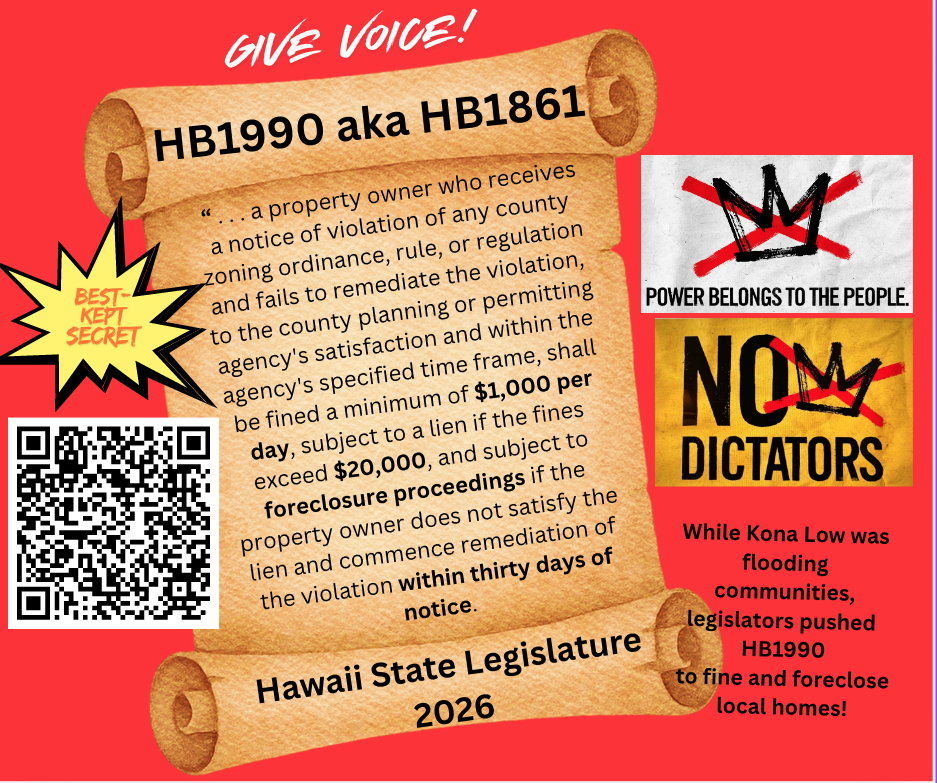
Best-kept secret is HB29 HD1 that is being quietly pushed through at the Hawaii State Legislature.
#HB29 is getting weirder by the minute. An attorney from Ashford & Wriston representing the Hawaii Bankers Association (HBA( testified that Hawaii already has a non-judicial foreclosure for delinquent mortgages, which is true. She cited the Hawaii Revised Statutes HRS 667 on foreclosure.
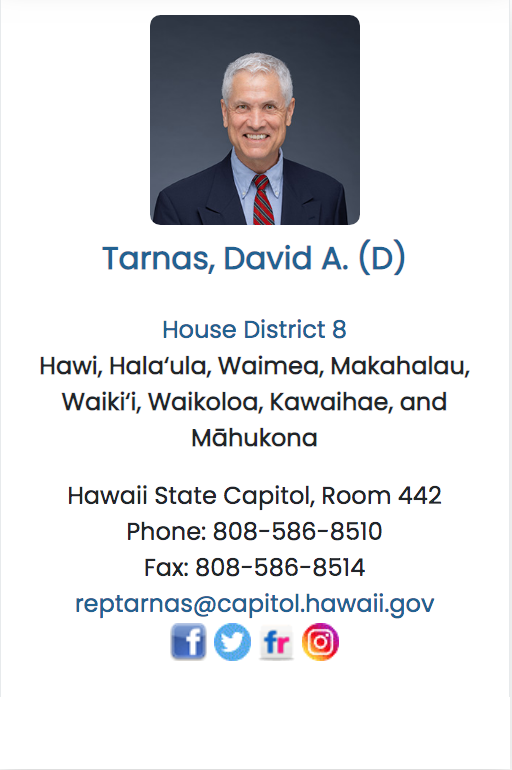
So, Chair #DavidTarnas said he would incorporate the bankers’ testimony into their HB29. amendment.
But, why? It doesn’t make sense. There is NO Mortgage involved. No private property owner applied or got a mortgage from the County.
We’re talking heavy smokes and mirrors, apples and oranges here. Expectedly, Bankers can force a NON-JUDICIAL foreclosure if a private property borrower does not pay. A property owner knowingly entered into a mortgage contract with promise to pay the bank.
But with this new POWER OF SALE HB29, it’s a forced “taking”. The County wants to sell a private property — based on a County civil fine — WITHOUT going to court. EVERY private property owner becomes a sitting duck.
This is really spooky. It exposes all private property owners to the whims of the government. HB29 HD1 is a fast lane to Tyranny.
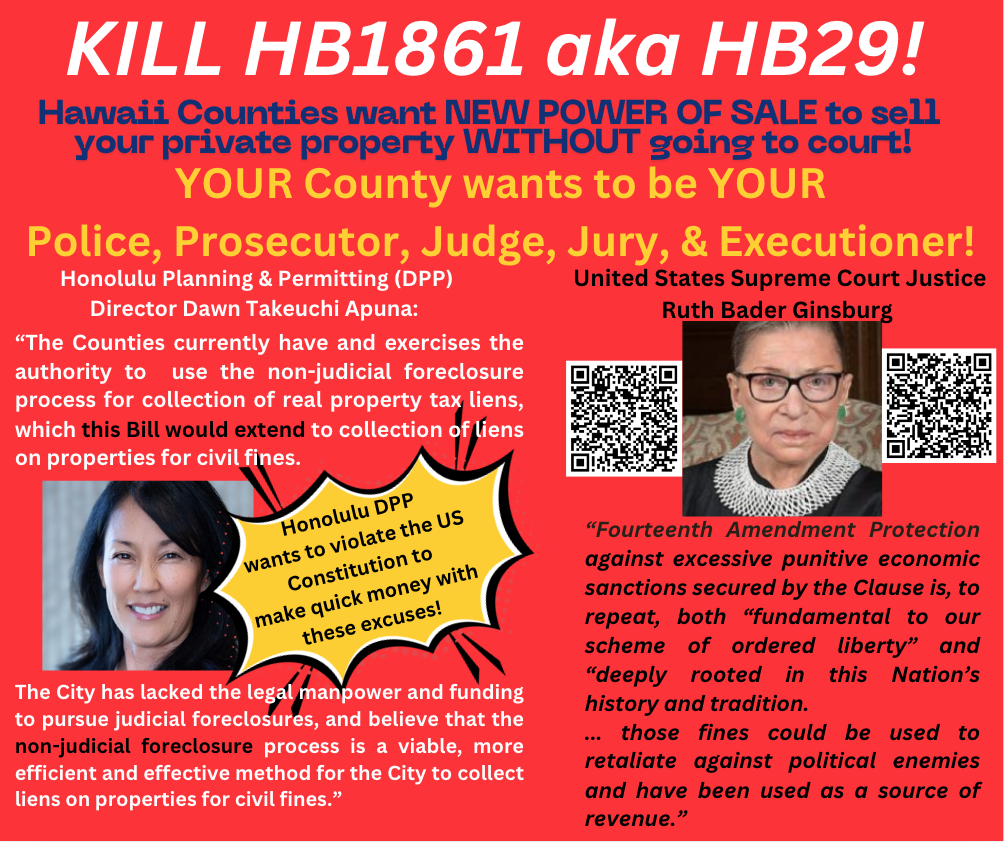
Give voice. I testified that allowing the Counties Non-Judicial POWER OF SALE – – to sell private properties based on DPP’s civil fines WITHOUT going to court – – is unconstitutional and violates the 14th US Amendment. I asked if the public can trust DPP to be the POLICE, PROSECUTOR, JUDGE, JURY, & EXECUTIONER!
You can also see the Honolulu Department of Planning and Permitting’s reasons for wanting more easy Powers here. Dawn Takeuchi Apana‘s excuses for this quick Power of Sale are that their existing eminent domain power is too slow and costly and the city is short-staffed.
Do we really want to trust DPP who does not respect basic Constitutional Private Property Rights?
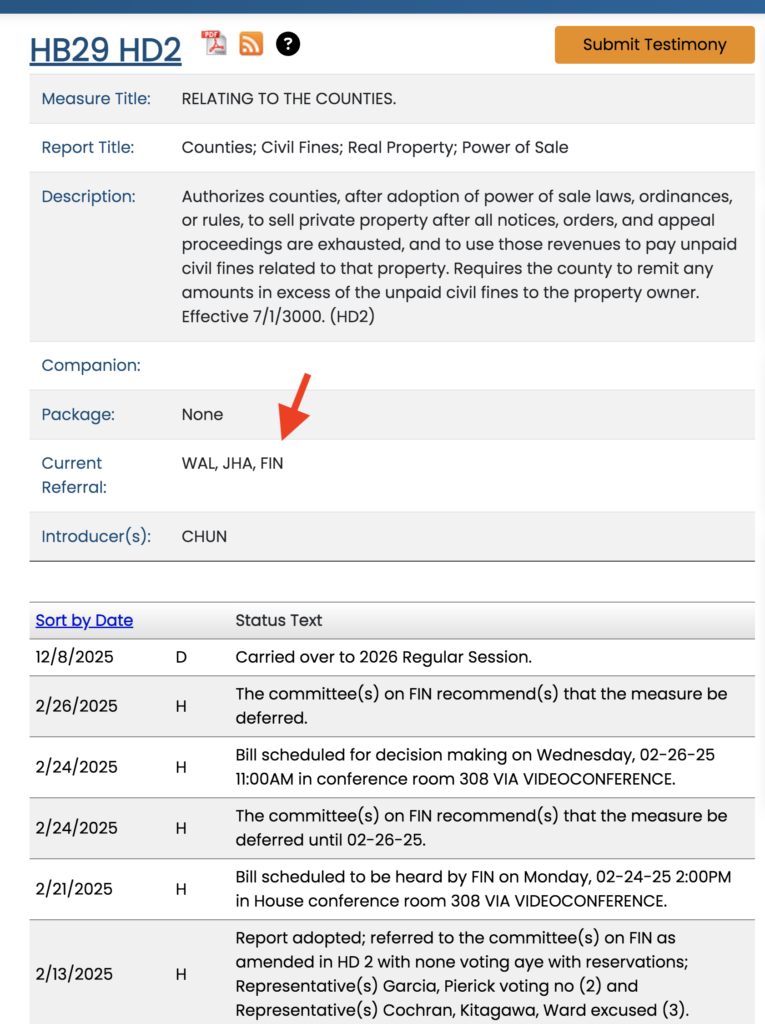
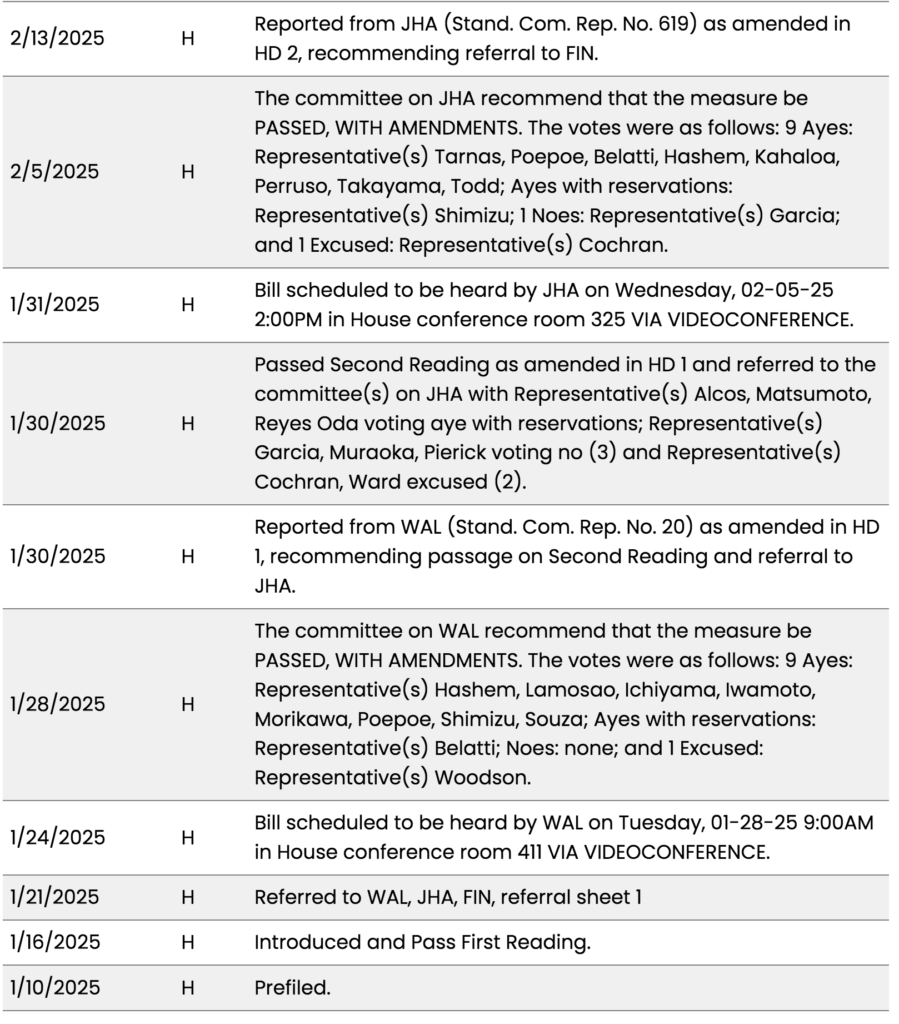
2/5/2025 H The committee on JHA recommend that the measure be PASSED, WITH AMENDMENTS. The votes were as follows: 9 Ayes: Representative(s) #Tarnas, #Poepoe, #Belatti, #Hashem, #Kahaloa, #Perruso, #Takayama, #Todd; Ayes with reservations: Representative(s) #Shimizu; 1 Noes: Representative(s) #Garcia; and 1 Excused: Representative(s) #Cochran.
1/31/2025 H Bill scheduled to be heard by JHA on Wednesday, 02-05-25 2:00PM in House conference room 325 VIA VIDEOCONFERENCE.
1/30/2025 H Passed Second Reading as amended in HD 1 and referred to the committee(s) on JHA with Representative(s) #Alcos, #Matsumoto, #Reyes Oda voting aye with reservations; Representative(s) #Garcia, #Muraoka, #Pierick voting no (3) and Representative(s) #Cochran, #Ward excused (2).
1/30/2025 H Reported from WAL (Stand. Com. Rep. No. 20) as amended in HD 1, recommending passage on Second Reading and referral to JHA.
1/28/2025 H The committee on WAL recommend that the measure be PASSED, WITH AMENDMENTS. The votes were as follows: 9 Ayes: Representative(s) #Hashem, #Lamosao, #Ichiyama, #Iwamoto, #Morikawa, #Poepoe, #Shimizu, #Souza; Ayes with reservations: Representative(s) #Belatti; Noes: none; and 1 Excused: Representative(s) #Woodson.
1/24/2025 H Bill scheduled to be heard by WAL on Tuesday, 01-28-25 9:00AM in House conference room 411 VIA VIDEOCONFERENCE.
Good public policies are vetted carefully in an over-arching manner. They must be rooted within the parameters of the US Constitution that have served us well for 235 years.
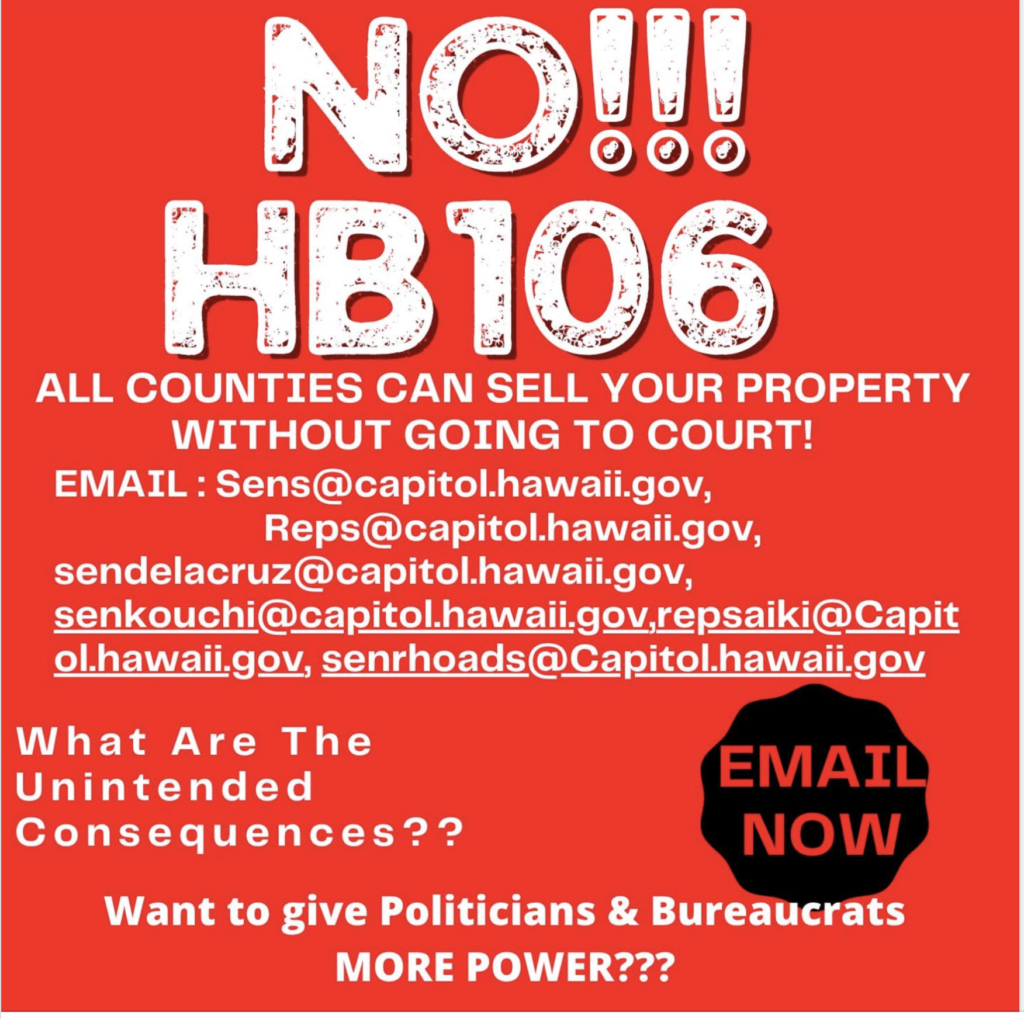
There are some very troublesome bills – SB875, HB15. HB538, HB106, SB216, HB 498 that are introduced this 2023 session.
The language may vary in these Bills but the core violation is the taking of private property based on civil fines, without providing the judicial court process. It’s not about the market value or the balance of the sold property loot.
I get it that certain politicians are hoping for easier and quicker penalties like non-judicial foreclosures. But to think that the counties can seize private property based on civil fines is misguided. We can’t have knee-jerk legislation just because we want to punish some “egregious” private property owners or to create a new source of income revenues.
Counties cannot become the in-house Police, Prosecutor, Jury, Judge, and Executioner.
The late Justice Ruth Bader Ginsburg said it best in one of her last Opinions for the US Supreme Court in Timbs vs Indiana relating to excessive CIVIL fines and Due Process. Below are some of jurist RBG’s excerpts to all of us from the grave:
“This Court has held that the Fourteenth Amendment’s Due Process Clause incorporates the protections contained in the Bill of Rights, rendering them applicable to the States.”
“For good reason, the protection against excessive fines has been a constant shield throughout Anglo-American history: Exorbitant tolls undermine other constitutional liberties. Excessive fines can be used, for example, to retaliate against or chill the speech of political enemies, as the Stuarts’ critics learned several centuries ago.”
” Protection against excessive fines has been a constant shield throughout Anglo-American history for good reason: Such fines undermine other liberties. They can be used, e.g., to retaliate against or chill the speech of political enemies. They can also be employed, not in service of penal purposes, but as a source of revenue. The historical and logical case for concluding that the Fourteenth Amendment incorporates the Excessive Fines Clause is indeed overwhelming.”
“Even absent a political motive, fines may be employed “in a measure out ofaccord with the penal goals of retribution and deterrence,” for “fines are asource of revenue,”
” In short, the historical and logical case for concluding that the Fourteenth Amendment incorporates the Excessive Fines Clause is overwhelming. Protection against excessive punitive economic sanctions secured by the Clause is, to repeat, both “fundamental to our scheme of ordered liberty” and “deeply rooted in this Nation’s history and tradition.”
Keep in mind the counties already have “Judicial Foreclosure” and “Eminent Domain” powers in place. But the justification is that these processes take too long.
In other words, these bills will allow the counties to be the Police, Prosecutor, Jury, Judge, and Executioner. The Judicial Due Process will be cut off.
We’re asked who started these non-judicial foreclosure bills to forced sale of a private property, based on the Honolulu Department of Planning and Permitting (DPP) fines, without going to court.
Here are some quick answers:
It originated in 2022 as HB 1434 with Honolulu Mayor Rick Blangiardi. Keep it mind that this Power of Sale requests applied to ALL Counties in Hawaii. Based on my observations of him, it’s unlikely that this non-judicial Power of Sale idea originated from Blangiardi unless he’s hoping for a new stream of revenues from fines and sale of properties.
If I have to take a guess, it would be his Managing Director Mike Formby, formerly with the Pacific Resource Partnership (PRP) or former Department of Planning and Permitting (DPP) Director Dean Uchida.
Five (5) City Council members, known as the Gang of 5, also submitted testimony – Chair Tommy Waters, Esther Kia’iana, Brandon Elefante, Calvin Say, and Radiant Cordera.
What were the underlying motives?
Fortunately, Bill 1434 failed to pass last year.
I was in the same Mayoral campaign with Rick Blangiardi in 2020. Based on my observations and his words, he had very shallow understanding about Honolulu City Hall workings.
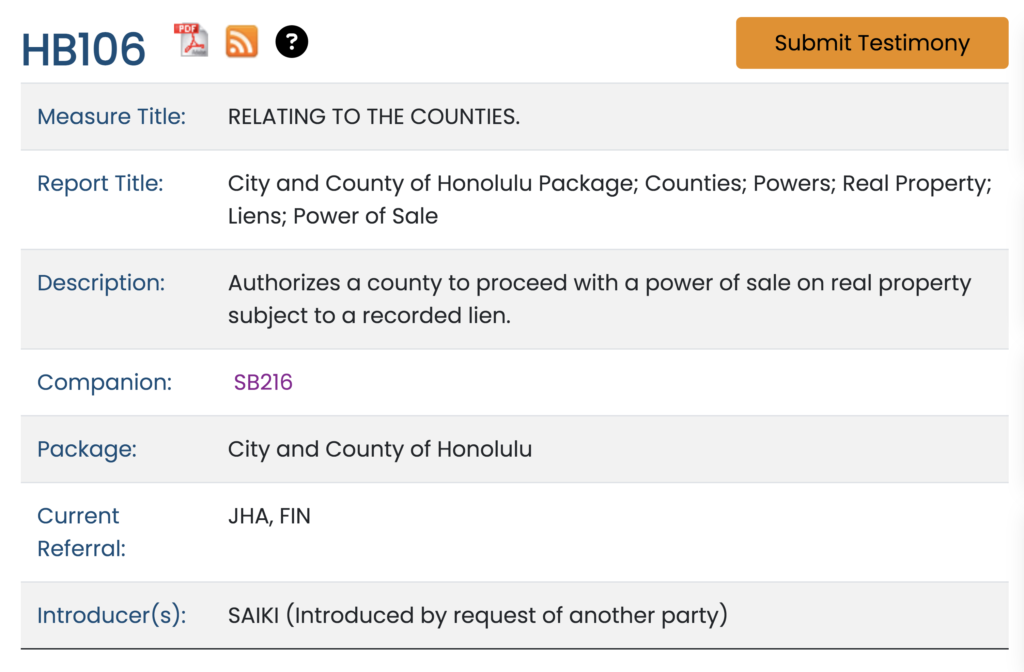
This year 2023, Mayor Blangiardi is back with HB 106 and SB 216 by request to Senate President Ron Kouchi and House Speaker Scott Saiki.
However, presto! The tactics have changed a bit this year. There are five (5) clone bills with the same agenda speeding through.
Google Searches show no county mayors, state legislators or city council members appear to have warned Hawaii about this draconian assault on private properties.
Here are the rest of the three (3) bills.
SB875 is introduced by Senators Stanley Chang, Donovan Dela Cruz and Sharon Moriwaki. This bill is alive and has crossed over on March 7, 2023.
This time around, written testimonies come from only Honolulu City Council former Budget Chair Calvin Say and DPP Director Dawn Takeuchi Apuna.
The time line provided in this bill is too unrealistic. It assumes that DPP is 100% efficient. In actual fact, it takes a very long time to get a permit. Some permits take a much longer time because it may need a shoreline certified shoreline. This could easily take six months to complete.
This is a reprint from the Star Advertiser published February 15, 2023. The limit for Star Advertiser was 600 words. For educational purposes, we’re adding more info through links and photos.
As part of the 2022 county package to state legislators, Honolulu Mayor Rick Blangiardi requested “nonjudicial foreclosure” powers, i.e., the power to seize private property without going to court. Fortunately, House Bill 1434 did not pass last year.
This year’s package includes another request for “nonjudicial foreclosure,” aka “power of sale.” 2023HB 106 BELOW represents an alarming threat to property owners and is prevalent in totalitarian regimes.
This year’s HB 106 offers weak assurance that “a county may, after all notices, orders, and appeal proceedings are exhausted, satisfy all unpaid civil fines through the power of sale on the real property subject to a recorded lien.”
Unfortunately, our years of civic participation at Honolulu Hale show that due process has not always been fair and equitable to ordinary residents.
Furthermore, recent federal indictments and guilty pleas continue to show the troubledHonolulu Department of Planning and Permitting (DPP) has no consistent record of fair play or efficient management. Written testimonies reveal alarming threats toward private property rights.
Dawn Takeuchi Apana, DPP director designate, stated: “Specifically, this bill would authorize the city to bring closure to pending civil fines imposed on landowners who are in violation of the city’s land use ordinances and building codes, through a nonjudicial or administrative process.”
Honolulu City Councilman Calvin Sayalso submitted testimony for a quicker seizure: “Our city corporation counsel is currently able to initiate a Judicial Foreclosure process, which has been successful in similar instances, however this is a long process that takes valuable resources away from other pressing legal matters.”
In other words, give us the authorization to hurry it up by bypassing the regular court method of foreclosure.
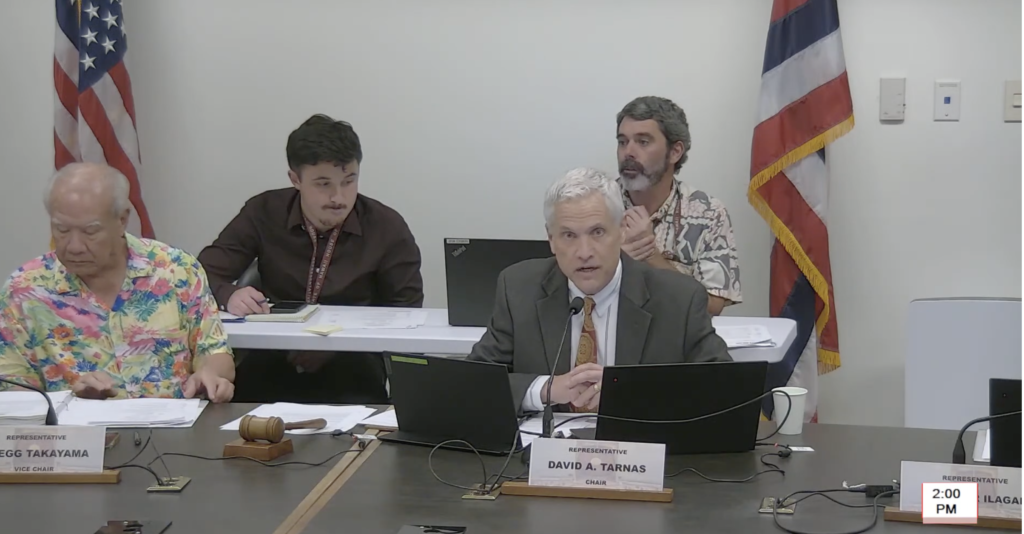
The House Committee on Judiciary & Hawaiian Affairs, whose members include Chairman David Tarnas and Vice Chair Gregg Takayama, approved HB 106 on Jan. 31. Its report states in part:
“Your committee finds that authorizing the counties to collect on liens filed on properties through a nonjudicial foreclosure process provides some leverage over property owners to comply or lose their property. If a property owner fails to comply and the property is foreclosed upon, this measure would enable the property to be put to productive use, allow liens attached to the property to be satisfied, and stop the accrual of additional debt or taxes on the property.”
Hawaii’s state legislators should recognize that most ordinary residents sacrifice and work their tails off to achieve real property ownership. Each county’s goal should be to help property owners comply with the law and correct their violations, not summarily seize their properties.
HB 106 invites corruption and exposes residents, especially those who have fewer financial resources available to them, as easy casualties of this potential power of sale. All Hawaii counties would be affected.
It should be noted the U.S. Supreme Court ruled unanimously on Feb. 20, 2019 (Timbs vs Indiana), that the Constitution’s ban on excessive fines — civil asset forfeitures are a type of fine — applies to state and local governments, thus limiting their ability to use fines to raise revenue.
The late Justice Ruth Bader Ginsburg also astutely argued fines could be used to retaliate against political enemies and had been used as a source to raise revenue.
RBG was a tireless and resolute champion of justice.
Hawaii has a few egregious property owners, but this tyrannical bill is not the solution. We urge our legislators to vote “no” on HB 106.
###
AUTHORS:Natalie Iwasa is a CPA and certified fraud examiner; Choon James is a residential Realtor and farmer.They have spent combined decades of civic participation at Honolulu Hale as community advocates for good governance.
The City and County of Honolulu is asking to have POWER of SALE on Oahu’s property owners based on DPP liens. Bill 106 will affect ALL Counties.
JHA 1/31/23 2:00 PM Tuesday 325 VIA VIDEOCONFERENCE
BILL 106 and companion SB 216 may sound harmless in an ideal world with perfect fairness and equity and justice for all.
But in real life, these bills are too over-reaching and will further marginalize Private Property Rights.
Bill 106 slams Due Process for ordinary citizens. There are systemic failures of discrimination, inequity, and entrenched bureaucracy at Honolulu Hale. This Power of Sale will expose every property owner to the possible whim of politicians, government officials and its powerful political machine.
Although there is supposedly a fair “process” in place, our decades of participating at Honolulu Hale and the records have shown otherwise. Repeatedly we have witnessed that this same “process” has been unfair and inequitable to ordinary citizens. No matter how thin the cheese is sliced, there are always two sides to it. But the government almost always wins because it has the upper-hand, resources and a legal corporate team to ignore or fight ordinary citizens.
Most ordinary citizens are not born with a silver spoon in their mouth. They work their tails off to achieve real property ownership. The County’s role ought to be helping property owners correct their violations and be in compliance; not be too eager to seize private properties through fines.
This POWER of SALE is NOT about a mortgage company foreclosing based on non-payments of a borrower. This is about the government seizing properties, based on DPP fines.
There is an alleged reason or justification that this Power of Sale is needed to enforce “monster homes” or “illegal vacation rentals”.
The isolated problems with monster homes and illegal vacation rentals are not compelling enough to provide counties with this unfettered powers. DPP needs to examine why monster homes are approved for permits in the first place. There was a time when a property owner could only build up to 50% of its land area. Incrementally, the city has approved regulations and ordinances that allow increased density in its land-use legislation.
As a matter of public policy making and with a bigger picture, providing all counties with this Power of Sale for the above alleged reason is akin to tearing down a Cathedral to fry an egg.
Ordinary citizens cannot afford expensive legal representation to make sure their side of the story is heard and fairly considered in the legislative decision-making.
Affluent and well-connected citizens have the means to circumvent DPP. Ordinary citizens will become the casualties of this powerful and overreaching legislation.
This Power of Sale (aka Non-judicial Foreclosure) is overreaching and tyrannical. This Power of Sale authority makes every property owner a sitting duck at the whim of the city.
Basing a POWER of SALE ( aka NON-Judicial Foreclosure) through DPP fines and recorded liens is the worst possible exposure for more corruption and possible political retaliation.
The City and County of Honolulu requested this same power aka “non-judicial foreclosure” in 2022.
Please read the 2022 written testimonies that provide a very brief summary of this issue. This far-reaching governmental power will affect all Counties but it was one of the best-kept secrets in 2022. It is the same in 2023.
Please protect Due Process and protect private property rights. As if Eminent Domain is insufficient for the government, the Honolulu County is again asking for a quick Power of Sale aka non-judicial foreclosure.
This governmental power is too much to bear in a democratic society. Private Property Rights must be revered as one of Democracy’s foundational pillars. The counties have other options.