
Honolulu Chair Tommy Waters Appeal to the Hawaii Supreme Court Hearing against Circuit Court Ruling that he was ineligible to run for a Third Term.

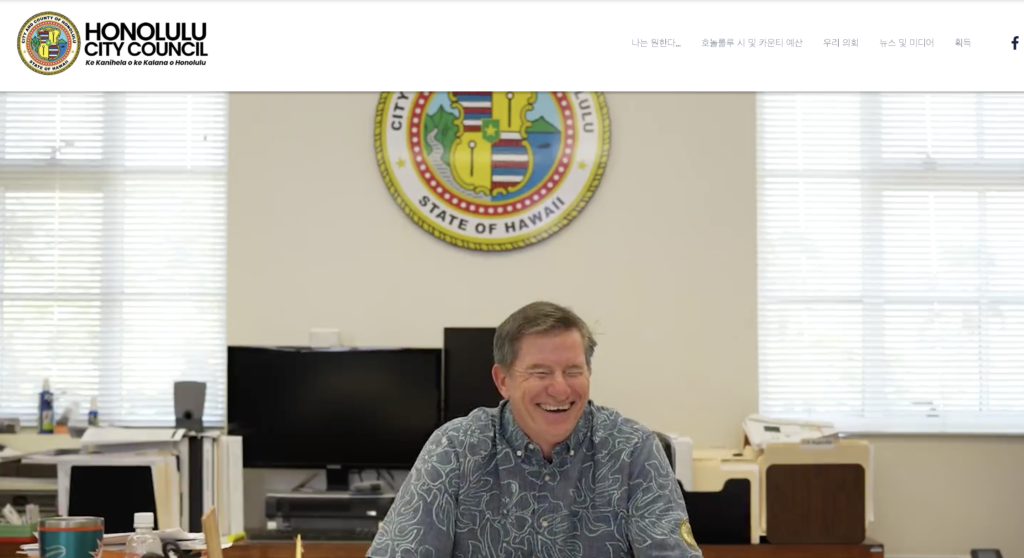
Screenshots from Honolulu City Council Website Premier video for a Council Chair.

This transferred appeal arises from the Circuit Court of the First Circuit’s order and judgment declaring that Defendant-Appellant Thomas Waters, a/k/a Tommy Waters (Waters) is ineligible to be elected to the office of Councilmember, District IV, City and County of Honolulu for the 2027-2031 term.

EXCERPT from Hawaii Supreme Court:

TUESDAY, AUGUST 25, 2026 – 2:00 P.M.

NO. SCAP-26-0000550

TREVOR R. OZAWA, Petitioner/Plaintiff-Appellee, vs. CHADD KADOTA, in his official capacity as Acting City Clerk of the City and County of Honolulu; SCOTT T. NAGO, in his official capacity as Chief Election Officer of the State of Hawai‘i, Respondents/Defendants-Appellees, and THOMAS WATERS a/k/a TOMMY WATERS, Respondent/Defendant-Appellant.

Supreme Court Courtroom
Ali‘iōlani Hale, 2nd Floor
417 South King Street
Honolulu, HI 96813

The oral argument will also be livestreamed for public viewing via the Judiciary’s YouTube channel at YouTube.com/hawaiicourts and ‘Ōlelo at olelo.org/tv-schedule/, subject to ‘Ōlelo’s programming availability.

Attorney for Petitioner/Plaintiff-Appellee TREVOR R. OZAWA:
     Trevor R. Ozawa of the Law Office of Trevor R. Ozawa

Attorneys for Respondent/Defendant-Appellee CHADD KADOTA, in his official capacity as Acting City Clerk of the City and County of Honolulu:
     Duane W.H. Pang and Jacqueline M. De Leeuw Huang, Deputies Corporation Counsel

Attorneys for Respondent/Defendant-Appellee SCOTT T. NAGO, in his official capacity as Chief Election Officer of the State of Hawai‘i:
     Randall S. Nishiyama, Tiffany R. Chang, and Jung Min Lee, Deputy Attorneys General and Aaron H. Schulaner, General Counsel

Attorneys for Respondent/Defendant-Appellant Thomas Waters a/k/a Tommy Waters:
     Lex R. Smith, Joseph A. Stewart, Bruce A. Nakamura, and Zachary K. Shikada of Kobayashi Sugita & Goda, LLP

NOTE: Certificate of Recusal, by Associate Justice Todd W. Eddins, filed 08/13/26.

NOTE: Certificate of Recusal, by Chief Justice Vladimir P. Devens, filed 08/13/26.

NOTE: Order assigning Circuit Judge Michael K. Soong, in place of Devens, C.J., recused, Circuit Judge Peter T. Cahill, in place of Eddins, J., recused, and Circuit Judge Peter K. Kubota, due to a vacancy, filed 08/13/26.

NOTE: Order granting Application for Transfer, filed 08/13/26.

COURT: Mckenna, Acting C.J. and Ginoza, J., and Circuit Judge Soong, in place of Devens, C.J., recused, Circuit Judge Cahill, in place of Eddins, J. recused, and Circuit Judge Kubota, assigned by reason of vacancy.

Brief Description:

This transferred appeal arises from the Circuit Court of the First Circuit’s order and judgment declaring that Defendant-Appellant Thomas Waters, a/k/a Tommy Waters (Waters) is ineligible to be elected to the office of Councilmember, District IV, City and County of Honolulu for the 2027-2031 term.

Section 3-102 of the Revised Charter of the City & County of Honolulu (Charter) provides, in relevant part, that: “Except as provided in Section 16-122, the regular terms of office of councilmembers shall be four years beginning at twelve o’clock meridian on the second day of January following their election. . . . No person shall be elected to the office of councilmember for more than two consecutive four-year terms.”

On January 25, 2019, this court invalidated the November 6, 2018 nonpartisan second special election for councilmember for District IV, City and County of Honolulu. It is undisputed that Waters was elected District IV councilmember in a subsequent April 2019 special election and was sworn into office in May 2019. Waters was re-elected in November 2022.

In this case before the circuit court, Plaintiff-Appellee Trevor R. Ozawa sought a declaration that Waters may not be elected as District IV councilmember for the 2027-2031 term under Section 3-102 of the Charter.

The circuit court concluded that Waters is ineligible to be elected as District IV councilmember for the 2027-2031 term.

End of Announcement

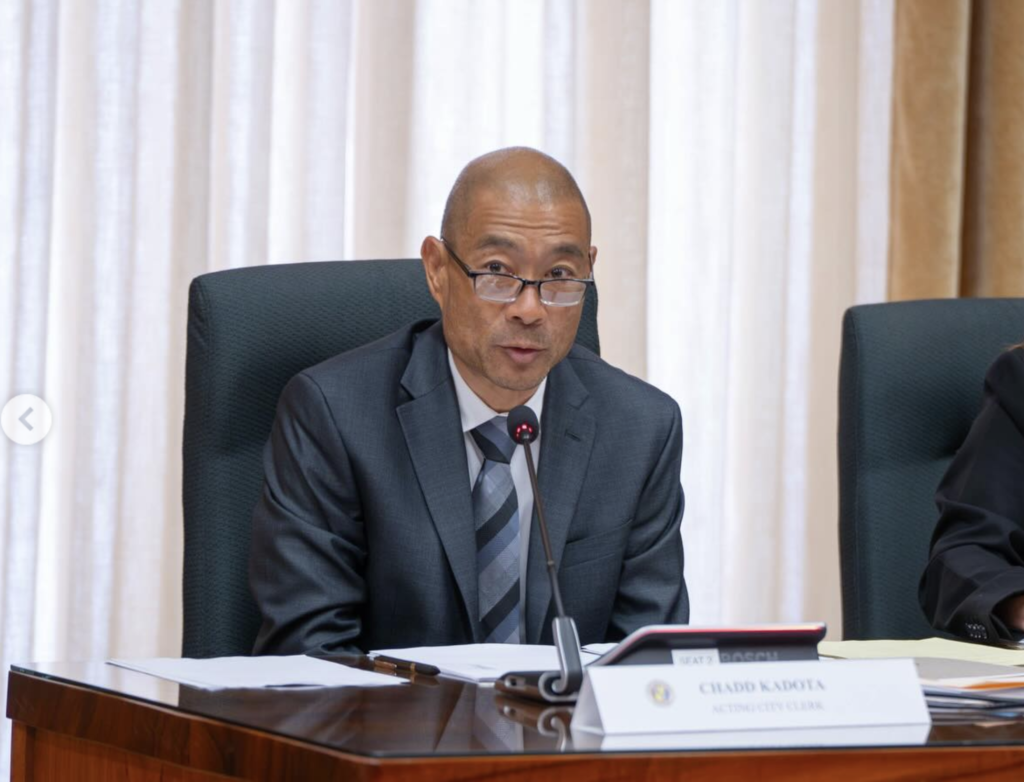
ACTING City Clerk Chad Kadota

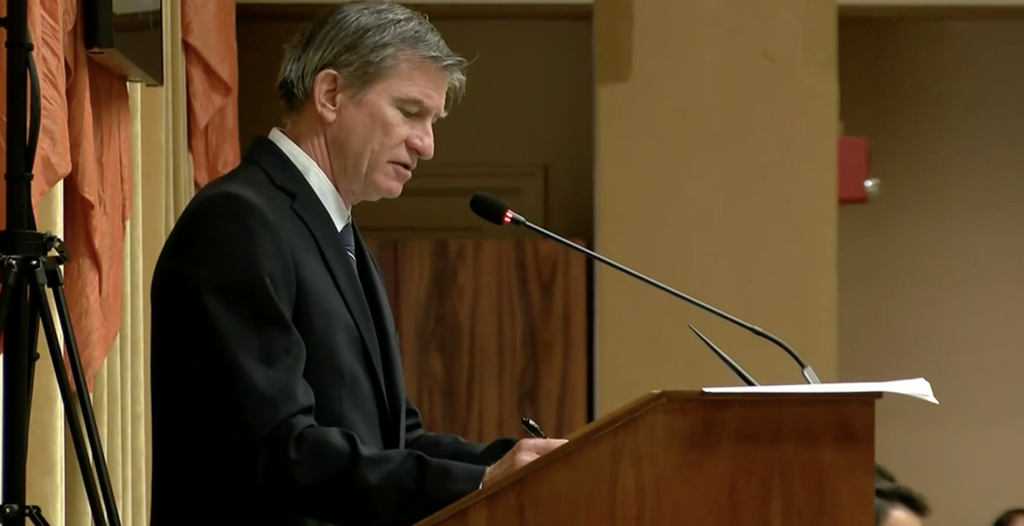
Tommy Waters as Chair of Honolulu City Council June 3rd, 2026

Another Action involving Chair Tommy Waters:

On August 18, 2026, a handful of District 4 voters have submitted to the Hawaii Supreme a COMPLAINT CONTESTING the Primary Election for their District – – to not remove Tommy Waters from the November 3, 2026 General Elections Ballot.

EXCERPT from By Daryl Huff

Published: Aug. 18, 2026 at 5:09 PM HST HONOLULU (HawaiiNewsNow) – 

The complaint says the second error was the clerk telling voters that Waters’ votes were invalid. “By declaring Waters ineligible,” the complaint says, “the Honolulu Elections Division changed the primary election results and disenfranchised voters.

“If he’s ruled eligible, then we should have a new election,” Iwasa said. “Probably even if he’s ruled ineligible, have a new election because there are just so many votes out there, thousands of them, right, who voted with one thing in mind and then learning, oh, that’s not going to work.”

Ozawa said in a statement, “Every step in this process has been public, followed the law, and been decided by a judge, not by any campaign. I trust the Supreme Court to bring this to a fair and final resolution, and in the meantime I’m staying focused on earning the votes of East Honolulu this November.”

Attorney says outcome uncertain

“The only way that they can change who is on the ballot is through an election contest. That has been settled law in Hawaii for over 100 years,” attorney Lance Collins said.

Collins says the challengers may not get the outcome they want, because the court could agree Waters is ineligible and also find that his votes should have been considered blank, which would mean Ozawa won outright with well over 50% of the valid votes.

“There is an outside chance that the Supreme Court could just simply say, Judge Ashford got it right. And as to the election contest, Mr. Ozawa outright won the race,” Collins said.

Asked how she would feel if that happened, Iwasa said, “I would feel, I would be really upset, honestly, with you. Because that, in my opinion, would not be fair at all.”

The court is on a tight deadline and could hear arguments on the appeals and challenges a week from Tuesday.

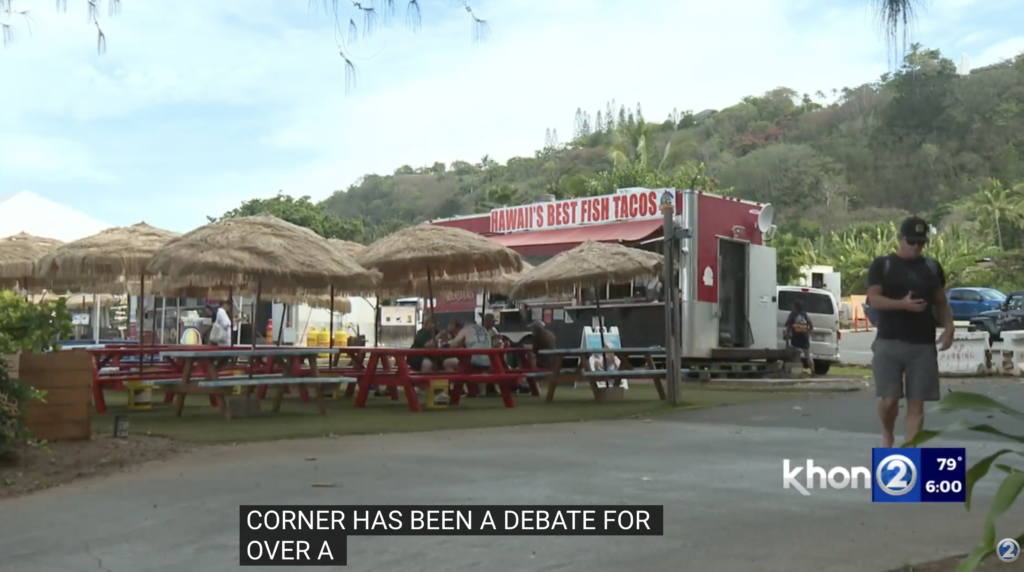
Shark’s Cove Controversy at North Shore, Oahu began with poor decision-making at the Honolulu City Department of Planning and Permitting (DPP) and City Council

In a nutshell, the County of Honolulu, Department of Planning and Permitting and City Council, failed to adhere to its own county ordinances. A B-1 Zoning is for rural communities commerce for its own neighborhood needs, not for tourism. This lack of adherence to its own Ordinances, Rules and Regulations created a lot of friction amongst residents. The livelihood of small businesses, the surrounding environment as well as the taxpayers of Honolulu have been needlessly disrupted.

Hanapohaku LLC, owned by Andrew Yani, purchased the three-acre property near Shark’s Cove in Pupukea on Oahu’s North Shore for $5.5 million in 2014. (Years later, in March 2026, the City and County of Honolulu bought this same property from Hanapohaku LLC for $24.6 million.

County of Honolulu’s Failure to recognize it’s own Planning Ordinances:

AI Overview: The North Shore | Sustainable Communities Plan is a long-range guide by the City and County of Honolulu’s Department of Planning and Permitting. It manages land use, rural character, and infrastructure from Kaʻena Point to Kawela Bay through 2045, keeping 97% of the region zoned for agriculture or preservationThe North Shore Sustainable Communities Plan Ordinance mandates the B-1 Zoning.

Under the City and County of Honolulu Land Use Ordinance (LUO) Chapter 21, B-1 zoning designates the Neighborhood Business District.

Its primary purpose is to provide small-scale commercial areas that serve the daily retail and business needs of the immediately surrounding residential population.

Common Permitted Uses for B-1 Zoning

  • Retail & Convenience: Small grocery stores, drug stores, and local retail shops.
  • Services: Dry cleaners, salons, medical clinics, and branch banks.
  • Food & Beverage: Neighborhood cafes and restaurants.
  • Mixed-Use Residential: Multi-family dwellings are permitted under specific rules, provided they are built above or alongside a commercial use on the lower level.

EXCERPT FROM CIVIL BEAT – A petition seeks to force the city to enforce land use and coastal zone management laws designed to protect marine areas from overuse. By Stewart Yerton  October 3, 2017

“In a petition filed earlier this month with the Honolulu Department of Planning and Permitting, the nonprofit organization Malama Pupukea-Waimea says the department erroneously granted a permit to allow the dining encampment and has let the landowner behind the project get away without paying fines.

Malama Pupukea-Waimea wants the planning department to require developer Hanapohaku to correct land use violations, pay outstanding fines and apply for the type of permit the owner needs to lawfully operate its food truck village in a specially protected area near the ocean.

The petition requests a contested case hearing, a sort of administrative judicial hearing before the agency, which is a necessary prelude to a court challenge.

“This poorly planned development and the irresponsible approach of the owners has imposed hardship on community,” said Denise Antolini, Malama Pupukea-Waimea’s president and the attorney who filed the petition. “For the past three years, weʻve seen a big spike in traffic, pedestrian hazards, runoff, and spillover litter and other impacts on the Pupukea beach park and the Sharks Cove marine protected area.”

Antolini said the property owners allowed things to get out of control on the site and racked up nearly $150,000 in unpaid fines for violating city planning and permitting laws, letting as many as 10 food trucks operate without the type of permit needed for coastline development.

Although the property owner has scaled back to five food trucks from eight, Antolini said the city needs to take a harder look at the project.

“Only after community vigilance, monitoring, and complaints to regulatory agencies and elected officials did Developer make any effort to reduce the impact of its activities,” Malama Pupukea-Waimea’s petition says. “However, these significant problems persist.”

Andrew Yani, a partner in Hanapohaku, declined to comment.

Curtis Lum, a spokesman for the Honolulu Department of Planning and Permitting, declined to comment, citing the litigation.”

Consequently, City and County of Honolulu exposes itself to Environmental Lawsuits and Friction

The multi-million dollar public buyout serves as the climax to nearly a decade of legal battles over commercialization:

  • The Food Truck Violations: In the late 2010s, groups like Mālama Pūpūkea-Waimea filed petitions against the developer for racking up roughly $150,000 in city fines. The site operated up to ten food trucks simultaneously without the proper coastal zone development permits, causing toxic runoff, traffic hazards, and litter spillover into the marine life conservation district.
  • The 2019 Mega-Development Lawsuit: In February 2019, Hawaii’s Thousand Friends, the Save Sharks Cove Alliance, and local residents filed a massive lawsuit against Hanapohaku LLC. They successfully blocked a proposed mauka commercial center featuring multi-story retail buildings and a 126-space parking lot.
  • The Resolution: Faced with permanent community resistance, litigation, and zoning restrictions, the developer ultimately pivoted to sell the property directly to the city, transforming a bitter zoning war into a public safety project. The city paid $24.6 Million for this property that was privately acquired in 2014 for $5.5 Million.

The City Acquisition Timeline

  • March 2026: Honolulu Mayor Rick Blangiardi announced that all primary parties signed a purchase and sale agreement to buy the 2.7-acre property from Hanapohaku LLC for $24.6 million.
  • August 2026: The land deal is undergoing its final closing stages, cementing the property for the future Honolulu Ocean Safety and EMS first responder hub.
  • August–Late 2026: Upon final closing, the city is legally mandated to issue a strict 90-day notice to vacate to the eight onsite commercial tenants.
  • The Long-term Outlook: Affected businesses (including North Shore Surf Shop and Sunrise Shack) are actively petitioning for a compromise, but city officials stated they lack the legal framework to mix private commercial storefronts with public safety facilities on the site. The city plans to offer off-site relocation assistance.

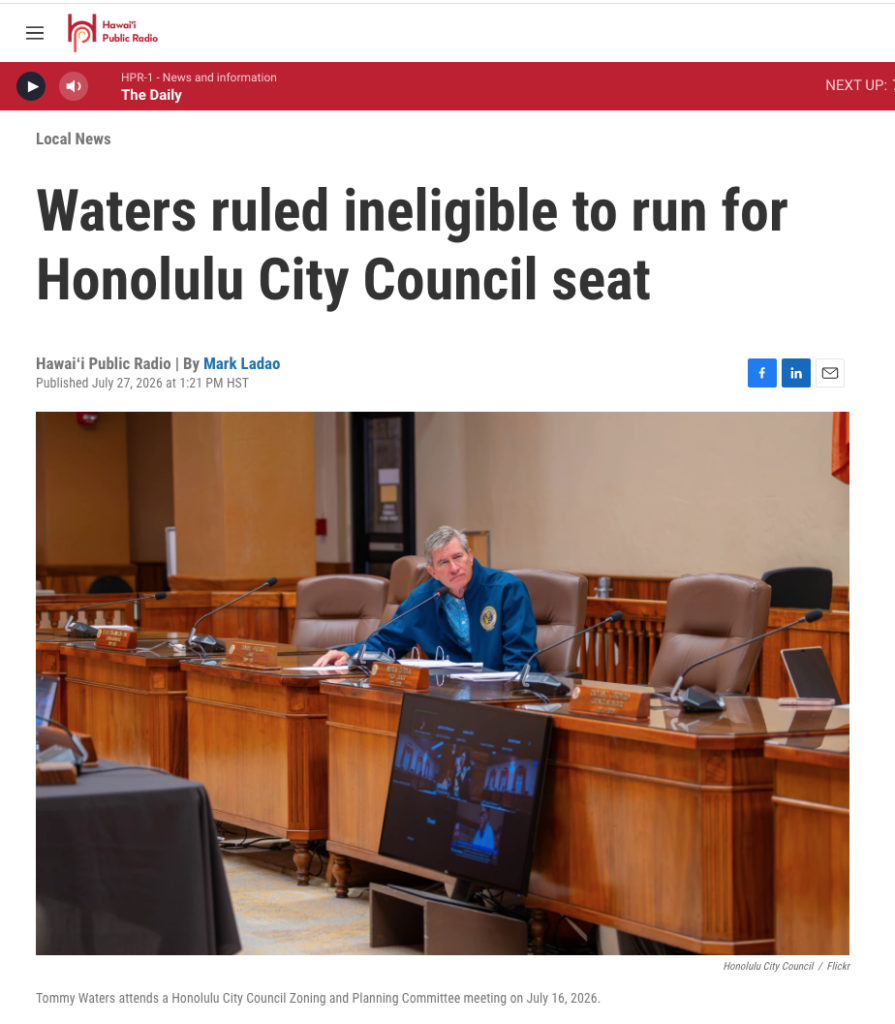
Honolulu City Council Chair Tommy Waters ruled ineligible to run for Third Term

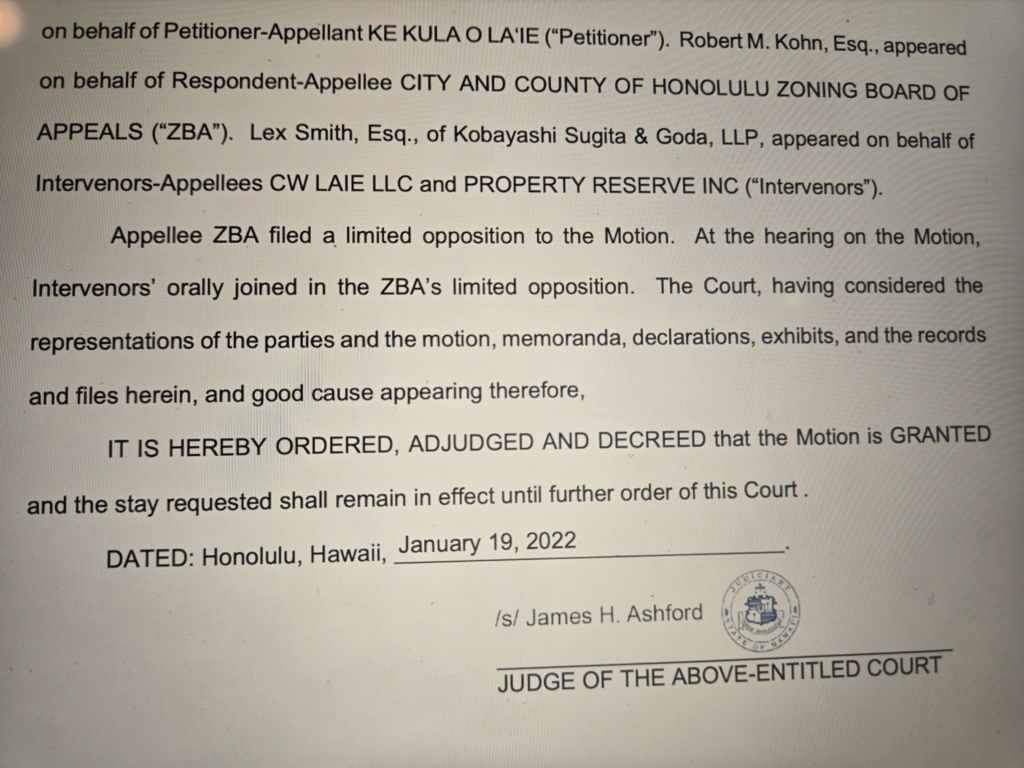
Circuit Court Judge James Ashford ruled today, maintaining that Waters cannot run for a Third Consecutive Term for District District IV – Hawai‘i Kai, Kuli‘ou‘ou, Niu Valley, ‘Āina Haina, Wailupe, Wai‘alae Iki, Kalani Valley, Kāhala, Wilhemina Rise, Kaimukī, Kapahulu,
Diamond Head, and Waikīkī

However, this ruling does not prevent Waters to take a break and run again for a seat in the Honolulu City Council. It’s just that ““No person shall be elected to the office of councilmember for more than two consecutive four-year terms.” as currently stipulated in the Honolulu City Charter.

The letter of the law and the spirit of the law is in play here.

Trevor Ozawa filed a lawsuit questioning Chair Waters’ action:

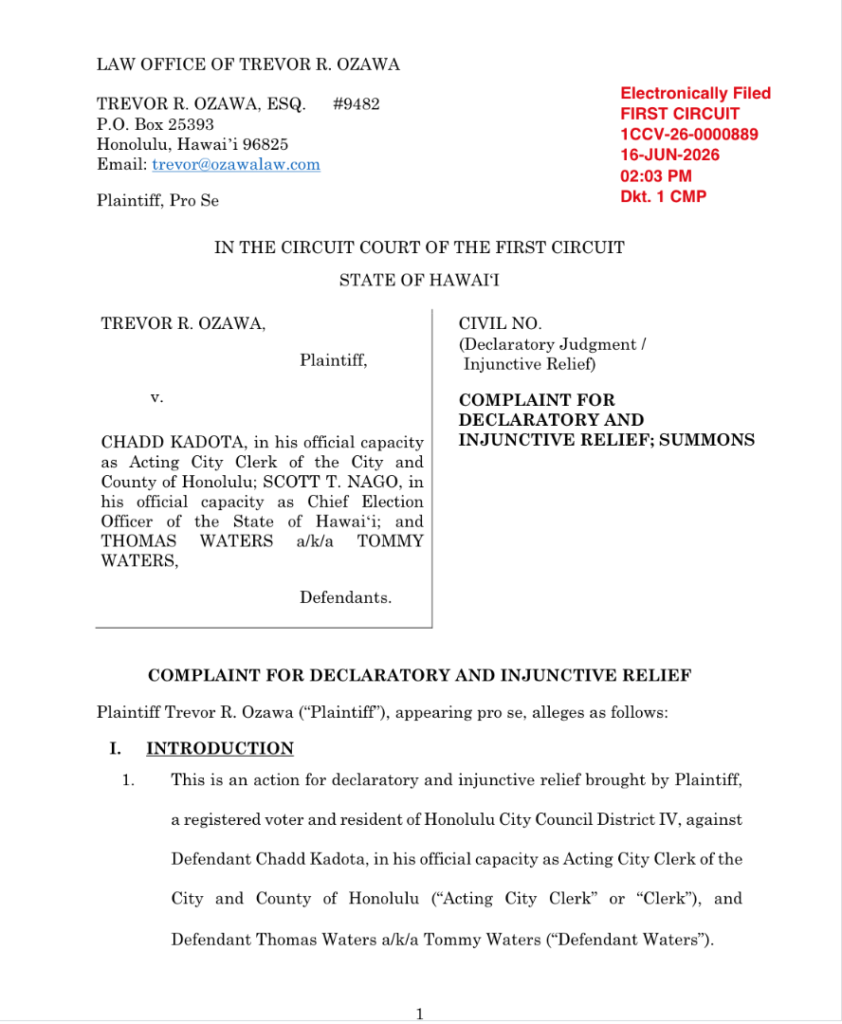
Below is excerpt of the Complaint for Declaratory and Injunctive Relief from the Circuit Court:

This action presents a single, narrow, and purely legal question: whether
Defendant Waters is eligible under Section 3-102 of the Revised Charter of
the City and County of Honolulu (“Charter”) to be a candidate for, and to be
elected to, a third consecutive four-year term as Councilmember for District
IV in the November 2026 election.


3. Charter Section 3-102 provides, in relevant part:


“No person shall be elected to the office of councilmember for more
than two consecutive four-year terms.”


4. Defendant Waters was elected to the office of councilmember for the 2019–
2023 four-year term at a special remedial election held April 13, 2019. He
was elected to the office of councilmember for the 2023–2027 four-year term
at the general election held November 8, 2022. He has now filed a
nomination paper seeking election to the 2027–2031 four-year term — his
third consecutive election to a four-year council term, in direct violation of
Charter Section 3-102.


5. On June 5, 2026, Plaintiff filed a timely Written Objection to Defendant
Waters’ nomination paper with the Acting City Clerk pursuant to Hawaii
Revised Statutes (“HRS”) § 12-8, setting forth in detail the legal and factual
basis for Defendant Waters’ ineligibility. On June 12, 2026, the Acting City
Clerk issued a preliminary determination declining to refer the matter to
circuit court and stating that “no further action will be taken by this Office.”

6. The Acting City Clerk’s determination does not withstand scrutiny. It rests
on the proposition that Defendant Waters was elected to “a term of office
that commenced on May 6, 2019” — a phrase, and a date, that appear
nowhere in the Charter. Charter Section 3-102 provides that regular
council terms begin “at twelve o’clock meridian on the second day of
January following [the councilmember’s] election,” not on the date of the
councilmember’s oath of office. The Acting City Clerk’s determination
conflates the commencement of Defendant Waters’ personal service with
the commencement of the Charter-defined four-year term — a conflation
the plain text of the Charter forecloses.


7. This is the second time the Acting City Clerk has reached this same
erroneous conclusion on this same record. A substantially similar objection
filed by Christian H. Butt on March 23, 2026 received a materially identical
response on April 7, 2026 — including the same factual error regarding the
date of Defendant Waters’ swearing-in.


8. Plaintiff brings this action because no other adequate remedy exists to
resolve this purely legal question before ballots are printed and the 2026
election proceeds. The material facts are a matter of public record and are
not in genuine dispute. What remains is a question of law: the meaning of
Charter Section 3-102 as applied to an undisputed factual record. Plaintiff
intends to move for summary judgment promptly following Defendants’
appearance in this action.

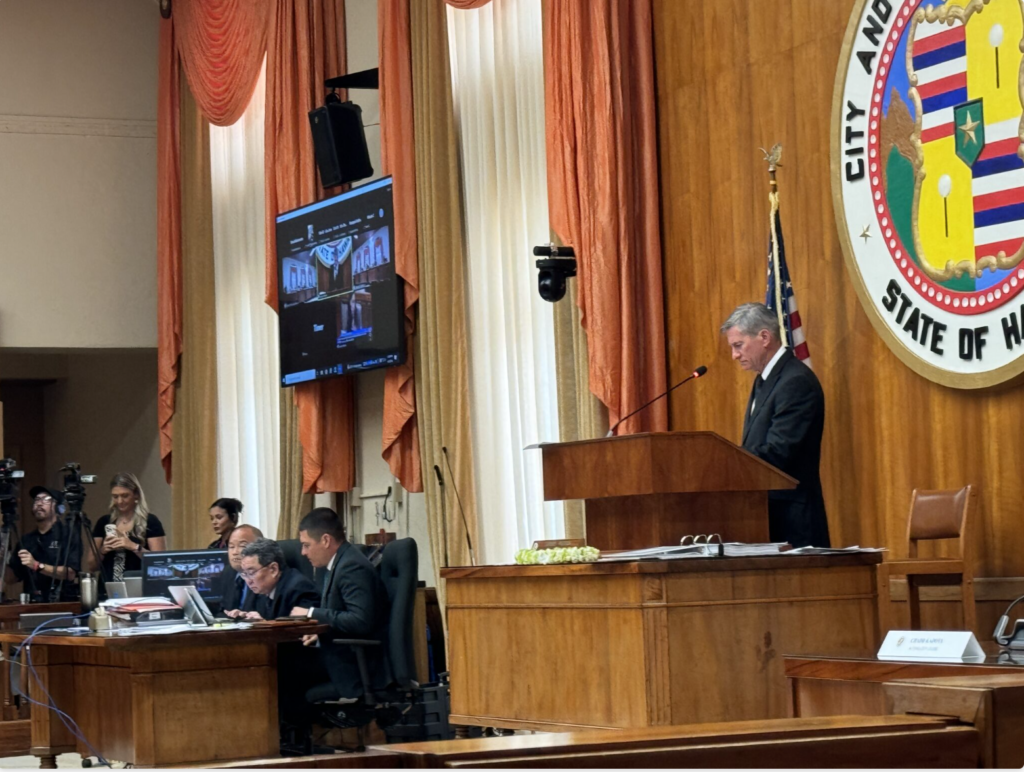
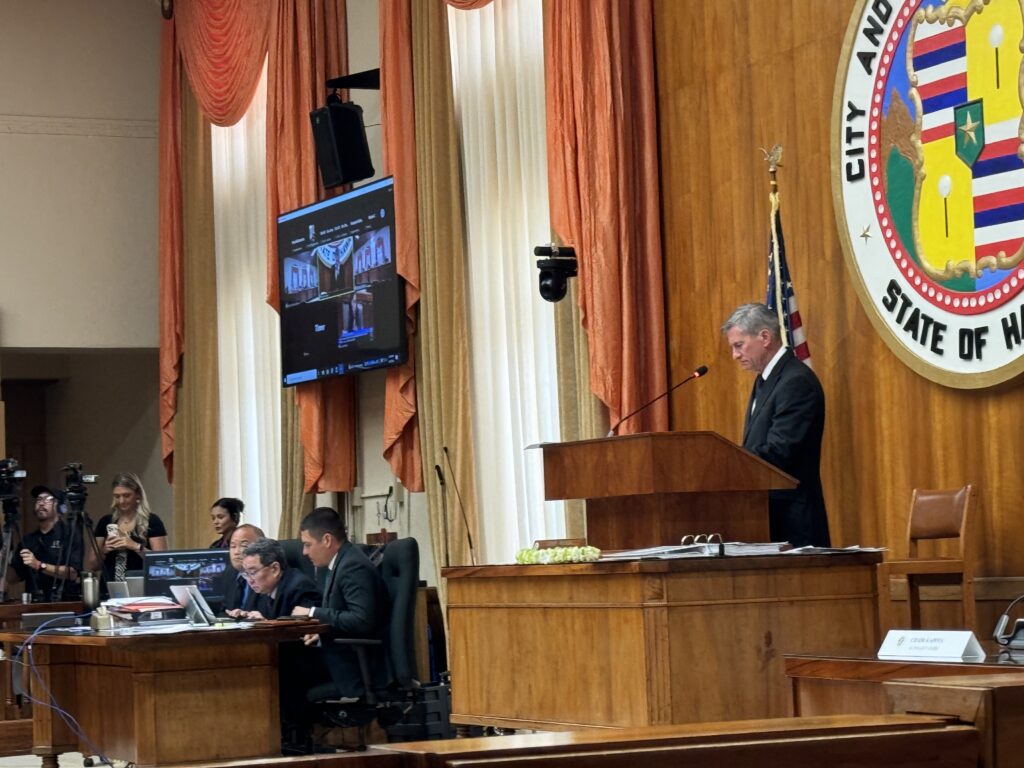
Council Chair Tommy Waters at the Honolulu Hale Chambers. Next to him is the Acting City Clerk Chadd Kadota.

The Council Chair said he would appeal after the ruling. There are obviously questions whether the Chair of the City Council set up his Eligibility question for his own personal gain. Chair Waters himself told the public he was testing the waters.

The pressure on an ACTING City Clerk Chadd Kadota to make the decision as to whether Waters is eligible or not for a Third Term must be tremendous. It’s the Honolulu City Council who does the hiring of this clerk position.

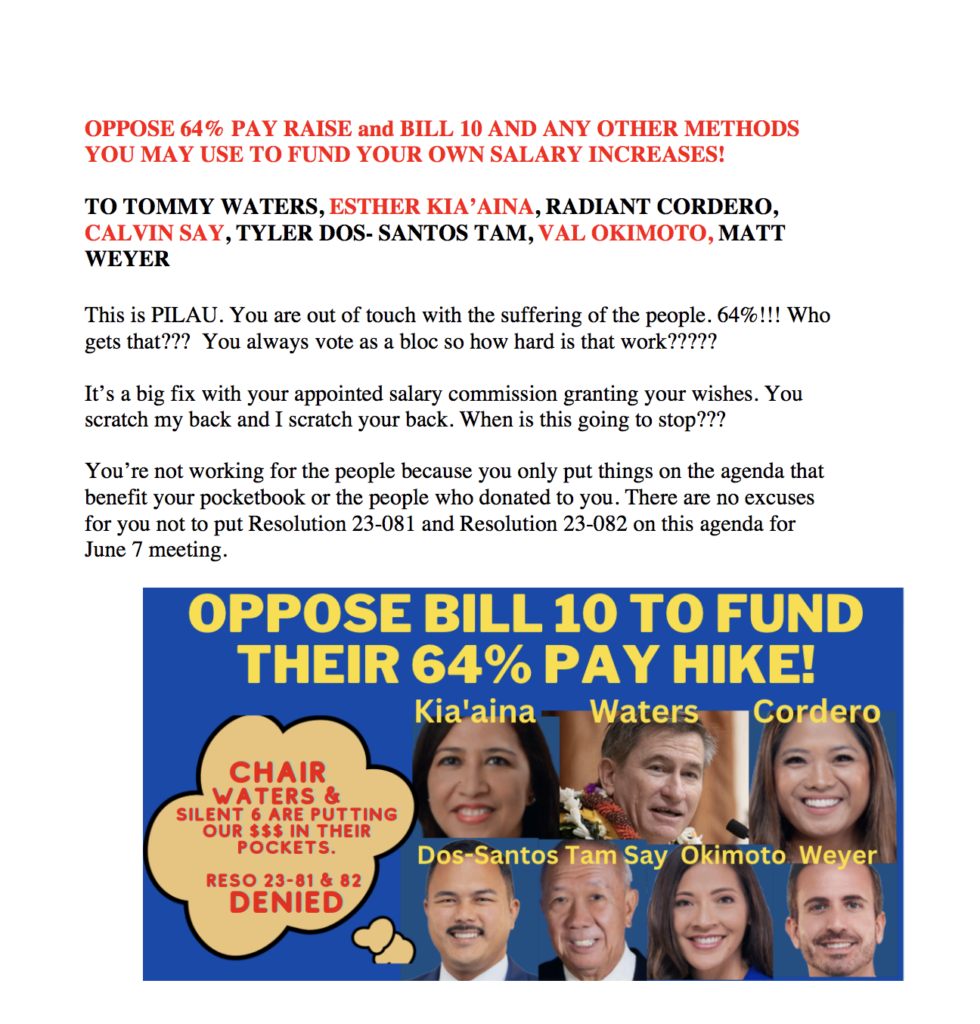
Besides the above controversy, Chair Waters’ intransigent push to diss the public on their 64% salary raise will stick negatively with his public record.

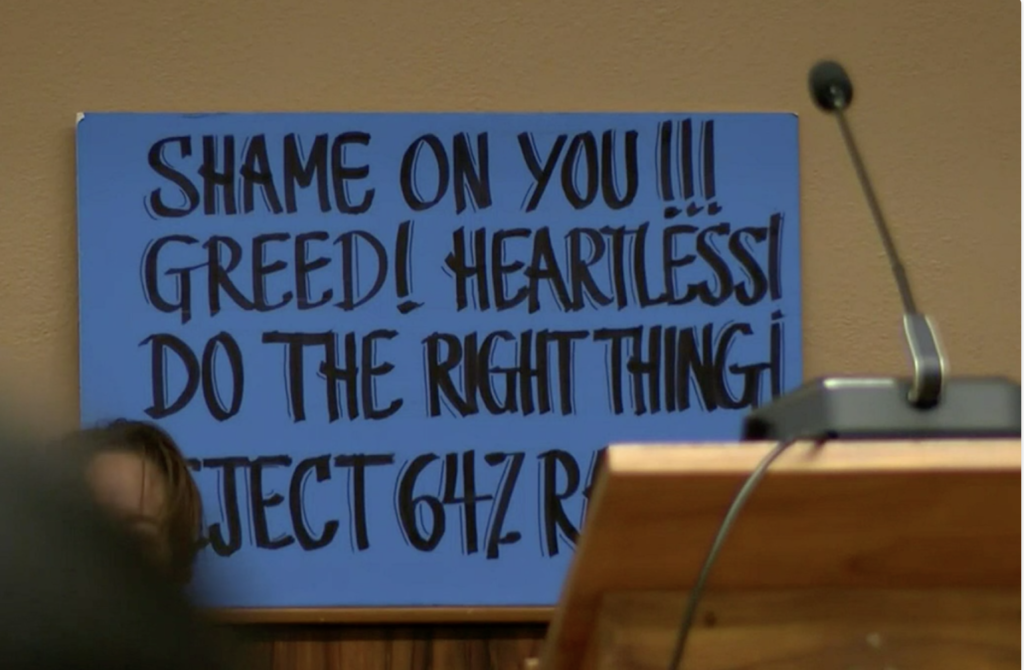
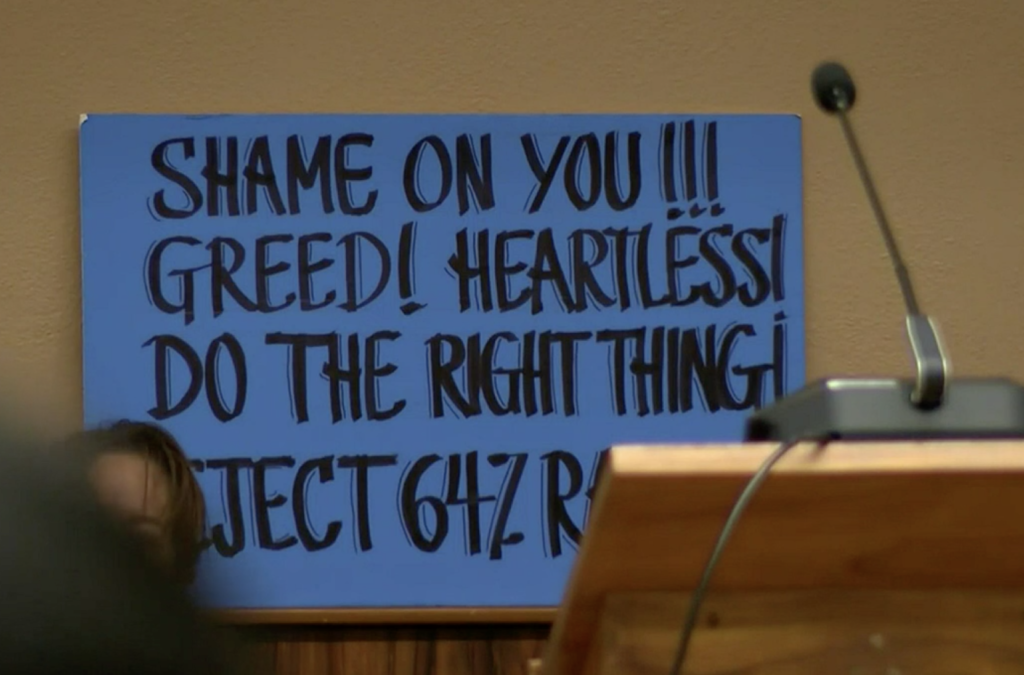
Tommy Waters’s most controversial action as the City Council Chair was to prevent a public participation by refusing to place on the council agenda relating to the infamous 64% salary increase in 2023 – – Scroll to 6:58 to watch the spirited pushback from the public.

After the intransigent approval, the city council Chair Waters, Esther Kia’aina, and others proceeded to adopt a charter question to remove themselves from making decisions on salary increases. Instead, the responsibility to approve salary raises now falls on the Honolulu Salary Commission, appointed by the City Council and Mayor. As of today, the cumulative salary increase has been 86%. There’s a lot the public can forgive, but this one will haunt Waters for a very long time.

Chair Waters has made “improvements” to the Council in various ways. The City Council website now prominently features the Council members. Look at his own promotion as Chair. This city-funded social media promotion has never been done before by other Council Chair.

It’s not clear whether a dedicated spokesperson for the Council is still in place. Of course, the question would be why would the City Council need a dedicated media spokesperson when the City Council member can hold their own. Each council already has about five full-time staff. Other support include the entire Council Services that cover professionals who provide legal drafting, research, budget analysis and so forth.

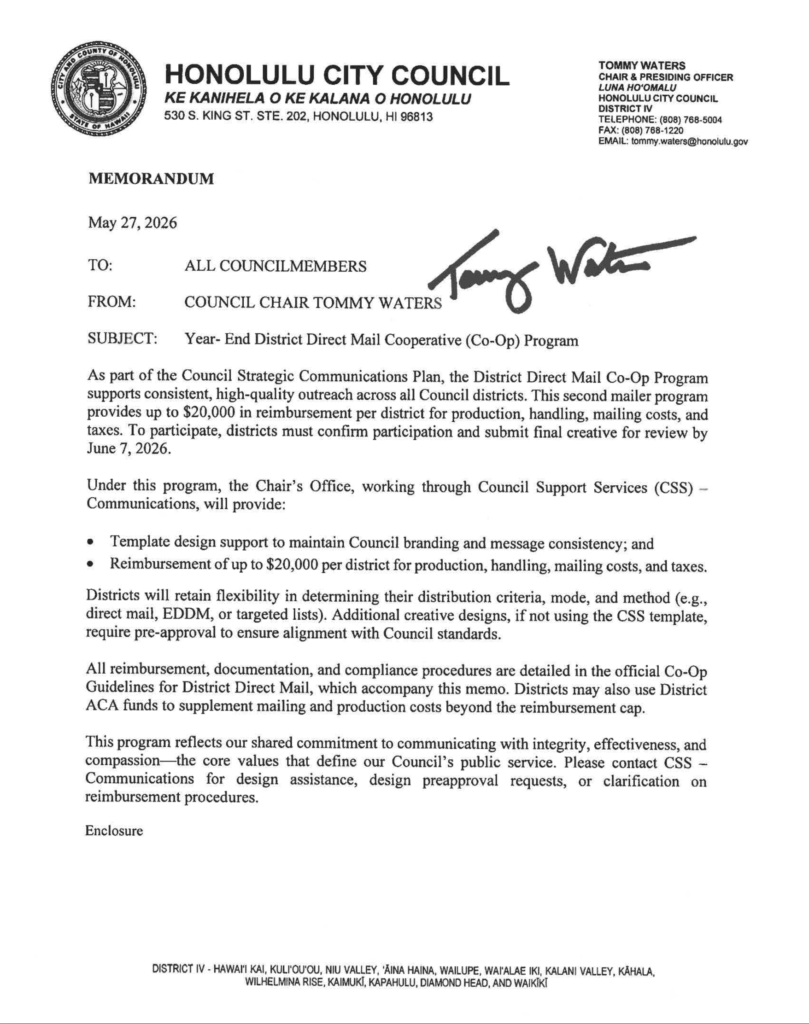
Another recent “improvement” is the additional available funds to support Council members in the name of “shared commitment to communicating with integrity, effectiveness, and compassion – the core values that defines our Council’s public service.

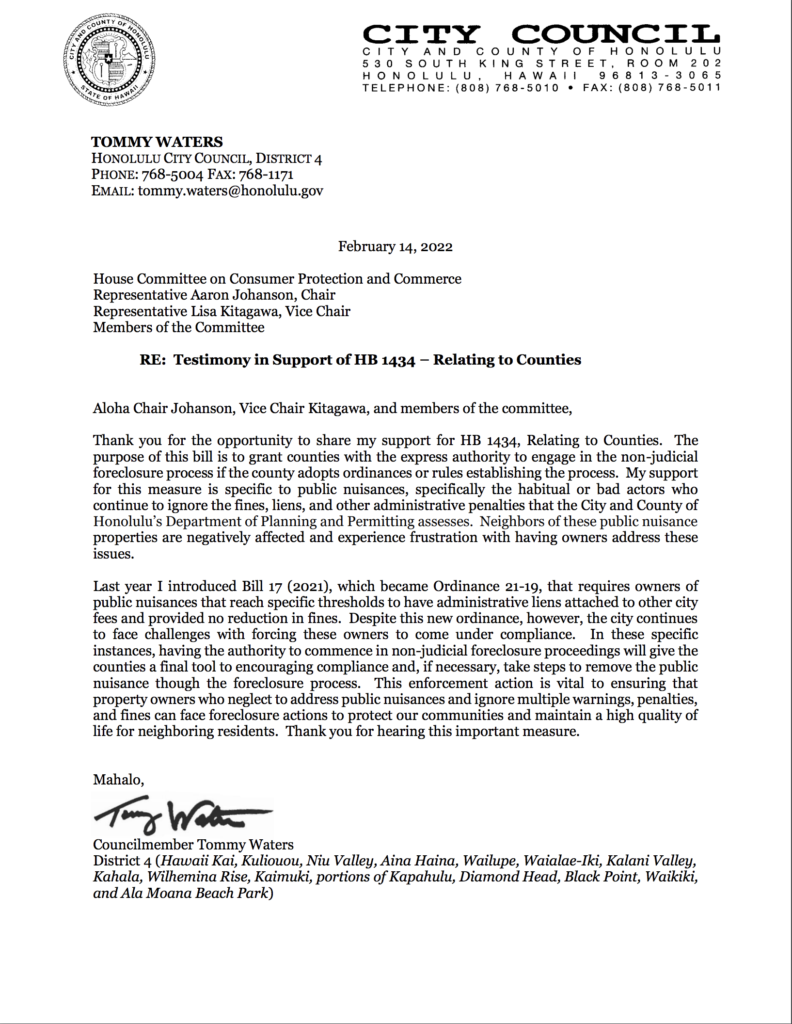
Yet, away from the public radar, Chair Waters has quietly promoted punitive measures without Due Process to the Public. Unbeknownst to the general public, HB 1434 submitted by Honolulu Mayor Rick Blangiardi (as a Mayoral Legislative Package to the State Legislature) was the beginning of a new agenda to deny Due Process to Hawaii. It’s ongoing since 2021.

The DPP Director and five Honolulu City Council Members also testified or submitted written testimony to the STATE Hawaii Legislature for new powers to seize property through NON-Judicial Foreclosure, due to DPP county fines. This is very concerning as he should know that the government is not always right and the public always wrong. Due Process is a fundamental right for a citizen. Such an over-reaching power should be made known to the Public.

This agenda is continuing.

Chair Waters is also known for his inconsistent management of time limit for Public Testimony at Honolulu Hale. Some testifiers are allowed to have more than ample time while he cuts off others.

Chair Tommy Waters has shown to be a politician with a punitive streak inside Honolulu Hale. As the Chair, he has the power to assign positions. He uses his power when loyalty to his agenda is tested.

My biggest concern as a citizen is the fact that the Council Chair has not questioned the Honolulu Rail aka Skyline budget each year. It bites a huge chunk of the city’s treasury every year. But, during this 2026-27 budget session, much more media attention and efforts were focused on the manini Office of Economic Revitalization (OER) than the extremely expensive white elephant at Honolulu Hale. Many in Oahu are hurting with the costs of living and yet not much is focused on this need.

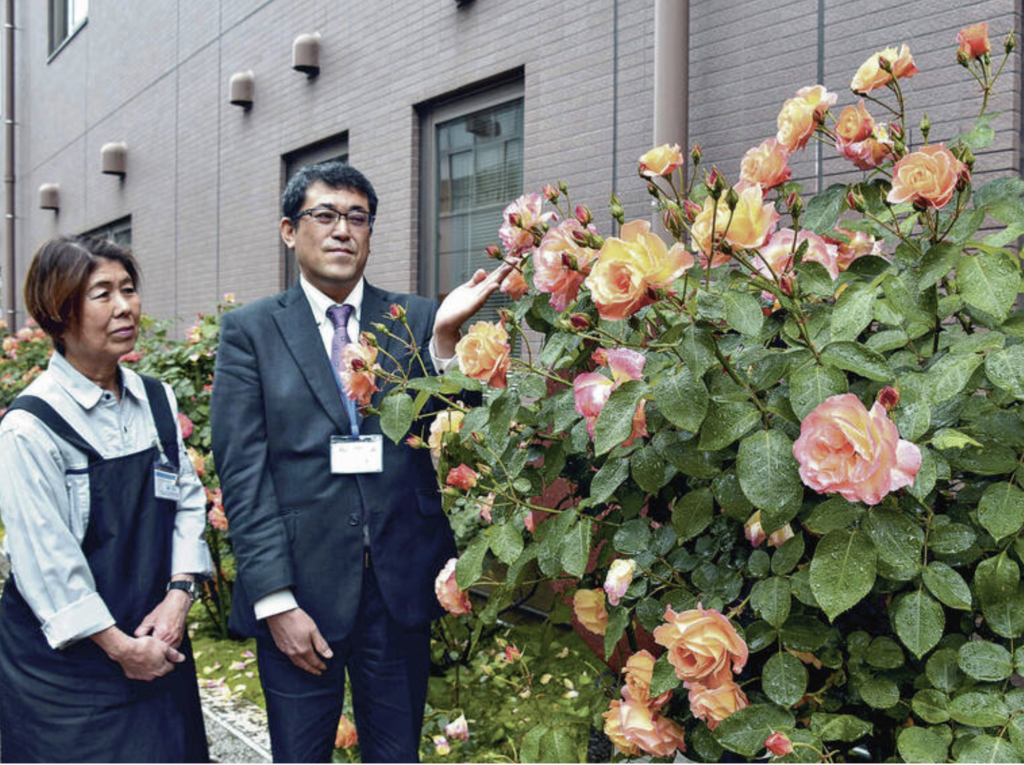
‘Anne Frank’ roses bloom at Tokyo school

By Japan News

June 25, 2026

Roses grown in memory of Anne Frank are in full bloom at Takaido Junior High School in Suginami Ward, Tokyo. Otto Frank, Anne Frank’s father, gifted the school with the rose plant a half-century ago.

TOKYO >> About 200 rose plants of a variety named in honor of a young writer who died in the Holocaust have bloomed at Takaido Junior High School in Suginami, Tokyo.

The roses are referred to by the school as “Rose of Anne Frank.” Anne perished in a Nazi concentration camp during World War II. Otto Frank, Anne’s father, presented the school with some of the rose plants a half- century ago, and the school has nurtured them with great care ever since.

A Belgian horticulturist developed the variety in memory of Anne Frank and gave it to her father. Its buds are red, and as they bloom, the flowers change in hue from orange to pink, a unique characteristic of the variety.

About 50 years ago, Takaido students read a Japanese translation of Anne’s “The Diary of a Young Girl” and wrote compositions in the form of letters to Anne. The school compiled them into a collection, which they sent to her father.

That inspired a correspondence between the students and Otto Frank. During their exchanges, the students shared their wishes to plant the rose at the school as a symbol of peace, and Frank sent 10 plants to Japan. Three were planted at the school.

In 2004, school parents and local residents formed a group to tend the roses. Currently, about 40 people are still helping students care for the flowers.

The school also donated roses to more than 100 schools and other places in Japan.

Some Answers to Your Questions about the Honolulu City Council 64% Pay Raise Controversy

2023 Pay Raise Ruckus

Parts of this information is from public domain. The Approval of the City Council 54% Pay Raise is on around April 22, 2023. This huge increase caught the ire of the public. Much attention was focused on this issue that also produced significant attendance that prolonged into the evening at Honolulu Hale.

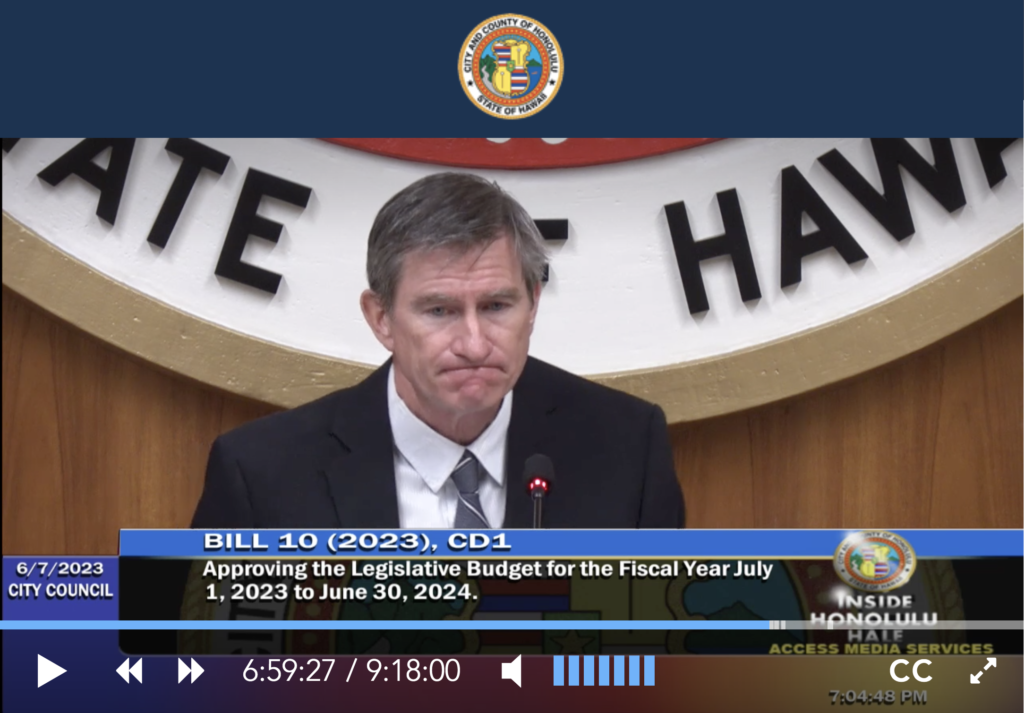
Tommy Waters was the Chair of the Honolulu City Council who pushed this through. This is the recording on June 7, 2023 beginning 6:59

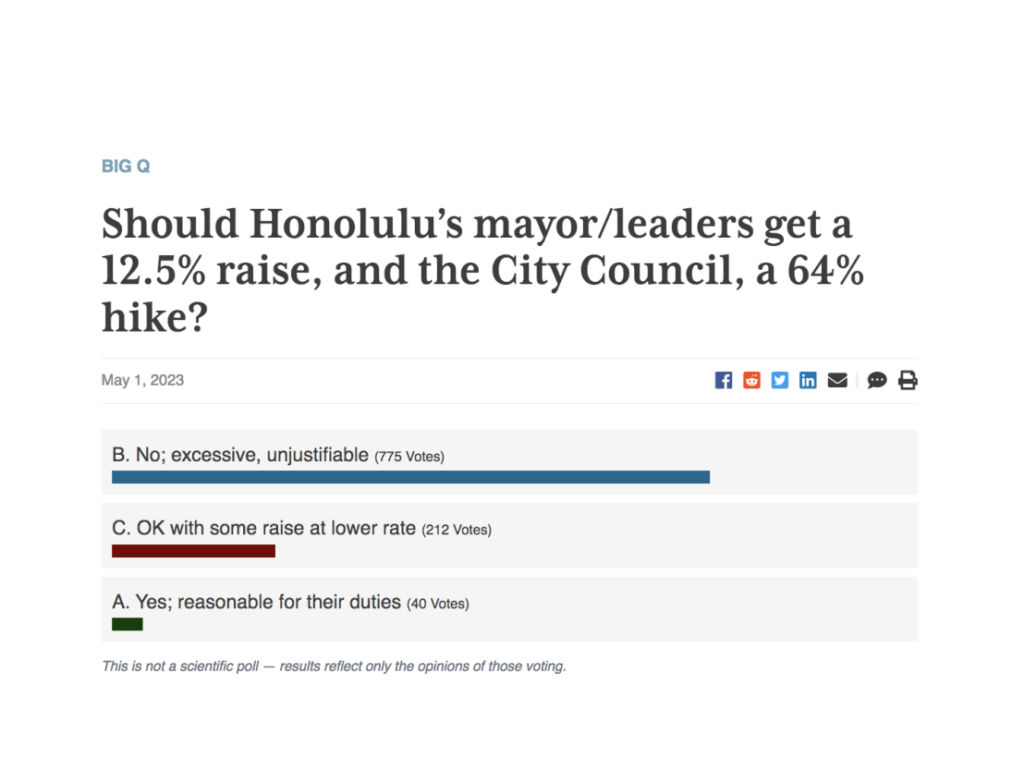
There was even a polling by the Honolulu Star Advertiser with overwhelming voters against the 64% pay raise.

Chair Tommy Waters dug in his heels.

In 2023, the Honolulu Salary Commission approved a controversial 64% pay raise that increased City Council members’ salaries from $68,904 to $113,304 per year, and raised the Council chair’s salary to $123,288. The adjustment cost the city an additional $44,40 annually per participating member.

Summary of 2023 Adjustments

  • Council Members: Base pay increased from $68,904 to $113,304
  • Council Chair: Pay increased from $76,968 to 123,288
  • Mayor & Executive Leadership: Received a smaller 12.6% pay raise during the same cycle, with the mayor’s salary rising above $200,000.00

Key Developments Since 2023

  • Charter Amendment Capping Raises: Public backlash over the hike led Oahu voters to overwhelmingly approve a charter amendment, which took effect in 2025, capping future raises at 5% annually and removing the City Council’s authority to vote on their own compensation.

I voted NO against this Charter Amendment Capping Raises. It fundamentally takes the accountability from the ELECTED City Council Members. It passes the buck to the Salary Commission and takes the City Council members off the hook.

This is a very bad direction in many ways.

First, the city council position is an elected position. It should not be clumped together into the regular employee salary category.

Second, the City Council members must be accountable to the public in this elected office.

Third, the City Council and the Mayor appoints members to the Honolulu Salary Commission who will make the ultimate decision on salaries for the people who appointed them.

  • Rejections: Council members Andria Tupola, Radiant Cordero, and Augie Tulba formally rejected the 2023 pay raise at the time.
  • In 2023, Councilmember Andria Tupola, along with Councilmember Augie Tulba, introduced two resolutions (Resolution 23-81 and Resolution 23-82) to reject the Honolulu Salary Commission’s controversial 64% pay raise for council members and executives.
  • Resolution 23-81: Requested the rejection of salary increases and schedules for all city officials (including the Mayor and executives) on the basis of current economic conditions. Although the Council Chair Tommy Waters refused to put this Resolution on the Agenda to be discussed. Irate residents went ahead and submitted written testimonies to this Resolution to vent their anger. Read the written testimonies here.
  • Resolution 23-82: Specifically called to reject the Council members’ and the Council chair’s pay hikes, citing that the recommended raises were “unreasonably high and should not be allowed to take effect”.
  • Residents again were denied public participation as Chair Tommy Waters refused to put the two about Resolutions into the agenda for discussion. Residents collected some petitions but to no avail.
  • Because Council Chair Tommy Waters refused to schedule the resolutions for a hearing, the salary increase never received a vote amongst the council members. However, The Salary Commission Recommendations were accepted. The public was denied public participation. Tupola ( and Augie Tulba) formally rejected the pay raise in a memo to the city to keep their salary at its lower 2022 level ($68,904), although she eventually accepted the higher salary after the buzz subsided and she was re-elected.

2026 – – Another salary increase. City Council member Esther Kia’aina presently opposed the Salary Commission 4.7% making a differentiation between elected and employee salaries. However, she was a staunch supporter of the 2023 salary 64% increase. She also supported the City Charter Question relieving the City Council of accountable by giving full power of decision to the appointed Salary Commission.

  • Subsequent Adjustments: In 2026, the Honolulu Salary Commission authorized another 4.7% salary increase for executive and legislative posts, pushing regular council members’ salaries to $127,801

Knowledge is Power

Repost: This is a good reminder that we can all learn to obtain knowledge and continue to learn. There is no age limit.

Nearly 700 people were injured and 214 missing due to the Indian Ocean earthquake that trigger the tsunami in 2004 in Phuket, Thailand.

A ten-year-old started screaming about a wave no one could see—and 100 people lived because her parents believed her.

December 26, 2004. Mai Khao Beach, Phuket, Thailand. Christmas holiday. Perfect weather. The Smith family walked along the sand on their first overseas vacation together.

Then Tilly noticed something wrong.

The water wasn’t behaving normally. “It wasn’t calm and it wasn’t going in and then out,” she later recalled. “It was just coming in and in and in.”

The sea had turned frothy—”like you get on a beer,” she said. “It was sort of sizzling.”

Any other ten-year-old might have thought it strange. Tilly knew exactly what it meant.

Two weeks earlier, her geography teacher Andrew Kearney had shown the class footage of the 1946 tsunami that devastated Hawaii. He taught them the warning signs: sea receding unusually far, frothy bubbling water, ocean behaving strangely.

Tilly was watching those exact warning signs unfold in front of her.

She started screaming at her parents. “There’s going to be a tsunami!”

They didn’t believe her. They couldn’t see any wave. The sky was clear. The beach was calm.

But Tilly wouldn’t stop. She became more insistent, more frantic.

“I’m going,” she finally said. “I’m definitely going. There is definitely going to be a tsunami.”

Her father Colin heard the urgency in her voice. He decided to trust his daughter.

By coincidence, a Japanese man nearby overheard Tilly use the word “tsunami.” He’d just heard news of an earthquake in Sumatra. “I think your daughter’s right,” he said.

Colin alerted hotel staff. They began evacuating immediately.

Tilly’s mother Penny was one of the last to leave. She had to sprint as the water began rushing in behind her. “I ran,” she recalled, “and then I thought I was going to die.”

They made it to the second floor with seconds to spare.

Then the wave hit. Thirty feet tall.

Everything on the beach—beds, palm trees, debris—was swept into the pool and beyond. “Even if you hadn’t drowned,” Penny later said, “you would have been hit by something.”

The 2004 Indian Ocean tsunami killed over 230,000 people across 14 countries. Entire beaches in Phuket were wiped out.

But at Mai Khao Beach, not a single person died.

Because a ten-year-old girl paid attention in geography class.

Tilly was hailed as the “Angel of the Beach.” She received awards, spoke at the United Nations, met Bill Clinton. Her story is now taught in schools worldwide.

Her father Colin still thinks about what could have happened. “If she hadn’t told us, we would have just kept on walking,” he said. “I’m convinced we would have died.”

Tilly still credits her teacher. “If it wasn’t for Mr. Kearney,” she told the UN, “I’d probably be dead and so would my family.”

Two weeks. One lesson. One hundred lives.

That’s the power of education.

NOTE: AI – In the 2004 Indian Ocean tsunami, approximately 250 to 279 people died in Phuket. While Phuket saw significant localized devastation, the neighboring mainland province of Phang Nga (particularly the tourist area of Khao Lak) was much harder hit, suffering over 4,000 fatalities.

Don’t mess with the US Constitution

Reprint: Hawaii State Legislature 2022

Choon James

onSeptdorst0brc 1317a6i2708ue40237y2686ra4u58f7fga1F2a54,2l  ·

Shared with Public

Public

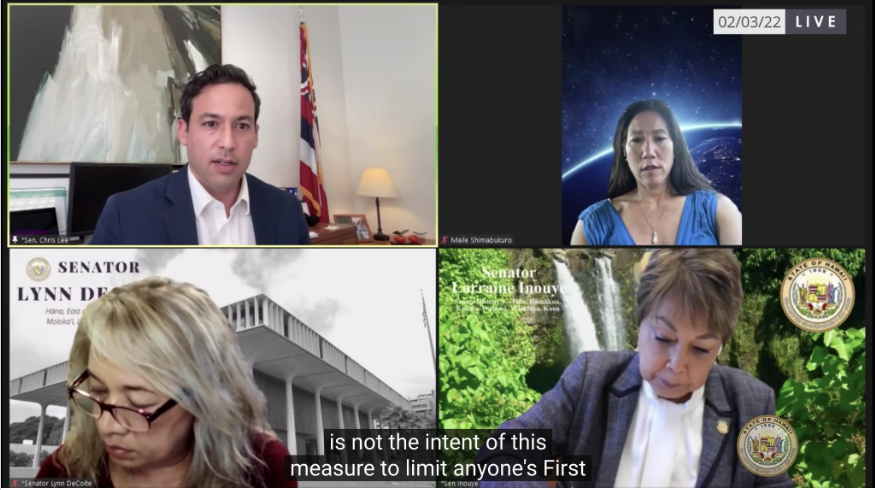
DEFERRED to Tuesday 2-8 3:05PM AGENDA. SB 1357 to prohibit flags display on vehicles on roads, etc. SCROLL TO 1:30 for status: https://www.youtube.com/watch?v=Y_Puas70MFA

We can’t have government shutting down Free Speech.

SECTION 1. The legislature finds that flags flown from vehicles being operated or moved on streets cause distractions and create unsafe driving conditions. The purpose of this Act is to discourage unsafe practices.

—————————————————————-

We must protect Free Speech at all costs.

There are lots of distractions and unsafe driving conditions on the road – Loose dogs. Drunk driving. Driving in opposite directions. Tourist trolleys. Huge vehicles blocking our view planes. Sign Waving. Display of huge banners on buildings along roads.

The item that is most distracting is the POTHOLES!!

We’re forced to keep our eyes down on the road to avoid the potholes which are EVERYWHERE. Our tires blow out. Cars try to miss the potholes on busy streets. The underbelly of the vehicles are damaged.

POTHOLES are the most dangerous and most distracting.

Hundreds of millions of dollars are spent but our roads have become more and more dangerous. We would like the Hawaii Senate to focus on this huge distraction …. require a warranty on the road roadwork and so on to promote road safety. It’s ridiculous that every time it rains, more potholes appear. There is no reason why the state cannot expect basic workmanship for the hundreds of millions that are spent annually.

Please terminate SB 1357 – It’s treacherous to free speech and an open democracy.

#2022 #HawaiiStateCapitol #FreeSpeech #FirstAmendment

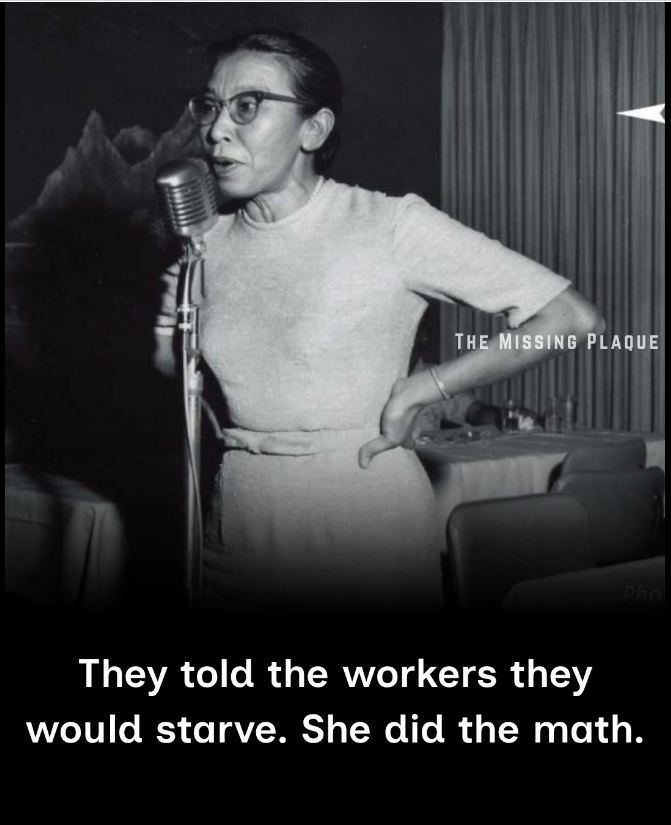
Ah Quon McElrath – The International Longshore and Warehouse Union (ILWU) Activist.

“AQ” was not a personal friend. I wish she was. But someone told me a funny story about her. I remember her roaming the State Capitol in her senior years the few times I was there. The Honolulu Hale is my familiar space, not the State Capitol. That person said she would roam the halls of the Hawaii State Capitol. She was fearless. It came to a point where politicians would see her coming and evade her.

She was known to tell a politician in her or his face and asked, “What’s wrong with you?”.

We need more Ah Quons!

The following excerpt is copied for educational purposes:

The Missing Plaque

ornSpdstoeu2g32tPg2tg3my1 a1i  3f12a2 1:62g00tlltaMM1c88mmgu ·

In 1946, Hawaiian sugar plantation workers made 24 cents an hour. The five corporations that owned the islands also owned the houses, the hospitals, the water lines, and the grocery stores. They were known simply as the Big Five. If a worker complained about the heat, the twelve-hour shifts, or the cane dust coating their lungs, they were evicted. If they struck, they starved.

Ah Quon McElrath knew exactly how the math of poverty worked. She was born directly into it. The daughter of Chinese immigrants, she grew up in the shadow of the Iwilei canneries and the massive sugar estates. Her father died when she was just a child. She watched her mother take in laundry, washing heavy work clothes by hand over a wooden board to keep the family from eviction. The territory in the decades before statehood was not the tourist paradise advertised in mainland magazines. It was an industrial fiefdom.

Five massive sugar agencies. Castle & Cooke. Alexander & Baldwin. C. Brewer. American Factors. Theo H. Davies. They controlled ninety percent of the economy. They dictated the price of land. They owned the shipping routes. They wrote the laws in the territorial legislature. They set the daily wages of the men who swung the machetes in the fields.

Ah Quon had managed to secure a university degree in sociology, but she remained rooted in the world of the laborers. She walked with a slight physical limp from a severe childhood burn, moving deliberately through the dirt roads of the camps, carrying notebooks filled with grocery prices, medical costs, and the true cost of living.

On September 1, 1946, the plantations went completely silent. The International Longshore and Warehouse Union (ILWU) called a territory-wide strike. Seventy-nine thousand workers and their dependents walked out of the fields. The cane stopped moving to the mills. The harvesting machines sat idle in the sun.

The Big Five responded exactly as expected. They locked the heavy wooden doors to the company-owned plantation stores. They cut off all lines of credit for rice and flour. They drafted eviction notices for the company-owned shacks. The plantation managers assumed the workers would return in a matter of days. A man might risk his own job, the corporate logic went, but he would not let his children go hungry. The isolation of the islands meant no outside help could arrive by train or truck. The workers were geographically trapped.

Records show the Big Five deliberately imported laborers from different countries over the decades—Japan, the Philippines, Portugal, Korea, China. The companies housed them in strictly segregated camps and paid them different wages based entirely on their ethnicity. At the time, the prevailing corporate strategy documented in management ledgers assumed that groups who could not speak the same language, worship in the same way, or eat the same food could never organize a unified strike. The division was not accidental. It was a highly calibrated structural mechanism of control.

The system the companies relied on was known formally as the perquisite system. Under this arrangement, housing, medical care, and fuel were not purchased by the workers with their own money. They were provided directly by the plantation as part of their compensation. It looked like benevolence on paper. In practice, it meant the company held absolute authority over a family’s daily survival.

When the strike began, the companies immediately weaponized the perquisites. Plantation doctors were instructed to turn away striking families. Water lines to the camps were threatened with shutoffs. The message was delivered without emotion or fanfare: the company owned the infrastructure of life, and the company was shutting it down.

During the second week of the strike, the eviction warnings appeared. Small, typed pieces of paper pinned to the wooden doors of the camp houses. The workers had no savings to rent apartments in Honolulu. They had no vehicles to leave the rural estates. There was literally nowhere else to go.

Ah Quon McElrath did not speak five languages. She spoke arithmetic. The ILWU named her its first social worker. Her job was not to stand on a soapbox and deliver speeches about the dignity of labor. Her job was to keep 79,000 people alive long enough to break the monopoly.

She started with rice. She calculated exactly how many calories a human body needed to survive without working in the fields. She organized massive hunting and fishing committees, sending men into the mountains for wild pigs and to the ocean for daily catch. She bypassed the company stores entirely, negotiating directly with independent farmers for vegetables that the Big Five did not control. One of the independent farmers who sold them cabbage asked to remain anonymous on the receipts. He still lost his land lease two years later.

When the plantation doctors locked their doors, she set up parallel dispensaries. She recruited sympathetic physicians from the city and gathered donated medical supplies. It was not glamorous work. She kept the union’s emergency medical fund in a battered cardboard box under her bed because she did not trust the local banks. The banks, like the shipping lines and the stores, belonged to the sugar companies.

Every morning, she updated her ledgers. She tracked which families had infants needing milk, which camps had pregnant women requiring care, and which locations were running low on staple grains. The strike stretched into October. Then November. The companies waited for the hunger to fracture the picket lines along the old ethnic boundaries. The hunger never came. The massive soup kitchens ran on her schedules, feeding Japanese, Filipino, Chinese, and Portuguese workers from the very same pots.

The companies divided them by language. She organized them by arithmetic.

On November 18, after 79 days of total paralysis, the Big Five broke. The strike ended. The workers secured a 19-cent-per-hour raise, a guaranteed 48-hour work week, and an absolute end to the perquisite system. The companies were forced to convert housing and medical care into cash wages. The mechanism of control was permanently dismantled.

Ah Quon McElrath spent the next fifty years auditing pension plans, enforcing safety regulations, and negotiating healthcare benefits for the laborers. She never sought fame. She kept her office in the union hall, surrounded by filing cabinets.

The sugar plantations are mostly gone now. The vast fields where the laborers walked out have been paved over for luxury resorts, residential subdivisions, and golf courses. The company stores are closed. The ledgers she filled with the exact price of rice and milk in the autumn of 1946 are boxed away in the University of Hawaii archives. The numbers on the pages are still perfectly legible.

Ah Quon McElrath: the woman who outcalculated an empire.

Source: Center for Labor Education and Research, University of Hawaii.

Verified via: The ILWU Archives, Densho Digital Repository.

(Some details summarized for brevity.)

Hamajang HB1990 – Chronology of a Dictator’s Bill to fine $1000 minimum per day for ANY violations of County Ordinance, Rule, and Regulation. $20,000 fine TOTAL will face foreclosure!

Why? Why does the public not know about this?

AYES (WR) With Reservations is still a “YES” vote.

Hamajang HB1990 (2026) – Chronology of a Dictator’s Bill to fine $1000 minimum per day for ANY violations of County Ordinance, Rule, and Regulation. $20,000 fine TOTAL will face foreclosure!

HOUSE REPORT FROM THE Judiciary & Hawaiian Affairs Committee:

All these Bills have the same agenda = HB1990, HB1861, HB811, HB106, HB29 for the last five years.